How to Build a Multi Agent Workflow That Actually Scales
Multi-agent workflows fail ops leaders when orchestration gaps pull them back in. Build one that routes, hands off, and scales without you.
 Skydive 26 min read
Table of contents
Most teams think they built a multi-agent workflow. They built a dependency on a person. Here is what a system that actually holds together looks like, and why the difference is architectural.
A multi-agent workflow is an architectural pattern where multiple specialized AI agents coordinate, divide labor, and communicate to complete work that no single agent could handle reliably on its own. The common assumption is that a multi-agent workflow requires a human to stay in the loop as the orchestrator, because AI agents can’t be trusted to hand off context reliably without someone mapping every step in advance. The diagnosis of why most implementations fail is considerably messier.
Most teams attempting this have connected a few LLM calls, routed outputs between them, and assumed the hard part is done. It isn’t. 70% of enterprise AI projects fail before they scale, not because the models underperform, but because the surrounding architecture was never built to hold together without a human filling the gaps.
See our AI Employees for how this works in practice.
70% of enterprise AI projects fail before scale

A multi-agent workflow exists when specialized agents each hold a defined role, communicate through structured protocols, and share enough state that the work moves forward without someone manually re-specifying context at every step. The key word is architectural. It is a deliberate design decision, not an emergent property of connecting several AI calls in sequence. Single-agent prompt chains handle what they were handed. Multi-agent systems handle what needs to happen next, because each agent understands its own lane and can recognize when the work belongs to someone else.
That distinction matters at scale because complexity compounds. A prompt chain that works for ten inputs often collapses at a thousand, not because the model degrades, but because the routing logic was never designed to hold. As industry research has noted, the dominant failure mode in AI implementation is not model capability but orchestration complexity, teams spend more effort maintaining the logic connecting AI components than on the productive work those components were meant to perform.
The hidden cost is not the tool budget; it is the judgment budget, the time, mental load, and attention of the person manually managing handoffs because no one designed the system to carry them. The definition of a well-built multi-agent workflow, then, is not the number of agents it contains, it is whether the system can carry context, route work, and recover from edge cases without pulling a human back into the loop to compensate for gaps the architecture was never designed to close.
The hidden cost is not the tool budget; it is the judgment budget, the time, mental load, and attention of the person manually managing handoffs because no one designed the system to carry them.
Key takeaways
- A multi-agent workflow breaks down at scale not because the agents are too weak, but because the orchestration logic becomes the full-time job, and nobody budgeted for that.
- The four components that actually hold a multi-agent system together are failure-prevention contracts, not capability upgrades: distinct agent roles, an orchestration structure, shared memory, and reliable handoff logic.
- Teams that patch a fragile orchestration layer instead of rebuilding it don’t hit a model ceiling, they hit an engineering ceiling that compounds every time a new workflow or edge case gets added.
- Pattern selection is a scale decision. The orchestration pattern you choose on day one determines whether complexity grows linearly or exponentially as the system expands.
- Mapping every handoff manually feels like control. In practice, it produces a system that works once and breaks the moment anything changes.
- The design principle that survives scale is simple: describe what needs to happen and let the system figure out how, not the other way around.
- Skydive’s Multi-teammate ships with this built in. Each teammate has its own identity, scope, and history, and teammates hand off to each other without anyone mapping the steps in advance, the orchestration emerges from the description, not from the engineering.
The Real Reasons Multi Agent Workflows Break Down at Scale
Most teams discover this only after they have already committed to a tool stack, at which point refactoring the orchestration layer is expensive enough that the fragile version gets patched indefinitely instead of rebuilt. Heads of operations assume that a multi-agent workflow requires a human to stay in the loop as the orchestrator, because AI agents can’t be trusted to hand off context reliably without someone mapping every step in advance. Every ops leader who has tried stitching agents together knows the feeling: you build something that technically works, then spend the next three weeks holding it together yourself. The failure rarely comes from the models. It comes from the structure around them.
The Seams Between Systems Are Where Work Goes to Die
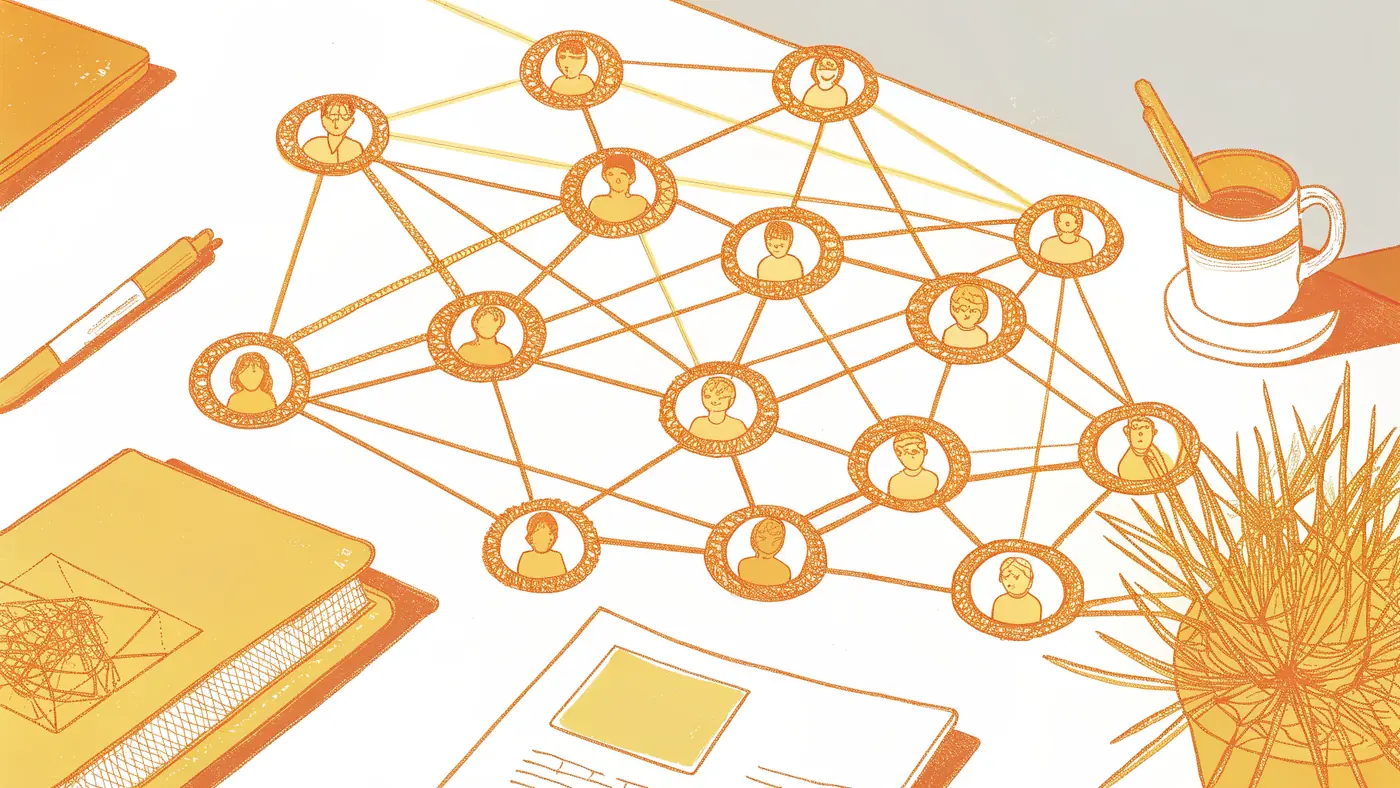
The average knowledge worker switches between many tools per day. For a Head of Operations coordinating a multi-agent workflow, each switch is a potential handoff point where context can drop. The seams between systems are not edge cases. They are the job.
Work gets lost at transitions. An agent completes a task, passes an output, and the next agent in the chain receives a file or a string with no surrounding context. What was the original request? What constraints applied? That information lives nowhere the next agent can reach. And there is a compounding problem beyond lost context: when agents operate autonomously across many components without a coherent structure holding them together, output quality degrades.
The result is workflows that feel unreliable, functionality that works in isolation but behaves unpredictably at scale, with code quality and security suffering when no single layer owns the handoff logic. Getting real output from AI tools, not just suggestions, requires that the orchestration layer be built into the system itself.
Skydive is built from that understanding. Each teammate operates in its own per-teammate sandbox with browser access, so agents aren’t sharing a fragile, undifferentiated environment. Granular permissions and team collaboration controls mean every agent’s scope is explicit, not assumed. And because Skydive is multi-teammate by default, the coordination between agents is structural, not improvised.
Why the Head of Operations Becomes the Default Orchestrator
When orchestration logic is not encoded in the system itself, it gets encoded in a person. The Head of Operations becomes the connective tissue the workflow was supposed to replace. Every new tool, every new agent, every edge case routes back to them. That is not a workflow. That is a dependency.
Skydive is designed to remove that dependency. Complex, multi-step workflows run with clear ownership at each stage, so the head of operations can coordinate their team without losing track of who owns what, and without becoming the router themselves. Multi-channel access means teammates receive and act on work across the surfaces where it arrives, rather than requiring a human to manually translate inputs between systems. Scheduled runs handle recurring orchestration automatically, so the ops leader is not the trigger for work that should already know when to start.
Undocumented Logic Creates Fragile Single Points of Failure
Consider what happens when a key ops hire leaves mid-project. They built the routing logic for a three-agent procurement workflow. They knew which edge cases triggered a human review. They knew why the second agent skipped a step under certain conditions. None of that was written down. Now it is gone. The workflow fragility is an architecture problem.
Skydive addresses this at the architecture level through memory and persistence. Context doesn’t live in someone’s head; it lives in the system. Pre-built teammate templates encode best-practice routing logic so teams aren’t starting from an undocumented blank slate. MCP (Model Context Protocol) support means the orchestration layer can connect to the tools and data sources a team already uses, without requiring a custom integration built and maintained by the person who might leave.
Context Collapse and Structural Failure - Why the Distinction Changes Everything
According to Incorta’s analysis of the 2025 MIT research, the root cause of AI project failure is not model capability; it is fragmented data that prevents agents from maintaining reliable context across steps. The same research found that 95% of enterprise generative AI pilots fail to deliver meaningful business impact, with most stalling before production. Sonatafy Technology reports that the vast majority of enterprise AI projects fail to reach deployment at all. The bottleneck is structural: disconnected systems, absent shared memory, and orchestration logic that lives in someone’s head instead of the system itself.
95% of enterprise AI pilots fail to deliver impact
Skydive’s built-in tools and capabilities, combined with persistent memory across teammates, are a direct response to that structural failure. The system is designed so that context doesn’t collapse at handoff points; it carries forward. The back-and-forth communication overhead that consumes ops teams chasing status across tools is replaced by a workflow that already knows where it is, what it owns, and what comes next.
Core Components of a Multi Agent System That Actually Holds Together
The core components of a multi-agent system are failure-prevention contracts you put in place so the system does not silently degrade. Across the market, a functioning multi-agent system requires four elements:
- Agents with distinct roles and specific tools
- An orchestration structure
- Shared state and memory for context propagation
- Communication protocols for inter-agent messaging
Each one maps directly to a breakdown mode. The system holds together because each component closes a specific gap.
One of the most persistent friction points beginners face is that existing multi-agent SDKs rely on spawning separate CLI processes per agent, creating real deployment and performance overhead rather than running agents in-process. That architectural tax shows up before you’ve written a single workflow. Skydive is built from the ground up as multi-teammate by default, so agents run within the same environment rather than as isolated external processes, removing that deployment friction from the start.
1. The Orchestrator Agent - The Traffic Controller Every Multi Agent Workflow Needs
The orchestrator decides which agent handles what, and when. Without it, agents either duplicate work or wait indefinitely for a signal that never arrives. The real tradeoff: a poorly scoped orchestrator becomes a single point of failure, quietly absorbing every ambiguous decision the other agents cannot resolve. This is precisely the problem teams hit when they try to coordinate complex, multi-step workflows without a clear owner at each stage, work stalls, accountability diffuses, and the overhead of status updates eats into the time that should go toward high-impact work. Skydive’s orchestration layer is designed to coordinate teammates through those workflows without losing track of who owns what at each stage, keeping routing logic explicit and bounded.
2. Shared Memory Layer - The Connective Tissue That Stops Agents From Working in Silos
Shared state and memory allow agents to act on the same version of reality. Without it, each agent operates on incomplete information and the system loses critical context at every handoff boundary, as Innervation AI documents in its breakdown of multi-agent failure modes. A procurement agent, for example, needs a scoped memory window that retains only vendor-specific context, so it does not conflate decisions across unrelated purchasing workflows. Skydive’s memory and persistence layer is built with this principle in place, each teammate carries context across runs without bleeding state across unrelated workflows. Memory scope matches task scope.
3. Modular Task Decomposition - Breaking Complex Goals Into Sub-Tasks Agents Can Actually Execute
Modular task decomposition quality determines whether agents collaborate accurately or work at cross-purposes. Vague task boundaries are where most scaling problems begin: overlapping responsibilities cause agents to duplicate work or produce contradictory outputs, a pattern that broader industry trends consistently trace back to role definition failures. Beginners who want to handle work that spans tools without becoming the engineer find this is the exact layer where complexity collapses into chaos, at the decomposition level.
Decomposition is a decision that needs to live in the memory layer, where it can update as roles shift, rather than being baked into a static orchestration map that breaks the moment scope changes. Skydive’s pre-built teammate templates give teams a structured starting point for role decomposition, reducing the surface area for boundary overlap before a single task runs.
4. Standardized Agent Communication Protocol - The Shared Language That Keeps the Workflow From Breaking Down
Agents in a multi agent workflow can’t collaborate reliably if they’re passing messages in incompatible formats. A standardized communication protocol defines how agents send, receive, and interpret messages, reducing integration friction and making the system extensible as new agents are added. The tradeoff is rigidity: overly strict protocols slow down iteration when agent roles need to evolve quickly.
5. Dynamic Feedback Loop - The Self-Correction Mechanism That Keeps Multi Agent Workflows From Drifting
A feedback network allows agents to pass results back through the system for review, correction, or escalation rather than treating every output as final. This is the right component for workflows where output quality is variable and errors compound across steps. The honest tradeoff: feedback loops add latency and require a coordinator agent to manage cycles, which increases both complexity and token cost.
Main Orchestration Patterns for Multi Agent Workflows: and How to Choose the Right One
Pattern selection is a scale decision, not a capability one. The pattern you choose determines whether orchestration complexity grows linearly or exponentially as you add agents, edge cases, or new workflows. Teams that default to whatever their framework demoed first don’t hit a model ceiling. They hit an engineering ceiling, where the orchestration logic becomes the full-time job.
A compounding problem for most teams: existing multi-agent frameworks are model-locked, making it genuinely difficult to mix models within a single workflow, forcing painful cost and performance trade-offs when, for example, you want Gemini handling planning, GPT handling implementation design, and Claude Haiku handling coding in the same run. The orchestration pattern you choose either makes that kind of model mixing tractable or turns it into a re-architecture project.
According to industry research on evaluating multi-agent orchestration failure modes, recovery, and decomposition quality, the leading cause of cascade failures in multi-agent systems is a mismatch between the chosen orchestration pattern and the actual workload shape. The pattern is the structural decision that determines whether your system absorbs complexity or amplifies it.
Pattern Selection Quick-Reference
| Pattern | Best When | Avoid When |
|---|---|---|
| Orchestrator-Worker | Task decomposition is predictable; clear hierarchy | Routing logic is ambiguous or frequently changes |
| Hierarchical Multi-Agent | Distinct domains need independent sub-management | You’re adding hierarchy to reduce visual messiness |
| Sequential Pipeline | Steps are strictly dependent and linear | Any step may need to loop back to an earlier step |
| Parallel Fan-Out | Subtasks are independent and speed is critical | Outputs overlap or aggregation logic is complex |
| Event-Driven Trigger | Workflows are reactive and asynchronous | You need easy debuggability and synchronous tracing |
1. Orchestrator-Worker Pattern - Best for Centralized Task Delegation
A central agent analyzes an objective, breaks it into subtasks, routes each to a specialist, and synthesizes the outputs into a final result. Across most production deployments, this pattern performs best when task decomposition is predictable and the hierarchy is clear. The real tradeoff: the orchestrator becomes a single point of failure. If its decomposition logic is wrong, every downstream agent works on the wrong thing.
This is where handoff clarity becomes load-bearing. Skydive’s multi-teammate architecture is built so every team member, human or agent, has a clear, predictable process and knows exactly who owns what at each stage. Granular permissions and per-teammate sandboxes mean the orchestrator’s routing decisions are reflected in actual access boundaries, not just prompt instructions, which removes the ambiguity that turns decomposition errors into full-pipeline failures.
2. Hierarchical Multi-Agent Pattern - Best for Nested Complexity at Scale
Sub-orchestrators sit between the top-level orchestrator and specialist agents, each managing their own cluster of workers. It is the right pick when your workflows have genuinely distinct domains that need independent management. It is the wrong pick when you add hierarchy because the flat version felt messy. Hierarchy that exists to manage complexity is useful; hierarchy that creates complexity is just debt.
Skydive’s granular permissions and team collaboration model map cleanly onto this pattern: sub-orchestrators can be scoped to their own domain with the access they need and nothing more, keeping the hierarchy purposeful rather than sprawling.
3. Sequential Pipeline Pattern - Best for Deterministic, Step-Dependent Workflows
Agents execute in a fixed linear chain, each processing the previous agent’s output and passing its result forward. The critical limitation: pipelines have no tolerance for variable workload shapes. If step three occasionally needs to loop back to step one, a sequential pipeline requires re-engineering the graph, not just updating a prompt.
Skydive’s scheduled runs and memory and persistence layer support sequential pipelines where each step’s output is reliably available to the next, without teams having to build their own state-passing infrastructure or chase down what broke between handoffs.
4. Parallel Fan-Out Pattern - Best for Speed-Critical, Independent Subtasks
Multiple agents run simultaneously against independent subtasks, then an aggregator synthesizes results. The aggregation step is where this pattern earns or loses its value. If the aggregator has to reconcile conflicting or overlapping outputs, the time saved in parallel execution disappears in post-processing. Most teams underestimate the aggregation complexity until they are already committed to the pattern.
Running parallel branches across teammates with per-teammate sandboxes and browser access means each branch operates in isolation by default, reducing the state contamination that makes aggregation harder than it should be.
5. Event-Driven Trigger Pattern - Best for Reactive, Asynchronous Workflows
Agents activate in response to events rather than on a fixed schedule or direct call. The observability cost is real. Async trigger chains are significantly harder to debug than synchronous pipelines because failures surface far from their origin. Skydive’s multi-channel access and memory and persistence give async workflows a consistent record of what fired, when, and what state each agent held, which is the minimum you need to make trigger chains debuggable in practice.
The deeper problem, identified in industry research on multi-agent orchestration failure modes, is that the widespread belief that someone must choose and pre-configure the right pattern before a workflow can run is itself a primary source of orchestration failure. Because real workloads shift, the pattern selected at design time is frequently wrong by the time the system reaches production. This is why the most durable architectures, as broader trends in hybrid workforce design also reflect, treat pattern selection as a revisable decision, not a one-time commitment baked into the graph. Skydive’s pre-built teammate templates and MCP (Model Context Protocol) support are practical expressions of this: you can start from a working pattern, validate it against real workload shape, and restructure without rebuilding from scratch.
Related Reading
- The Complete Guide to AI Agent Infrastructure & Components
- Make vs n8n: Which Automation Tool Wins in 2026?
- Gumloop vs n8n: Which Automation Tool Should You Choose?
- 13 Best AI Agent Builders in 2026
- Multi Agent Orchestration Explained: What It Is and How It Works
- 13 Best Lindy AI Alternatives for Smarter Automation 2026
Frameworks for Implementing Multi Agent Workflows - LangGraph, AutoGen, CrewAI: and What Each One Costs You
Three frameworks dominate the multi-agent implementation conversation right now, and picking between them is genuinely straightforward once you understand what each one optimizes for. The harder question, the one most teams only discover after weeks of setup, is what all three share: the assumption that orchestration is your engineering team’s job first, and a business tool second.
Building multi-agent workflows with LangGraph requires engineering teams to construct the orchestration layer upfront, including the graph, the routing logic, and the agent connections, so the workflow design itself becomes the primary engineering project before any business task is automated. That cost is real and it compounds.
1. LangGraph - Best for Teams Who Need Surgical Control Over Multi Agent Workflow State
LangGraph uses graph-based state machines to give developers deterministic, auditable control over agent loops and routing. Nodes represent actions; edges represent transitions. That explicitness is its genuine strength for regulated or high-stakes workflows where every routing decision must be traceable. The real tradeoff: any change to business logic requires a developer to redraw the graph. The orchestration layer never stops being an engineering maintenance project, which is costly if your workflows evolve frequently.
2. AutoGen - Best for Conversational Multi Agent Workflows with Dynamic Agent-to-Agent Dialogue
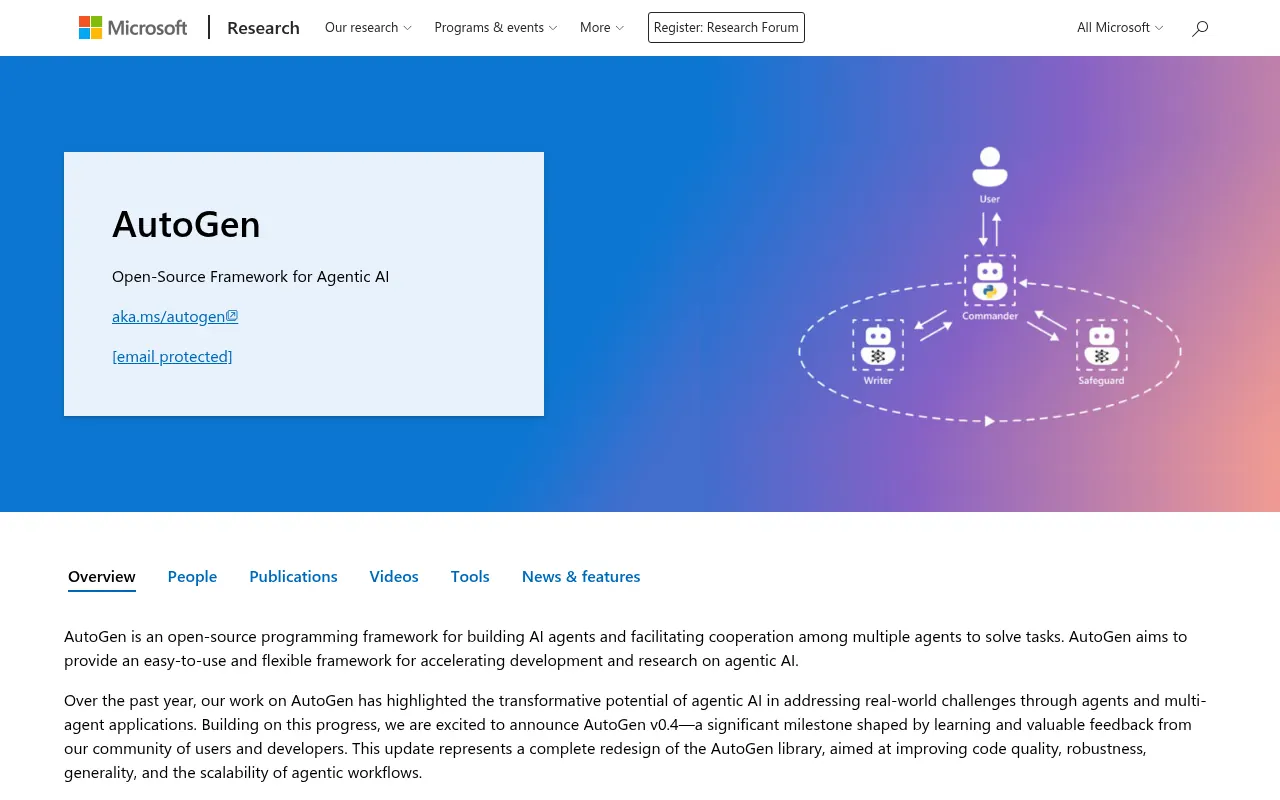 Microsoft AutoGen enables multi-turn agent conversations and dynamic agent-to-agent dialogue, making it a strong fit for workflows where the next step genuinely depends on what the prior agent surfaced. Practitioners building production systems with AutoGen consistently report one shared pain point: conversational loops that run longer than expected drive token consumption in ways that are difficult to observe or cap before costs accumulate. It is a capable multi agent framework, but production cost control requires deliberate instrumentation that the framework does not handle by default.
3. CrewAI - Best for Role-Based Multi Agent Workflows That Non-ML Teams Can Actually Ship
 CrewAI organizes agents into role-based crews with a defined manager, researchers, and writers, making the mental model accessible to non-ML teams who think in terms of job functions rather than graph topology. Practitioners and ops-focused teams consistently cite it as among the lower-friction paths from concept to working prototype, though no independent benchmark currently quantifies time-to-prototype across frameworks. The limitation surfaces at scale: task sequencing is still explicit and upfront, so as workflow complexity grows, the crew configuration becomes its own maintenance surface, just one with friendlier syntax than a state machine.
The shared cost across all three is worth naming plainly. Every framework relocates the orchestration burden rather than removing it. LangGraph encodes it in graph edges. AutoGen encodes it in conversation configuration. CrewAI encodes it in crew configuration files, friendlier to read than a state machine, but no less dependent on someone maintaining them as the workflow evolves. Choosing a framework is choosing where the maintenance burden lives, not whether it exists.
Why Scalable Multi Agent Workflows Are Described, Not Engineered: and What That Looks Like in Practice
Mapping every handoff in a multi-agent system feels like responsible engineering. It looks like control. In practice, it is the fastest way to build something that works once and breaks the moment anything changes.
How to Design Agent Handoffs That Work Without a Human Coordinator
The problem with oversight-heavy orchestration is that confidence built on a routing diagram is borrowed confidence. The diagram is only as current as the last person who updated it, and that person is usually the one who built the whole system in the first place. When they leave, or when the process shifts, the diagram becomes a liability. According to Vena Solutions, 2025, a leading barrier to automation scaling is exactly this: when orchestration logic lives in a central map or human coordinator, the loss of that coordinator collapses the entire workflow.
Scale is blocked by where the orchestration logic lives. Teams that move beyond piloting are not the ones who engineered better maps; they are the ones who shifted orchestration authority into a persistent, description-driven layer that outlasts any individual, converting what was trapped in one person’s judgment into infrastructure that runs without them.
Real delegation confidence comes from each agent understanding its own scope well enough that it does not need a map to know what to do next. That is a structural choice, not a feature.
What Self-Organizing Orchestration Looks Like in a Real Multi Agent Workflow
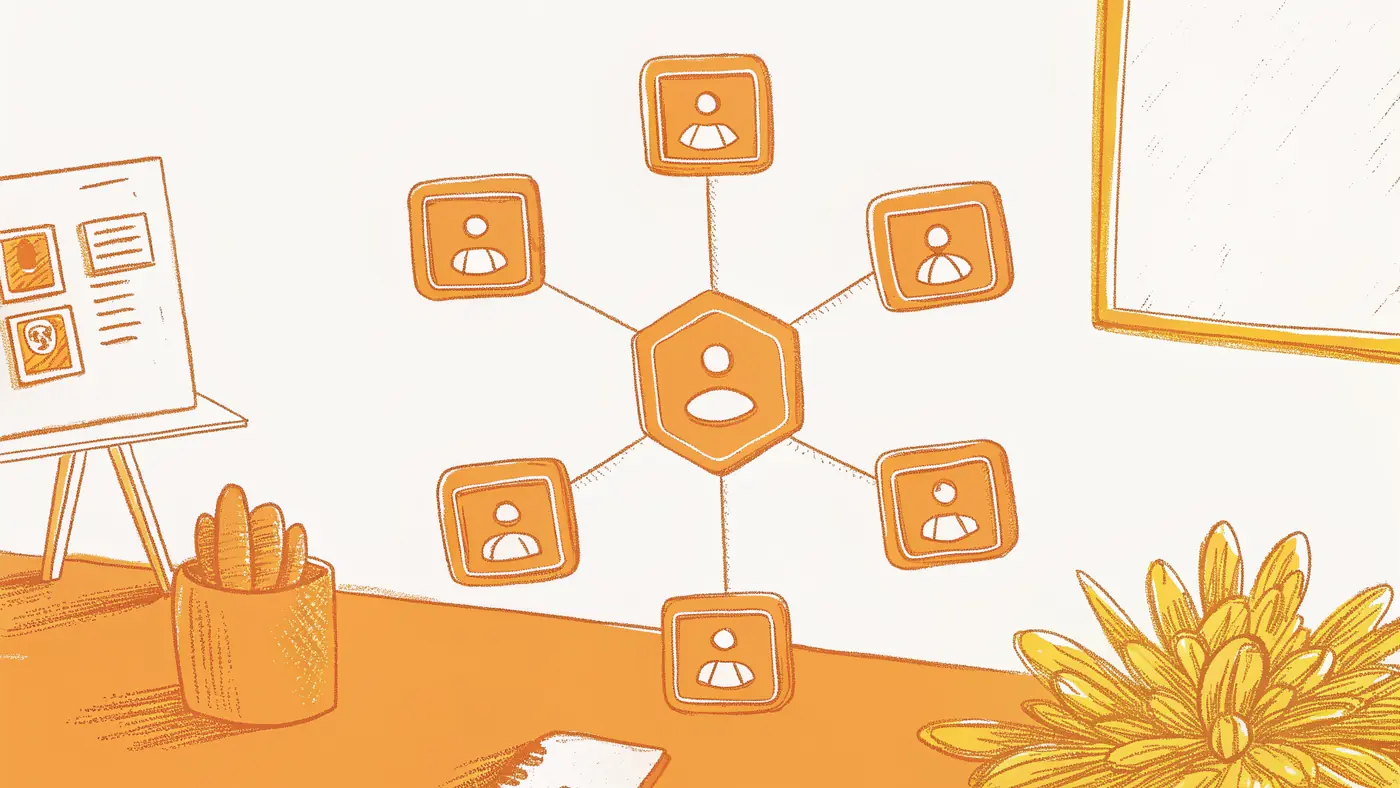
Consider a team that describes their process as: “handle all inbound vendor requests, route to the right internal contact, and follow up until resolved.” Three AI teammates coordinate to own it, each holding its own scope, its own history, and a clear understanding of where its responsibility ends and another’s begins. The handoff happens because each agent knows what it owns, not because a routing rule told it where to send the task.
This is what emergent orchestration looks like. It is not chaotic. In practice, description-driven orchestration reduces the surface area that breaks when workflows evolve, because there is no static routing graph to update, a structural advantage noted in Vena Solutions’ analysis of automation scaling barriers.
One honest trade-off: this approach requires precise, thoughtful descriptions upfront. Vague scope definitions produce vague behavior. The description does the work that the diagram used to do, which means it has to be written with the same care.
Persistent Agent Identity - How to Prevent Context Loss Across Every Handoff
Context loss between handoffs is where most multi-agent systems quietly fail. Not loudly, not all at once. A piece of information does not transfer. An assumption is not carried forward. The next agent starts from a position that is slightly wrong, and the error compounds.
The Objections Every Head of Operations Has Before Committing to a Multi Agent Workflow - Addressed Directly
Ops leaders don’t object to multi-agent workflows because they distrust technology. They object because they’ve been burned by systems that failed silently, required a specific person to decode, and collapsed the moment a single tool in the stack changed. Those objections are legitimate. The question is whether they’re arguments against multi-agent workflows in general, or arguments against a specific kind of architecture that was never designed to answer them.
“We’re skeptical of AI-generated code quality, the outputs feel janky, authentication feels pseudo at best, and nothing feels production-ready. That’s a real blocker when it comes to committing to multi-agent workflows.”

Rarely named explicitly: the operations leader’s fear that removing human oversight creates invisible failure modes is an argument against human-in-the-loop orchestration. Human errors in multi-step workflows are systematically normalized and underreported precisely because humans are assumed to be the error-correction mechanism; but research consistently shows that the overwhelming majority of enterprise AI pilots stall not because agents failed but because fragmented data and siloed systems forced humans back into the orchestration loop, a finding echoed across multiple 2025–2026 implementation analyses, including Incorta’s review of MIT research cited earlier in this piece, where their inconsistency and context loss became the primary throughput constraint. The real risk is autonomous agent failure less often than the organizational habit of treating human oversight as free and infallible when it is neither.
Errors Should Be Traceable, Not Mysterious
The fear here is real. Anyone who has watched an automation produce a wrong output with zero explanation knows the particular frustration of having no trail to follow. According to industry data, AI project failures are frequently attributed to implementation and integration breakdowns rather than model capability, meaning the failure point is the workflow architecture, not the AI itself. When each agent holds persistent memory across sessions, a wrong call leaves a record. Traceability is an architecture decision, not a feature you bolt on later.
How to Define Agent Scope Without Burying Logic in Routing Rules
The bus-factor problem in automation is severe and underreported. When the person who built the workflow leaves, what remains is routing rules, conditional logic, and implicit assumptions that exist nowhere in writing. The fix is an architecture where each agent’s scope is written in plain language as part of how the agent is defined. When scope is written in plain language as part of the agent definition itself, the logic survives personnel changes, onboards new team members without a walkthrough, and can be updated by the person who owns the process, not only by the person who built the system.
Related Reading
- Lindy vs Zapier: Which Automation Tool Wins in 2026?
- Types of AI Agent Pricing Models (And How to Choose)
- How to Master AI Agent Prompt Engineering in 2026
- 13 Best Relevance AI Alternatives for Building AI Agents 2026
- 15 Best Gumloop Alternatives for AI Automation in 2026
Next steps
If your orchestration logic still lives in a routing diagram or a coordinator’s head, the path forward starts with shifting that authority into a persistent, description-driven layer that runs without any single person holding it together.
The insight that scale is blocked by where orchestration logic lives, not by workflow complexity, means every hour spent maintaining a static graph is an hour the system is one personnel change away from collapse. The finding that 95% of enterprise AI pilots stall because fragmented data and siloed systems push humans back into the coordination loop means the oversight model most ops teams default to is itself the throughput constraint. Together, they point to one concrete next step: move from engineering handoffs to describing them, and let the system carry context across runs without a human re-briefing it at each stage.
Start by seeing how Skydive’s AI Employees apply that model in practice. Each teammate ships with its own sandbox, persistent memory, and built-in tool access, so the description you write becomes the infrastructure that runs, rather than a design artifact someone has to translate into a routing graph before anything moves.
Frequently Asked Questions
How do orchestrator-worker and hierarchical multi-agent patterns actually compare in practice?
The orchestrator-worker pattern performs best when task decomposition is predictable and the hierarchy is clear, but its central orchestrator becomes a single point of failure if its decomposition logic is wrong. The hierarchical pattern adds sub-orchestrators between the top-level agent and specialists, which is the right choice only when workflows have genuinely distinct domains that need independent management, adding hierarchy just because a flat structure feels messy creates complexity rather than managing it.
How do agents in a multi-agent system pass context to each other without losing information at handoffs?
A shared memory layer allows all agents to act on the same version of reality, so critical context carries forward instead of dropping at every handoff boundary. Memory scope should match task scope, for example, a procurement agent should retain only vendor-specific context so it doesn’t conflate decisions across unrelated purchasing workflows, rather than bleeding state across the entire system.
What actually causes silent failures when agents communicate, and how do you prevent them?
When agents pass messages in incompatible formats, errors propagate invisibly, with no exception, no alert, and no visible failure. Standardized inter-agent communication protocols are what prevent this class of silent handoff failure, yet they are the component teams most frequently skip in early builds, wrongly assuming orchestration logic will catch format mismatches.
Why does the orchestration pattern I choose matter more than the number of agents I use?
The orchestration pattern is the structural decision that determines whether your system absorbs complexity or amplifies it as you add agents, edge cases, or new workflows. According to industry research cited in the post, the leading cause of cascade failures in multi-agent systems is a mismatch between the chosen orchestration pattern and the actual workload shape, not model capability.
If the routing logic for my multi-agent workflow lives in one person’s head, what’s the real risk?
When orchestration logic is not encoded in the system itself, it gets encoded in a person, turning that individual into a dependency the workflow was supposed to replace. If that person leaves, critical knowledge about which edge cases trigger human review or why certain steps are skipped under specific conditions disappears with them, which is an architecture problem rather than a people problem.