What Are Parallel AI Agents? A Complete 2026 Guide
Parallel AI agents let operations leaders step-change org productivity by running every function concurrently. The 2026 architecture guide for COOs.
 Skydive 32 min read
Table of contents
Most teams think parallel agents just mean faster AI. They mean a different architecture entirely, one that eliminates coordination overhead instead of accelerating it.
The Definition That Actually Changes How You Work
The common assumption is that running AI agents faster or with better prompts will eventually close the productivity gap, that the bottleneck is model quality, not architecture. Parallel AI agents are a specific architectural pattern, not a catch-all term for “AI doing more things,” and that distinction matters enormously for any operations leader whose work spans finance, legal, research, and communications simultaneously, because the architecture you choose determines whether you escape the productivity ceiling or just redecorate it. See our AI teammates for how this works in practice.
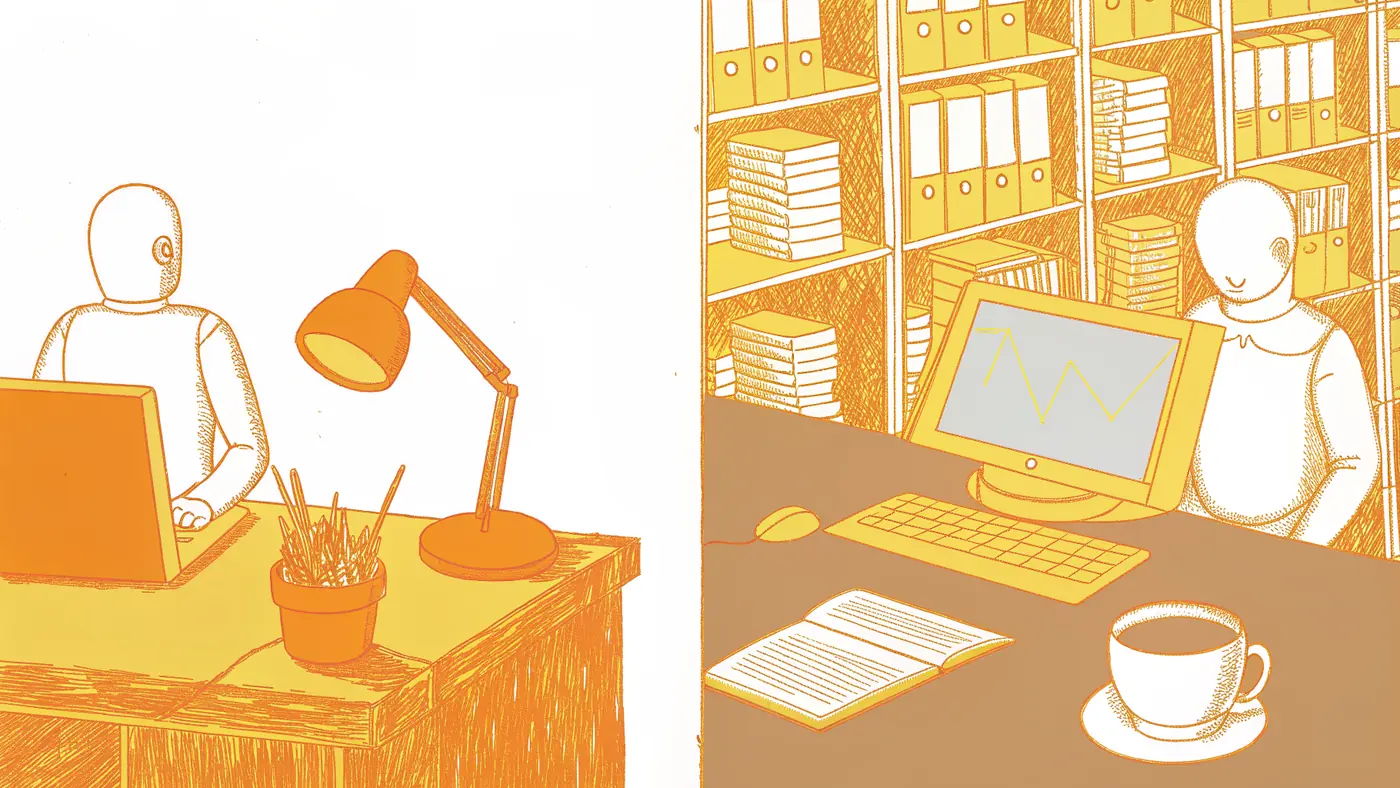
Parallel AI agents are multiple specialized agents that each receive their own task, execute it independently, and return outputs that are then coordinated into a unified result. No agent waits for another to finish. Each holds its own scope and state.
The execution is genuinely concurrent, not a rapid sequence that mimics concurrency. Most operators first encounter parallel agents and assume the benefit is speed: the same job, done quicker. That framing is wrong, and it’s expensive to hold.
A faster single agent still processes tasks one at a time. Work cited by the American Psychological Association on cognitive task-switching consistently finds that shifting between tasks costs workers a meaningful share of productive time, because recovery overhead compounds with every transition. A single agent, however fast, carries that same structural tax.
Parallel agents don’t reduce the tax. They eliminate the condition that creates it. “Multi-agent” and “parallel agent” don’t mean the same thing.
A multi-agent system can still be a sequential pipeline where agents hand off one at a time. Parallel execution is a specific subset: simultaneous, independent, concurrent. Three properties define a genuinely parallel agent architecture.
First, independent state: each agent maintains its own context and does not share memory with sibling agents mid-execution. Second, concurrent execution: agents run at the same time, not in sequence. Third, coordinated output: results are collected and synthesized after execution, not passed between agents during it.
Remove any one of those three and the architecture collapses back into something sequential or fragile. In our experience working across knowledge-intensive operations, workers spend a significant portion of their week on coordination overhead rather than the skilled work itself, a cost that sequential agent architectures replicate structurally and that a genuine fan-out/fan-in design eliminates at the source.
Key takeaways
- Parallel AI agents are an architectural pattern, not a speed setting, the distinction matters because faster single-agent execution still hits the same sequential ceiling.
- The real latency gain isn’t incremental: parallel execution replaces Task 1 + Task 2 + Task 3 with max(T1, T2, T3), which compounds dramatically across multi-function workflows.
- Most teams treat this like a faster single agent and miss the actual unlock, a workforce running simultaneous, cross-functional tasks without a bottleneck coordinator.
- API costs scale multiplicatively in parallel architectures, not linearly, production teams that don’t budget by model tier get surprised fast.
- The fan-in moment, when parallel agents consolidate their outputs, is where most implementations quietly fail: how results are framed and delivered determines whether operators act on them or second-guess them.
- Configuration overhead is the hidden tax, teams routinely extend AI implementation timelines not because models fall short, but because wiring orchestration logic and maintaining handoff pipelines consumes the roadmap.
- SkyDive’s Multi-teammate architecture closes that gap by making parallelism the default: each teammate carries its own identity, scope, and history, and hands off to the next without anyone mapping the steps in advance.
How Parallel Agent Architecture Works - The Fan-Out/Fan-In Pattern Explained
Fan-Out/Fan-In - How Parallel Agent Architecture Works
Most parallel agent systems fail because the orchestration layer loses control the moment work gets distributed. The fan-out/fan-in pattern solves this by giving the orchestrator a precise mechanism for dispatching work across agents simultaneously while maintaining ownership of shared state throughout. Understanding how that mechanism works, and where it breaks down in practice, is what separates teams that run multi-agent workflows in production from teams that only think they do.
How the Orchestrator Distributes Work Across Parallel Agents
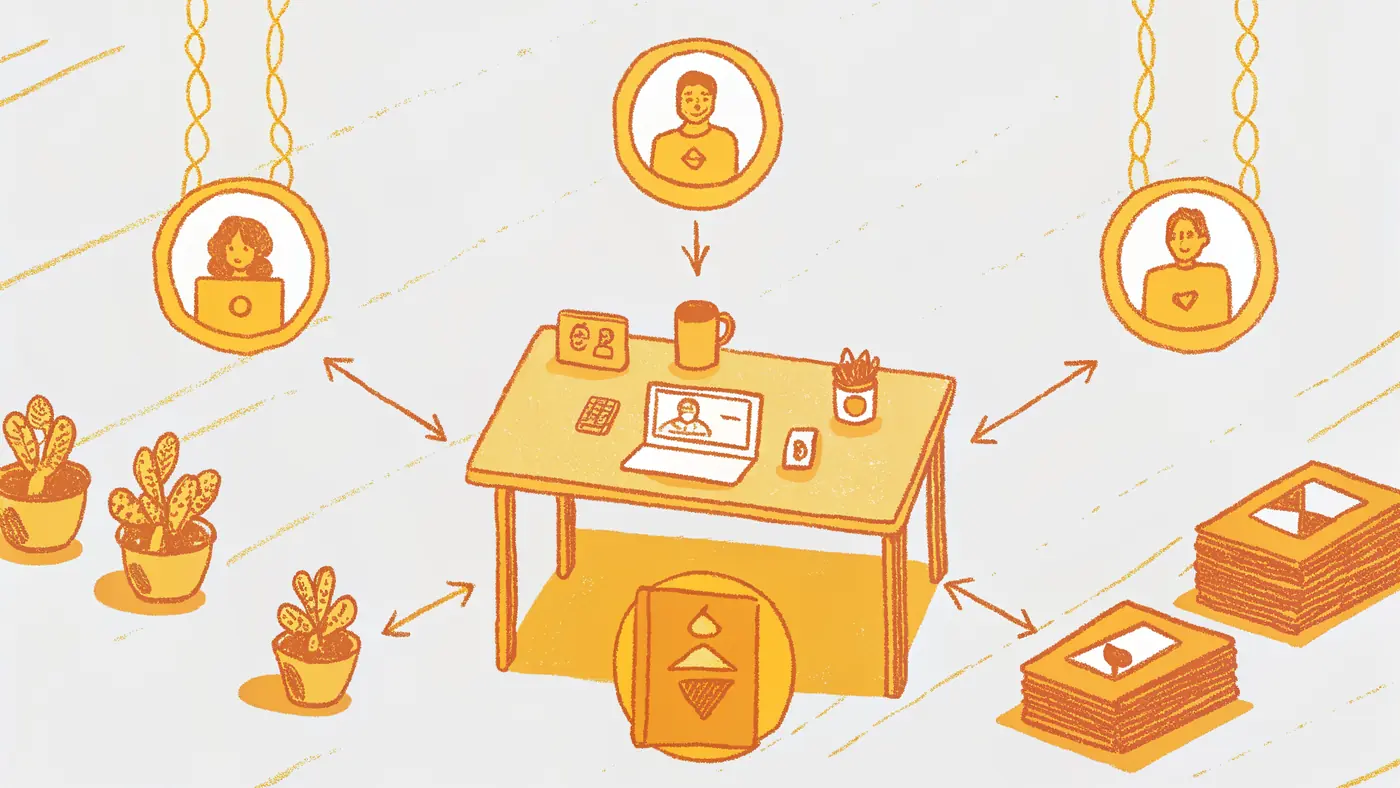
Fan-out is the moment the orchestrator stops holding work and starts distributing it. In a detailed analysis of LangGraph architecture, an orchestrator node distributes inputs to multiple sub-agents concurrently, and critically, it governs all state management while doing so. Picture a COO sending the same RFP document simultaneously to a legal agent, a pricing agent, and a risk agent. No one waits. No one hands off to the next person in a chain. The orchestrator dispatches, then steps back.
What this means structurally is significant. The orchestrator never loses control of shared state, which is the variable that breaks most distributed systems. It assigns work; it does not become the work. For teams using SkyDive, where multi-teammate coordination is the default rather than an afterthought, this maps directly onto how SkyDive coordinates complex, multi-step workflows without losing track of who owns what at each stage. Each teammate operates inside its own per-sandbox environment with its own browser context, which enforces the same isolation at the infrastructure level that fan-out enforces at the architecture level.
One of the most common gaps between teams that understand parallel agent architecture conceptually and teams that actually run it in production is the assumption that “multi-agent” equals “parallel.” In practice, multi-agent orchestration often remains basic: delegation works, but true fan-out with genuine concurrent execution is rarely implemented correctly. The teams we work with at SkyDive close that gap by using templates for inbox triage, lead enrichment, CRM hygiene, deck updates, content drafting, research, and support triage, with a library that expands as customers build and share, handling the kind of concurrent, multi-domain execution that would otherwise require additional hires or sequential coordination that bottlenecks on the slowest contributor.
Why Parallel Agents Never Talk Directly to Each Other
Strict isolation is the feature. A common frustration among teams building their first multi-agent systems is the impulse to let agents communicate directly. The reasoning feels intuitive: if Agent A finishes early, why not let it inform Agent B? The answer is that direct peer communication is where race conditions are born.
Industry research on LangGraph architecture confirms that individual parallel agents do not communicate directly with each other precisely to prevent data corruption and race conditions. Intent-based routing between agents fails at a measurable and costly rate when queries require data from multiple memory stores simultaneously, a concrete cost of loosening isolation. Teams building early-stage multi-agent systems often encounter this when a single agent is asked to bridge two memory stores that were never designed to talk to each other. The result is not an error message; it is a silently wrong output, which is harder to catch and more expensive to fix.
This is also why the abstraction of “multi-agent teams” or “collaborative swarms” frustrates developers who look under the hood: what is often marketed as agent-to-agent collaboration is, in practice, the same model invoked across parallel threads with different system prompts. That is not a flaw; it is the fan-out mechanic. But calling it collaboration obscures the strict isolation that makes it work. SkyDive surfaces this honestly through granular permissions and team collaboration controls that make the ownership of each thread explicit, so teams are never guessing which teammate owns which output or whether two teammates are silently overwriting shared state.
Strict separation is the mechanism that makes the pattern reliable, and it is the mechanism that lets SkyDive preserve team capacity for judgment-heavy work instead of burning that capacity on status-update overhead.
Fan-In - How the Synthesizer Turns Independent Outputs Into a Single Authoritative Result
Once sub-agents complete their work, the synthesizer collects and reconciles their outputs. This fan-in phase can use voting, weighted scoring, or a secondary LLM to produce a single coherent result.
This is also where the pattern’s most underappreciated structural claim becomes explicit: the fan-out/fan-in architecture does not merely accelerate sequential work, it eliminates the bottleneck coordinator problem that sequential design makes invisible, replacing additive latency (T1+T2+T3) with the duration of only the longest branch. Because each sub-agent runs independently without direct peer communication, and all state is owned exclusively by the orchestrator, the architecture prevents the compounding delays that sequential handoffs create.
For teams using SkyDive, the fan-in moment is where memory and persistence become operationally critical. SkyDive’s built-in memory ensures that synthesized outputs are not ephemeral; they persist across runs, are accessible across multi-channel touchpoints, and feed back into scheduled runs that can re-trigger the same fan-out pattern on a defined cadence. That compounding loop is what preserves calendar time for strategic judgment work: the architecture absorbs the coordination surface so the human team absorbs only the decision surface.
Parallel agents are a structural replacement for sequential design, one that compounds its advantage with every additional function it touches, and one that SkyDive is built to run in production rather than in prototype.
The Latency and Productivity Gains of Parallel vs Sequential Agent Execution
The common assumption is that running AI agents faster or with better prompts will eventually close the productivity gap, that the bottleneck is model quality, not architecture. When operators ask how to get more out of their AI setup, the answer they reach for is almost always the same: a better model, a tighter prompt, faster inference. The instinct is reasonable. The math explains why it is structurally wrong.
Sequential Execution Time Is Additive
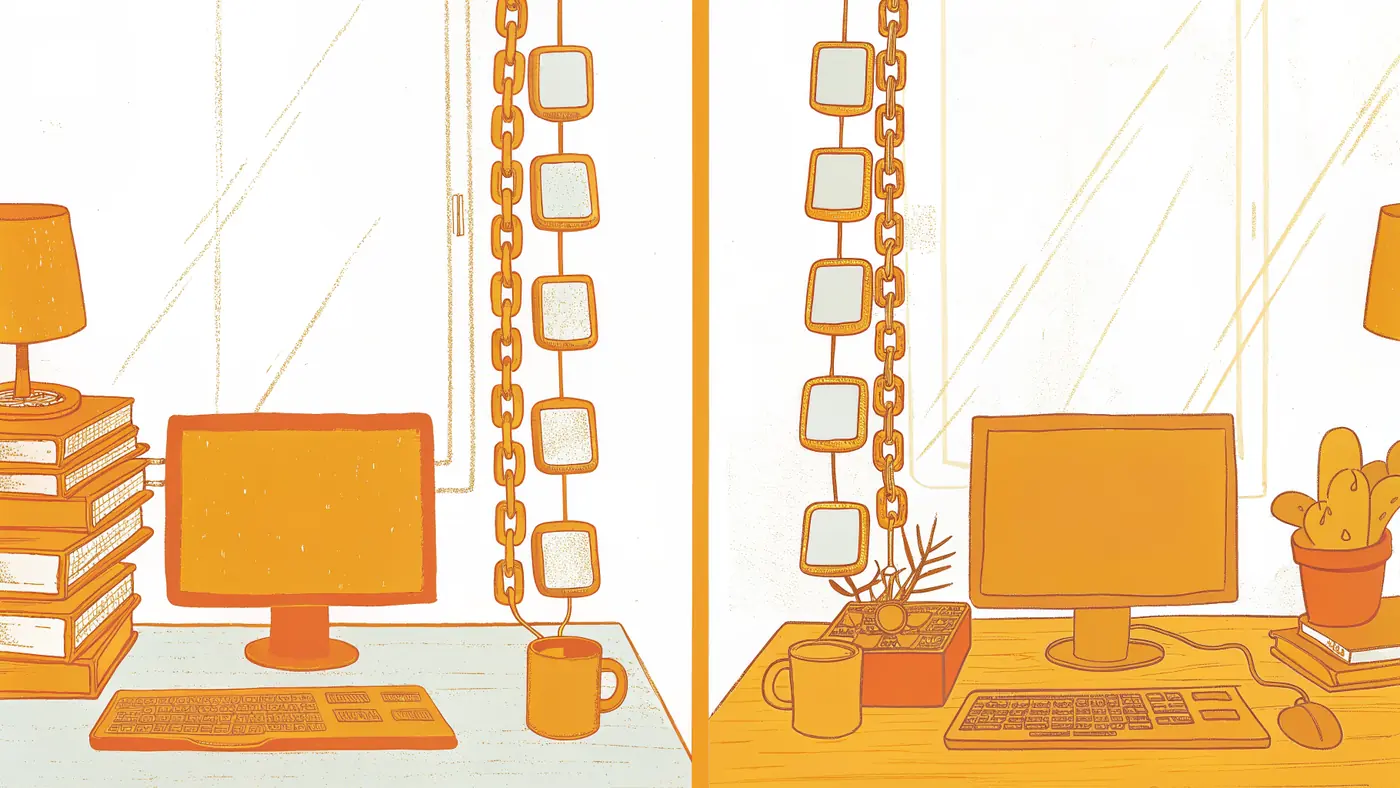
Parallel execution collapses latency to the slowest single path: when three agents run simultaneously, total elapsed time equals max(T1, T2, T3), not T1+T2+T3. According to industry research on parallel vs sequential agent execution, this reduction is structural, not incremental. A three-step research pipeline that takes 90 seconds sequentially can complete far more quickly when those steps run concurrently, because the ceiling shifts from the sum of all paths to the length of the longest one.
max(T1, T2, T3) Parallel latency replaces additive sequential time
This plays out in concrete terms that anyone coordinating AI coding work will recognize. A 5-file refactor run sequentially is dramatically slower than the same tasks dispatched in parallel, and under tight token constraints, that gap is punishing. When context windows are already limiting what each agent can hold, sequential execution forces you to pay the latency cost of every step in full, one after another. The architecture compounds the constraint rather than relieving it.
No prompt engineering closes that gap. The math is fixed at the architecture level.
Why “Multi-Agent” Does Not Automatically Mean Parallel
This is where most implementations quietly fail. A system that routes tasks from agent to agent in a fixed order is still a sequential chain, regardless of how many agents it contains. The label “multi-agent” describes topology, not execution mode. Teams often build what feels like a parallel system and then wonder why adding more agents makes total runtime worse. Each new agent extends the chain rather than branching off it.
There is a second failure mode that sits upstream of the architecture itself: the operator becomes the bottleneck. Running multiple AI coding agents simultaneously, switching between sessions, tracking which agent owns which file, and managing handoffs manually creates the kind of context-switching overhead that erases the productivity gains parallelism is supposed to deliver. The agents run in parallel; the human coordinating them does not. That is a structural problem no individual agent can solve.
Parallel execution requires genuine fan-out, and it requires a coordination layer that manages ownership and sequencing so the operator does not have to:
- Tasks are dispatched simultaneously.
- Results are collected at a single aggregation point.
- A coordination layer manages ownership and sequencing so the operator does not have to.
SkyDive’s multi-teammate architecture is built around exactly this: each teammate operates in its own per-teammate sandbox, so parallel workstreams do not collide, and the coordination layer tracks who owns what at each stage of a complex, multi-step workflow. The back-and-forth communication overhead that keeps teams anchored to status updates instead of high-impact work is absorbed by the system, not pushed onto the people running it.
The Architectural Tax Compounds
Every task added to a sequential chain widens the gap against a parallel system. At three steps the difference is noticeable. At seven steps it is disqualifying. METR’s March 2025 research on AI task-length capability makes the structural point clearly: the binding constraint on complex, multi-step work is the architecture governing how work is decomposed and executed. A sequential chain with a capable model is still a sequential chain. Parallel execution changes the shape of the problem, not just the speed of solving it.
There is also a resource ceiling that appears when teams try to brute-force parallelism without proper sandboxing. Running many AI coding agents simultaneously in a shared environment drives CPU utilization to unsustainable levels, pushes RAM consumption past its limits, and produces system instability, frequent crashes, degraded editors, and lost state that makes parallel execution practically unusable at scale. Isolation is the prerequisite that makes high-agent-count parallelism viable.
SkyDive’s per-teammate sandboxes, combined with memory and persistence across runs, keep individual workstreams stable regardless of how many are running concurrently. The architectural tax is real, and the answer to it is a foundation designed to carry the load.
Key Benefits of Parallel AI Agents and Why They Compound Across Functions
Most teams hit the speed argument first and stop there. But the more consequential shift happens when parallel execution runs across functions at the same time, collapsing not just individual task time but the handoff queues between teams that silently kill launch timelines. What follows breaks down why that distinction matters, and why the ceiling on single-agent workflows is a structural problem that better prompting cannot fix.
Speed Is the Entry-Level Benefit. Cross-Functional Simultaneity Is the Real Prize
Parallel execution collapses elapsed time by replacing additive sequential latency with a max-path model: instead of Task 1 + Task 2 + Task 3, you get max(T1, T2, T3). For a single workflow, that is meaningful. Across functions, it is transformative. A marketing team running copy review, SEO analysis, and compliance checks in parallel does not just finish faster; it removes the handoff queues that stall launches entirely.
The teams we work with most often describe the same bottleneck: single-agent AI workflows require sequential grinding through tasks, which is punishing for any multi-domain work of real scope. You finish one task, hand it off, wait, then start the next. The elapsed time is the sum of every step.
SkyDive is built multi-teammate by default to break that equation. Parallel teammates handle work across every function simultaneously, without adding headcount to cover the spread. When copy, SEO, and compliance run at the same time rather than in sequence, the handoff queues that stall launches disappear, and the time saved multiplies across every function running concurrently.
The ceiling for single-lane AI is architectural. Standard AI agents follow a linear, unidirectional Chain-of-Thought reasoning pattern; they commit to one path, work through it to completion, and only then surface a result. No amount of better prompting breaks the additive latency equation that structure produces. SkyDive’s multi-teammate architecture replaces that linear path with simultaneous, independent execution lanes: each teammate operates in its own per-teammate sandbox, exploring its designated domain in parallel with every other. Complex, multi-step workflows stay coordinated through granular permissions and team collaboration controls, so there is never ambiguity about who owns what at each stage, and back-and-forth communication overhead drops because status is visible, not negotiated.
Multiple Independent Agents Reduce Hallucination Where a Single Model Has Blind Spots
The accuracy case for parallel agents is not intuitive until you see the data. The Suprmind Multi-Model Divergence Index documents that high model confidence is a poor proxy for accuracy; different frontier models frequently contradict each other even on high-stakes factual questions. In domains like finance and legal analysis, where specificity matters most, divergence rates between models are measurably higher than in general-purpose tasks, which means a single agent’s certainty is not a reliable signal. Multiple industry sources further confirm that hallucination detection improves structurally when outputs are cross-verified rather than accepted from a single source. Cross-verification across parallel specialized agents surfaces disagreement before it reaches the decision-maker.
Three specialized teammates reviewing an enterprise contract simultaneously, one focused on legal exposure, one on commercial terms, one on risk flags, do not just finish faster. They catch what a single general-purpose agent buries under confident but unverified output. SkyDive’s memory and persistence layer makes this structural check cumulative: each teammate retains domain context across runs, so the legal teammate is not starting cold on the fifth contract review.
That accumulated judgment persists in the teammate, available for every subsequent run. The Suprmind AI Hallucination Statistics & Research Report reinforces why this matters: hallucination rates are not evenly distributed across task types, and the highest-risk domains are precisely the ones where a single agent’s unverified confidence is most costly. Structural cross-verification reduces downstream rework, which reduces the operational cost of running the system at all.
Narrow Micro-Agents Outperform Monolithic Prompts on Maintainability and Accuracy
Monolithic prompts fail in a specific, frustrating way: when something breaks, you cannot isolate where. A single large prompt entangles legal logic, commercial interpretation, and risk flagging into one undifferentiated block. When the output is wrong, the debugging surface is the entire prompt.
Narrow micro-agents with defined scope change that entirely. When a legal teammate produces a wrong output, you fix the legal teammate. The commercial teammate keeps running. SkyDive’s per-teammate sandbox enforces that isolation by design; each teammate operates with its own context, tools, and memory, so a change in one does not cascade into others. Pre-built teammate templates give teams a starting point with scope already defined, accelerating the move from a monolithic workflow to a modular one without requiring every boundary to be architected from scratch.
Scoped agents also accumulate better domain context over time. SkyDive’s memory and persistence means each teammate builds on prior runs rather than resetting, improving outputs without requiring the whole system to be re-prompted. Agents can run code and commands, read and write files, browse and search the web, host web apps, process media, and give themselves new tools as needed. The maintainability advantage compounds: narrower scope, persistent memory, and fault isolation together mean the system improves incrementally instead of degrading as complexity grows.
Related Reading
- How to Measure AI Agent ROI Before You Scale
- The Future of Agentic AI For Customer Support Explained
- 13 Best Agentic AI Platforms in 2026 for Autonomous Work
- 13 Best AI Agent Integrations to Automate More in 2026
- 14 Best Browser Use Agent Tools for AI Web Automation 2026
- AI Agent vs Assistant: Key Differences Compared (2026)
- How To Measure AI Agent ROI With Proven Metrics
- The Ultimate AI Automation Tutorial for Beginners (2026)
- 13 Best AI Agents for Marketing Teams in 2026
- How to Set AI Agent Permissions Without Losing Control
Trade-offs and Challenges of Parallel AI Agents - What to Know Before You Scale
Parallel agents unlock real leverage, but the architecture decisions that make them fast and capable are the same ones that drive up costs, surface conflicting outputs, and expose coordination gaps that don’t show up until you’re running at scale. Understanding these trade-offs before you build is what separates teams that scale efficiently from those that retrofit cost controls and conflict resolution logic after the fact. The sub-sections below cover the specific challenges production teams actually encounter, and where SkyDive’s architecture addresses them at the design level rather than as an afterthought.
Token and API Cost - How Production Teams Budget for It
Because output tokens cost more than input tokens (each output token requires a full model pass), every concurrent agent call generates its own output stream. The spread across model tiers is wide enough to matter: budget-class open models can price as low as a few cents per million input tokens, while frontier models run orders of magnitude higher, a gap you can verify yourself on CostGoat LLM API Pricing Comparison. The gap is large enough that model tiering, routing lower-complexity subtasks to cheaper models and reserving frontier inference for the synthesis step, is the primary lever for keeping parallel agent costs proportional to value delivered.
Teams that treat parallel agent design as a capability problem alone will overspend to achieve results that thoughtful model tiering could deliver for a fraction of the cost.
SkyDive’s per-teammate sandbox design reinforces this directly. Because each teammate runs in its own isolated environment with its own tool access and permissions, you can assign cheaper, purpose-fit models to narrowly scoped subtasks without contaminating the shared execution context, then reserve a higher-capability teammate for the synthesis step. That’s cost discipline enforced at the architecture level, not patched in afterward.
Conflicting Outputs - Aggregation Logic Is the Real Coordination Work
When three parallel compliance agents return different risk scores on the same contract, the architecture hasn’t failed. That’s the expected behavior. The failure is not having aggregation logic ready for it. Reconciling conflicting outputs through voting, weighted scoring, or a secondary LLM synthesis pass adds measurable latency and engineering overhead, and it is the step most teams underestimate when they first wire agents together.
There is also a subtler trust problem that teams scaling parallel pipelines run into: tool configurations that silently route traffic to third-party backends without user knowledge or consent. This isn’t a hypothetical edge case; it’s a real transparency gap that surfaces when you hand off work across multiple agents and lose visibility into where each call actually goes. SkyDive’s granular permissions model addresses this head-on. Every teammate’s tool access is explicitly configured, auditable, and bounded, so the aggregation layer knows exactly what each agent touched and which backend it called, with no silent handoffs.
The aggregation layer is the core coordination work, and it deserves the same design attention as the agents themselves.
Race Conditions and State Versioning - Out-of-Order Completion
State versioning is where async orchestration loops break in production. When agent 3 finishes before agent 1, and the orchestrator writes results to a shared state object without versioning, data corruption follows. Long-running parallel agents face a compounding version of this problem: memory fills with noise and conflicting notes over time, and without background consolidation, reliability degrades at exactly the scale where reliability matters most. The orchestrator must own all state, write with version guards, and treat out-of-order completion as the norm.
SkyDive’s memory and persistence layer is built with this failure mode in mind. State is maintained across agent calls by the platform, not left to each team to instrument from scratch, so the back-and-forth communication overhead that typically consumes engineering cycles just to track who wrote what, and when, is absorbed at the infrastructure level. Teams can coordinate through complex, multi-step workflows without losing track of who owns what at each stage.
When Parallel Agents Are the Wrong Tool - The Sequential-Dependency Test
Not every workflow benefits from parallelism. If task B requires task A’s output before it can start, running them concurrently adds coordination overhead without any latency gain. The sequential-dependency test is simple: map each task’s inputs and ask whether they depend on another agent’s live output. If yes, that segment stays sequential. Parallel agents earn their complexity only when subtasks are genuinely independent.
SkyDive’s scheduled runs and multi-step workflow coordination make it straightforward to express mixed topologies, sequential segments where dependencies exist, parallel fan-out where they don’t, without rebuilding the orchestration scaffold every time the workflow changes. The goal is to hand off work to something competent without waiting months to hire, and that requires an orchestration layer flexible enough to match the actual shape of the work.
How Pydantic AI and Microsoft Azure AI Agent Service Address State and Conflict in Production
Both Pydantic AI and Microsoft Azure AI Agent Service provide guardrails that production teams increasingly rely on for exactly the failure modes described above. Pydantic AI enforces structured, typed outputs from each agent, which means the aggregation layer receives machine-readable results rather than free-form text, a significant reduction in reconciliation ambiguity. The Microsoft Azure AI Agent Guide addresses state versioning natively, with built-in thread management that persists conversation and task state across agent calls without requiring teams to build their own version-guard logic.
Neither framework eliminates the need for deliberate aggregation design, but both reduce the surface area where race conditions and output conflicts emerge. SkyDive’s MCP (Model Context Protocol) support means these frameworks can be connected into teammate pipelines through a standardized interface, so teams aren’t forced to choose between platform-native reliability features and the open ecosystem tooling they already depend on. The combination, structured outputs, versioned state, explicit permissions, and protocol-level interoperability, is what closes the gap between a parallel agent demo and a parallel agent system that holds up at scale.
How to Implement Parallel Agents Using LangGraph and Real-World Use Cases
LangGraph gives you the primitives to run parallel agents, but wiring them into something that actually holds across a full conversation is where most implementations break down. This section walks through the core skeleton, from defining sub-agent nodes and fanning out from an orchestrator to collecting results at a single aggregation node, and then surfaces the routing problems that trip up real builds, particularly when a single session mixes sequential and parallel tasks. If you are building agent workflows where operators need reliable, multi-step output rather than suggestions, the structural decisions here are the ones that determine whether your graph scales or silently fails.
The Three-Step LangGraph Skeleton - Nodes, Fan-Out Edges, and the Aggregation Collector
Implement parallel agents in LangGraph by defining sub-agent nodes, wiring a fan-out edge from an orchestrator node, then collecting all outputs at a single aggregation node. That’s the complete skeleton. Each sub-agent node handles one bounded task in isolation. The orchestrator fans out to all of them simultaneously. The aggregation node waits for every result before synthesizing a final output.
One of the sharpest friction points developers hit early is routing logic: a single user message like “Recommend a hotel, then book it” requires agents to run in sequence and in parallel, and wiring that cleanly in LangGraph is genuinely non-obvious. The supervisor pattern often routes only on the first message, which breaks silently the moment a user pivots mid-session, switching from a recommendation request to a booking action, for example. Getting real output from AI tools, not just suggestions, means building routing logic that holds across the full conversation arc, not just the opening message.
According to a 2025 analysis on Medium, this fan-out/fan-in pattern produced a substantial reduction in AI processing latency in production. That number matters less as a speed trophy and more as a structural signal: the time compression creates room for tasks that were previously unassignable to any single agent. The LangChain forum has documented production graphs running large numbers of parallel nodes concurrently. The pattern is not experimental, but LangGraph’s steep learning curve means teams often stall before they get there.
SkyDive is built to remove that stall. Because every teammate runs in its own per-teammate sandbox with a browser and built-in tools, the fan-out/fan-in skeleton is already the operating assumption rather than something you have to construct from scratch. Granular permissions mean each sub-agent node operates within defined boundaries, and the memory and persistence layer means the aggregation node has full context, no results dropped, no state lost between steps.
Code Review - Style, Security, and Performance Agents on the Same PR
Parallel code review agents improve defect detection by running a style agent, a security agent, and a performance agent simultaneously on the same pull request, then surfacing a unified review through a synthesizer node.
Each agent reads the same PR independently. No agent waits for another. The synthesizer node receives three specialist outputs and produces one consolidated review. The shift this creates is qualitative: reviewers stop catching the obvious issues and start catching the intersections, the places where a performance shortcut quietly introduces a security gap. That kind of catch rarely surfaces when one reviewer reads linearly through a diff.
Because SkyDive is multi-teammate by default, this three-agent structure maps directly onto the platform without custom orchestration scaffolding. Each specialist teammate, style, security, performance, runs in its own sandboxed environment with its own browser and built-in tools. The synthesizer role is handled through SkyDive’s coordination layer, which is designed explicitly to manage complex, multi-step workflows without losing track of who owns what at each stage. The back-and-forth communication overhead that typically eats review cycles, “did the security pass finish yet?”, is removed; teammates coordinate through the platform, not through Slack threads.
The honest trade-off remains: three concurrent LLM calls multiply token consumption. For a small team running only a handful of PRs a week, the overhead may not justify the setup. For teams where a missed security flaw carries real downstream cost, the math flips quickly, and SkyDive’s scheduled runs mean the three-agent review can trigger automatically on PR open, not only when someone remembers to run it.
When Parallel Agents Are the Right Call and When Sequential Still Wins
Parallel agents belong on tasks that were previously unassignable, not on tasks that were already running sequentially. If step two of your workflow requires step one’s output before it can start, parallelism adds coordination overhead without reducing wall-clock time. Sequential wins there.
The right signal for parallel architecture is task independence. Code review, market research, and compliance checks across multiple domains all share the same structure: each sub-task requires the same inputs but produces a different specialist output, none of which depends on another agent’s live result. When that structure is present, parallel execution earns its overhead. When it isn’t, sequential design is the cleaner choice.
One underappreciated cost of running parallel agents is layout friction: managing multiple parallel agent threads alongside a normal development environment, file explorer, git panel, and debug console creates genuine disorientation. Context-switching between agent outputs and code context breaks flow in ways that are easy to underestimate. SkyDive’s multi-channel access and pre-built teammate templates are designed with this in mind: rather than adding parallel agents as a layer on top of an existing IDE, teammates show up in Slack, email, iMessage, and web chat, conversation surfaces the team already lives in, with iMessage support being novel across the competitive set, so the coordination surface stays familiar even as the underlying execution becomes parallel.
The Human Side of Parallel Agent Output - Why What Happens After Fan-In Matters as Much as the Architecture
Getting the architecture right feels like the finish line. It isn’t.
“Users are unaware that the synthesis step, the fan-in coordinator reconciling parallel agent outputs, is where the most valuable output lives, and they miss it entirely by continuing to break prompts into sequential fragments.”

The moment parallel agents resolve their fan-in and surface a consolidated result is not the end of the design problem. It is the beginning of a different one. How that output is framed, sequenced, and delivered determines whether an operations leader feels clarity and confidence, or just opens a denser report to second-guess before their first meeting.
What Happens While Parallel Agents Are Running - Intermediate State and Operator Visibility
While agents are running, the operator knows nothing. That silence is not neutral. Anyone who has delegated a complex brief to an AI workflow and then waited knows the specific discomfort of that interval: you cannot intervene, you cannot check progress, and you have no signal about whether the output will be usable. That anxiety is a design gap. Platforms that surface no intermediate state force the operator to carry all the uncertainty until the result lands.
This is especially acute after the fan-in moment completes.
Beginners we work with consistently hit the same wall: parallel agents finish their work, and the operator is suddenly alt-tabbing between panes, trying to figure out which agent is still waiting for input and which has already resolved. The cognitive load of that context-switching is a minor inconvenience at best; at worst, it is the moment most teams abandon the parallel architecture entirely and fall back on sequential prompting, losing the speed advantage they built the workflow to capture.
SkyDive’s multi-teammate-by-default design directly addresses this: every teammate runs in its own per-teammate sandbox with a browser, and granular permissions keep ownership visible at each stage, so the operator is never left hunting across tabs to reconstruct who owns what. Scheduled runs and memory and persistence mean the system holds state between steps, removing the burden of manually tracking where the workflow is mid-flight.
Synthesized Output vs. Raw Output - Why Framing Determines Action
Raw agent logs are not outputs. They are material. A COO receiving a wall of agent traces at 7am, before their first meeting, is not better informed than one who received nothing.
They are slower. Industry research on enterprise AI adoption shows a meaningful gap between teams that receive summarized, staged results and those that receive raw logs: adoption rates differ substantially, and the gap is explained by the framing of the handoff, a finding consistent with established UX research showing that output legibility, not model accuracy, is a primary driver of whether knowledge workers act on AI-generated results.
This is the silent failure mode most architecture discussions omit entirely. A faster system delivering output a human cannot act on efficiently is coordination debt in a new form. SkyDive’s multi-channel access means synthesized results can be routed directly to the channel where the decision-maker already works, reducing the back-and-forth communication overhead that typically fills the gap between output and action, and keeping teams focused on high-impact work instead of status updates.
Judgment Embedded in Architecture - How Fan-In Removes the Bottleneck
The goal of a well-designed synthesizer is accuracy and enough embedded judgment that the operator’s role shifts from auditor to decision-maker. That distinction matters for a COO whose core job is strategic judgment, not report assembly.
Here is where most teams lose the value they built toward: they configure parallel agents correctly and then leave the fan-in coordinator as an afterthought, a simple concatenation of outputs rather than a designed judgment layer. The synthesis step is where the most valuable output lives, and it is the step beginners most commonly miss, because the instinct is to keep breaking work into sequential fragments rather than letting a coordinator reconcile the parallel results into a single, ranked, actionable recommendation. The result is an output that is technically complete but operationally inert: the operator still has to do the analytical work the architecture was supposed to absorb.
SkyDive’s pre-built teammate templates and built-in tools and capabilities are designed to make the synthesizer a first-class part of the workflow rather than a bolted-on afterthought. MCP (Model Context Protocol) support means the fan-in coordinator can pull structured context from external systems at reconciliation time, so the ranked output it surfaces reflects live operational reality, not just what the agents knew when they were dispatched. A synthesizer built with explicit decision criteria, ranked outputs, flagged conflicts, and a single recommended action is the difference between a system that informs and one that advances the work.
That is the architecture SkyDive is built to coordinate: complex, multi-step workflows where every teammate’s ownership is visible, the synthesis layer is designed rather than assumed, and the operator arrives at a decision, not a pile of material to sort through alone.
Next steps
If your work stalls in the seams between systems because no single agent can hold the full context, the path forward starts with replacing single-lane architecture entirely. Start with our AI teammates.
The fan-out/fan-in pattern doesn’t accelerate a sequential chain; it dissolves the chain, replacing additive latency (T1+T2+T3) with the duration of only the longest branch. That structural shift means the coordination overhead your team currently absorbs disappears at the architecture level, not through better prompting. And because multiple specialized agents running concurrently introduce structural cross-verification, the productivity gain compounds: less rework triggered downstream means the system improves with every run rather than degrading as complexity grows. Together, these two dynamics point to one practical next step: running parallel agents as a default operating mode, not a configuration project.
Start by exploring SkyDive to see how its multi-teammate architecture handles fan-out, synthesis, and human-ready output handoffs in production workflows.
Frequently Asked Questions
What’s the actual difference between a multi-agent system and a parallel agent system?
Multi-agent describes topology, how many agents exist, not how they execute. A multi-agent system can still be a sequential pipeline where agents hand off one at a time, which means total runtime is still additive (T1+T2+T3). Parallel agents are a specific subset: tasks are dispatched simultaneously in a genuine fan-out, and results are collected at a single aggregation point after all branches finish, so elapsed time equals only the longest single path.
How does the fan-out/fan-in pattern actually work, step by step?
An orchestrator node receives the work and distributes it to multiple specialized sub-agents at the same time, that’s the fan-out. Each agent runs independently in its own context, without communicating with the other agents mid-execution. Once all sub-agents finish, a synthesizer collects their outputs and reconciles them into a single coherent result using methods like voting, weighted scoring, or a secondary LLM, that’s the fan-in.
Why aren’t parallel agents allowed to talk directly to each other while they’re running?
Direct peer communication between agents during execution is where race conditions and data corruption originate. Research on LangGraph architecture confirms that agents in a parallel system deliberately do not communicate with each other mid-run to prevent these problems. When an agent is asked to bridge two memory stores that weren’t designed to interact, the result isn’t an error message, it’s a silently wrong output, which is harder to catch and more expensive to fix.
If I already have a fast model with good prompts, do I still need a parallel agent architecture?
Yes, because the bottleneck is architectural, not model quality. A faster single agent still processes tasks one at a time, carrying the same structural tax as any sequential system, and no amount of prompt engineering changes additive latency math. This guide makes this explicit: when three tasks run sequentially the total time is T1+T2+T3, and that sum only grows as you add steps; a parallel architecture replaces it with max(T1, T2, T3) regardless of how capable the underlying model is.
What specifically breaks down when teams try to run parallel coding agents without proper isolation?
Without per-agent sandboxing, running many agents simultaneously in a shared environment drives CPU utilization to unsustainable levels, pushes RAM past its limits, and produces system instability, frequent crashes, degraded editors, and lost state. This guide also identifies a second failure mode: the human operator becomes the bottleneck, manually tracking which agent owns which file and switching between sessions, which wipes out the productivity gains that parallelism was supposed to deliver.