13 Best AI Agents for Marketing Teams in 2026
The 13 best AI agents for marketing teams in 2026, reviewed so heads of marketing can finish cross-tool work without bridging every step themselves.
 Skydive 38 min read

Table of contents
Most marketing teams adopted AI and still do all the work themselves. Here is why the tool is not the problem, and what an actual AI agent looks like when it finishes the job without you in the middle.
Most marketing teams have already bought into AI. Industry surveys consistently find that the vast majority of marketers have adopted AI tools in some capacity. The common assumption among heads of marketing at smaller companies is that the problem is the tool itself, that if they just find a smarter or more powerful AI, it will actually finish the work for them. The harder question is whether those tools are actually doing the work, or just doing the easy part and leaving the rest to you.

87% of marketers have adopted AI tools
That distinction sits at the center of why so many AI rollouts feel productive in week one and quietly stall by week three. AI agents for marketing teams are autonomous software systems that reason through a goal, make decisions, and execute multi-step tasks without a human intervening at each stage.
Autonomy, in a practical marketing context, means the system can take a goal like “refresh the nurture sequence for leads who stalled at trial” and carry it through analysis, drafting, scheduling, and reporting without you bridging any of the steps. Agentic marketing is not about smarter suggestions. It is about finished work.
As Adobe’s research notes, most AI tools marketed to marketing teams function as productivity aids, generating drafts or surfacing insights, rather than as autonomous agents that execute multi-step workflows end-to-end. That is not an agent. That is an assistant with a better interface. When tools don’t hand off to each other, someone has to. That someone is usually the Head of Marketing, copying outputs between platforms, re-prompting the same tool daily, and spending cognitive overhead on orchestration instead of strategy.
The tools didn’t reduce the operational load. They redistributed it into smaller, more frequent interruptions.
A real bench of agentic marketing teammates operates differently. Each teammate holds its own scope, context, and memory of prior work. When one finishes, the next picks up, because the handoff is built into the architecture rather than delegated to the person who hired both of them. The teams getting real leverage from AI agents are not the ones with the largest tool budgets. They are the ones that stopped evaluating agents by what they generate and started evaluating them by what they finish, without a human in the middle.
Key takeaways
- 87% of marketers have adopted AI tools, and most are still doing the handoff work themselves, which means the tool isn’t the problem; the architecture is.
- Most marketing stacks already run three layers (generative, predictive, automation) that never talk to each other, the gap between them is where the week disappears.
- A single AI agent hits a ceiling fast: it can draft, score, or schedule, but it can’t close the loop that makes any of those actions matter.
- The real cost of a two-week trial isn’t the time, it’s discovering at the end that the tool you just configured still needs a human to carry every handoff.
- Six distinct agent types cover the functional work on a marketing calendar; what separates a useful bench from a collection of tools is whether one agent’s output becomes the next agent’s input without a human in the middle.
- Setup architecture predicts operational load more reliably than any feature list, platforms that make you map the steps just relocate the coordination burden onto your team.
- SkyDive’s Multi-teammate closes this loop by giving each teammate its own identity, scope, and history, so handoffs happen automatically across content, ops, and analytics, no one has to wire the steps in advance.
AI Agents vs Traditional Marketing Automation and Why the Difference Costs You the Week
Most small marketing teams are already running three layers without naming them, and understanding how those layers interact reveals exactly where leverage disappears.

- A generative layer that drafts copy and images
- A predictive layer that scores leads and forecasts performance
- An automation layer that fires emails when a contact hits a threshold
Each layer does its job. None of them hands off to the next without a human in the middle to carry the baton.
That third layer, the one that reads a result, makes a judgment call, and manually triggers the next step, is where leverage disappears. The cost is the compounding delay across every handoff in a given week.
The missing layer is action. Not suggestions. Not scores. Actual decisions made and executed across tools, without someone opening a new tab to do it.
Why “AI-Assisted” Still Means You Are the One Doing the Work
AI agents differ from generative AI and predictive AI in one structural way: they act. Generative AI creates; predictive AI forecasts; an agentic AI reasons through a situation and executes the next step without waiting to be told. With AI-assisted tools, the output lands in your inbox. You read it, judge it, decide what to do with it, and carry it to the next tool yourself. The AI helped. You finished.
*Key takeaway: According to the CMO Survey, 68.4% of companies now use AI in marketing activities, yet marketers rate the impact of AI on marketing performance at only 3.6 out of 7. Adoption is high, but leverage is not.*
The gap lives exactly here.
The Integration-Tax Problem - How Manual Handoffs Drain Marketing Capacity
Every tool did its part. You did the seams. That seam-work is the integration tax. It does not show up as a line item. It shows up as the strategic half of the week that never happens. The CMO Survey also found that marketers are absorbing functions well beyond traditional marketing because the systems around them are not handling it. That expansion of scope makes the integration tax harder to see and harder to shed: the same person who owns strategy is also the person bridging every tool, which means the strategic half of the week is the first thing that gets crowded out.
What the Action Layer Actually Does, and Why It Changes the Leverage Equation
The action layer is a reasoning loop that closes itself. When a lead score crosses a threshold, an action-layer agent reads the score, checks the contact’s engagement history, selects the appropriate sequence, enrolls the contact, updates the CRM record, and logs what it did and why. The human sees a summary, not a task. That distinction sounds incremental. Compounded across a week of handoffs, it separates a team that runs campaigns from a team that runs the strategy behind them.
The practical implication is that the bottleneck shifts from execution to judgment. Teams that deploy an action layer stop spending cognitive budget on carrying outputs between tools and start spending it on deciding which goals to set, which experiments to run, and which signals actually matter. The integration tax gets eliminated as a category of work entirely. That is the leverage the first two layers promised and could not deliver on their own, because neither a generative model nor a predictive score can reach across tool boundaries and close the loop without a person in the middle holding the baton.
AI Agent Use Cases by Marketing Function - What Each Agent Type Actually Handles
Six distinct agent types handle the functional work that consumes most of a marketing calendar. Key applications span content production, lead management, campaign orchestration, and analytics reporting. The critical distinction is whether the output of one agent becomes the input of the next without a human carrying the signal between them.
This points to an underexamined synthesis: the agent type that executes a task is almost never the bottleneck. The invisible gap is the handoff between agents. Evaluating AI agents by individual task performance is therefore the wrong selection criterion entirely; the only criterion that compounds capacity is whether agents hand off to each other by default, without a human wiring the seam.
SkyDive is built multi-teammate by default, meaning every agent type described below operates inside a shared coordination layer, with granular permissions, memory and persistence across runs, and scheduled execution, so the handoff between agents is structural rather than something your team has to wire together manually. The practical effect: your team handles work across every function without adding headcount, and the back-and-forth communication overhead that normally consumes focus time disappears into the workflow itself.
1. Demand Generation Agent - Autonomous Multi-Channel Campaign Orchestration
A demand generation agent takes a campaign brief and executes across paid, social, and email channels without waiting for a human to sequence each step. It adjusts spend allocation based on live performance signals and re-queues creative variants when click rates drop. SkyDive’s multi-channel access means a demand generation teammate can reach across channels in a single coordinated run, while scheduled runs keep campaign pacing consistent without requiring manual triggers. Best suited for teams running three or more concurrent campaigns; the real tradeoff is that brand guardrails need deliberate setup upfront or the agent optimizes for volume over voice.
2. Lead Scoring Agent - Real-Time Behavioral and Firmographic Qualification
One of the most acute time drains marketing teams face is lead research. Shortlisting and qualifying leads manually can consume a significant portion of a marketer’s week, leaving pipeline quality dependent on whoever had the bandwidth to do the triage that week. AI lead-research agents exist to remove that bottleneck. Across the market, lead enrichment and routing agents automatically score, segment, and hand off leads to the appropriate sales or nurture track without requiring human triage, cutting pipeline delays caused by manual review.
Static rule-based scoring models go stale the moment buyer behavior shifts, which is why real-time behavioral re-ranking materially changes pipeline quality. SkyDive’s memory and persistence means a lead scoring teammate retains context across sessions. It does not re-learn the pipeline from scratch on every run, and its per-teammate sandbox with browser access means it can pull live firmographic signals rather than relying on static exports. The limitation: firmographic data quality caps the agent’s accuracy ceiling regardless of model sophistication.
3. Content Marketing Agent - Brief-to-Publish Workflow Automation Across Formats
The most time-intensive content work is the research, briefing, and formatting that surrounds the writing itself. SEO brief agents monitor keyword shifts, perform competitive research, and draft production-ready briefs, removing the manual steps from the content workflow entirely. A lifecycle nurture agent running alongside this function can scan underperforming email sequences and self-correct subject lines based on live open metrics, a pattern that holds broadly across the market.
In SkyDive, pre-built teammate templates give content teams a working starting point for this brief-to-publish flow rather than configuring agents from scratch, and MCP (Model Context Protocol) support means teammates can connect to the external tools, CMS platforms, keyword research APIs, and analytics sources already embedded in your content stack. SkyDive’s complex multi-step workflow coordination ensures that when a brief agent finishes, the drafting teammate picks it up automatically, and the team retains visibility into who owns what at each stage without a thread of status-update messages. Brand voice drift is the one consistent tradeoff practitioners flag when brief-to-publish automation runs without a human review gate.
4. Personalization Agent - Individual-Level Messaging Adaptation at Audience Scale
A personalization agent maps individual contact behavior, pages visited, emails opened, content downloaded, to messaging variants and dynamically selects the right message for each recipient at send time. The practical result is that a nurture sequence no longer delivers the same three emails to every lead at the same interval; it adapts cadence, subject line, and body copy to where each contact actually is in their evaluation. SkyDive’s memory and persistence layer means the personalization teammate carries forward what it already knows about each contact across every run rather than treating each send as a cold start, a meaningful difference at scale when behavioral signals accumulate over weeks of a nurture cycle.
The consistent limitation practitioners flag is data dependency: a personalization agent is only as accurate as the behavioral and firmographic data it can access. Teams with fragmented contact records or thin engagement history will see modest gains until the underlying data quality improves. SkyDive’s granular permissions and team collaboration controls mean the right teammates have access to the right data sources without opening up full-stack access indiscriminately, a tradeoff that matters when personalization agents are touching live contact records across multiple segments.
5. Client Reporting Agent - Automated Insight Synthesis and Narrative Generation for Agencies
Reporting agents pull performance data from disparate ad platforms, analytics tools, and CRMs, then synthesize findings into client-ready narrative reports, eliminating the 8–12 hours agencies typically spend on monthly reporting cycles. Ideal for agencies managing 10+ client accounts where reporting overhead consumes disproportionate senior strategist time. The tradeoff: agents surface what happened efficiently but still require human judgment to explain why and recommend what to do next.
6. Content Repurposing Agent - Single-Asset Multiplication Across Formats and Channels
Repurposing agents transform a single long-form asset, a webinar, whitepaper, or podcast, into LinkedIn posts, email snippets, short-form video scripts, and SEO blog derivatives automatically. They’re the right tool for content teams sitting on large archives of underutilized assets. The honest limitation is format-native quality: agents produce structurally correct repurposed content but rarely capture the platform-specific tone and pacing that makes native content genuinely perform.
The 13 Best AI Agents for Marketing Teams in 2026
Running a bench of coordinated AI teammates is not the same as running a collection of AI tools. That distinction sounds small until you realize it explains why some marketing teams are reclaiming whole calendar blocks while others are still trialing their fourth “best-in-class” agent and wondering why nothing has actually changed.
According to AI Stratagems, agentic workflows, where multiple AI agents coordinate tasks across content, operations, and analytics without manual handoffs, are becoming the default architecture for marketing teams in 2026, with teams moving away from isolated AI tools toward coordinated agent networks that own discrete marketing functions end-to-end. That framing matters because it reframes the evaluation question entirely. The right question is not “which tool solves my immediate need?” It is “which combination of agents owns specific marketing functions end-to-end, and do they hand off to each other when they are done?”
The list below is organized by that logic. Each entry is anchored to the calendar item it removes, not the feature tier it sits in.
One more thing before the list: deploying more agents without designing how they pass context to one another does not compound capacity. It compounds noise. AI Stratagems data shows productivity gains are concentrated among teams that coordinate multiple AI tools across content, operations, and analytics, not those trialing a single tool in isolation. The architecture of coordination is the variable that separates teams that scale from teams that accumulate tools.
1. SkyDive - Best AI Agent Platform for Multi-Teammate Marketing Orchestration
 Most platforms on this list solve one function well. SkyDive’s AI teammates are designed to solve the coordination problem that makes every other tool on this list harder to keep running: the seam between functions.
A struggle we see consistently among marketing teams building their first multi-agent stack is that they spent years using AI only for simple, isolated tasks, writing a caption here, brainstorming a subject line there, because the tools could not take real action across connected platforms. The jump to coordinated agents that actually own functions end-to-end is an architectural shift, not just a feature upgrade. SkyDive is built specifically around that shift.
Each teammate has its own identity, scope, and memory. That last word is worth dwelling on. SkyDive’s memory and persistence layer means every AI Employee accumulates context about brand decisions, campaign history, and audience signals across sessions, it does not reset to zero each week. When a content teammate finishes a brief, it hands off to the distribution teammate carrying the full context of what was decided and why, without requiring a human to bridge the gap in Slack or re-explain the campaign brief from scratch. That is a structural difference from platforms where agents complete one task and wait.
The result is fewer status updates, less back-and-forth overhead, and a team that can stay focused on high-impact work instead of manually tracking who owns what at each handoff. Granular permissions and team collaboration controls mean every team member has a clear, predictable process, no one is walking blindly into their next task or handing off to a teammate without context. Multi-channel access and built-in tools and capabilities extend each teammate’s reach across the stack, while MCP (Model Context Protocol) support keeps custom integrations manageable without turning your Head of Marketing into an engineer.
Per-teammate sandboxes with browser access give each AI Employee an isolated environment to act, not just advise. SkyDive’s scheduled runs mean recurring campaign ops tasks execute on a cadence without anyone triggering them, and teams are productive on day one with templates for inbox triage, lead enrichment, CRM hygiene, deck updates, content drafting, research, and support triage.
Library expands as customers build and share.
Teams running coordinated multi-agent workflows report reclaiming meaningful calendar time on recurring campaign operations, the clearest sign that the coordination architecture is doing the work the marketer was doing before. The honest trade-off: this architecture is most valuable when you have at least two or three functions to coordinate. A team with a single, isolated content need may not see the compounding effect immediately.
2. Salesforce Marketing Cloud - Best for Enterprise AI Email Personalization at Scale
Salesforce Agentforce reasons across the full Salesforce Marketing Cloud data layer to drive send-time optimization, dynamic content selection, and campaign orchestration across teams of every size, including small businesses. The performance case for AI-driven personalization in email is strong, and Salesforce’s data depth is the core advantage here. The real trade-off is implementation: this is an enterprise-grade platform with enterprise-grade onboarding requirements. A Head of Marketing at a sub-50-person company will need dedicated admin support or a Salesforce partner to get full value, which adds cost and calendar time before the first campaign goes live.
3. HubSpot AI - Best for Mid-Market Teams Wanting an All-in-One Agent Layer
HubSpot Breeze sits inside the CRM, which means it reasons across contact history, deal stage, and engagement data without requiring a separate integration project. For mid-market teams already on HubSpot, the AI layer is the lowest-friction upgrade on this list: nurture sequences can be rewritten mid-campaign based on live engagement signals, and lead scoring updates without manual rule maintenance. The limitation is scope. HubSpot AI is strongest when your team’s entire workflow lives inside HubSpot. The moment your stack sprawls beyond it, the coordination advantage shrinks.
4. n8n - Best for Technical Marketing Teams Building Custom AI Agent Workflows
N8n is a workflow-first platform where AI agents are a secondary layer on top of a visual automation canvas. For a technical marketing team or a growth engineer embedded in a marketing org, that flexibility is genuinely powerful: you can wire together almost any combination of tools and build custom agent logic without writing full code. The honest limitation is that the operator becomes the engineer. If your Head of Marketing is the person who would own this, the setup burden is significant. n8n rewards teams that have technical capacity to spare, and it costs those that do not.
5. Amazon Ads Agent - Best AI Agent for Autonomous Paid Advertising Optimization
Amazon’s AI agent for advertising handles bid adjustments, budget pacing, and creative performance monitoring autonomously within the Amazon ecosystem. For brands with meaningful Amazon sales volume, removing manual campaign optimization from the weekly calendar is a real time recovery. The constraint is obvious but worth naming: this agent lives entirely inside Amazon. If your paid media strategy spans Google, Meta, and LinkedIn, Amazon Ads Agent handles one channel while the rest of your paid stack stays manual or requires separate tooling.
6. Frase - Best AI SEO Agent for Content Research and SERP-Driven Brief Generation
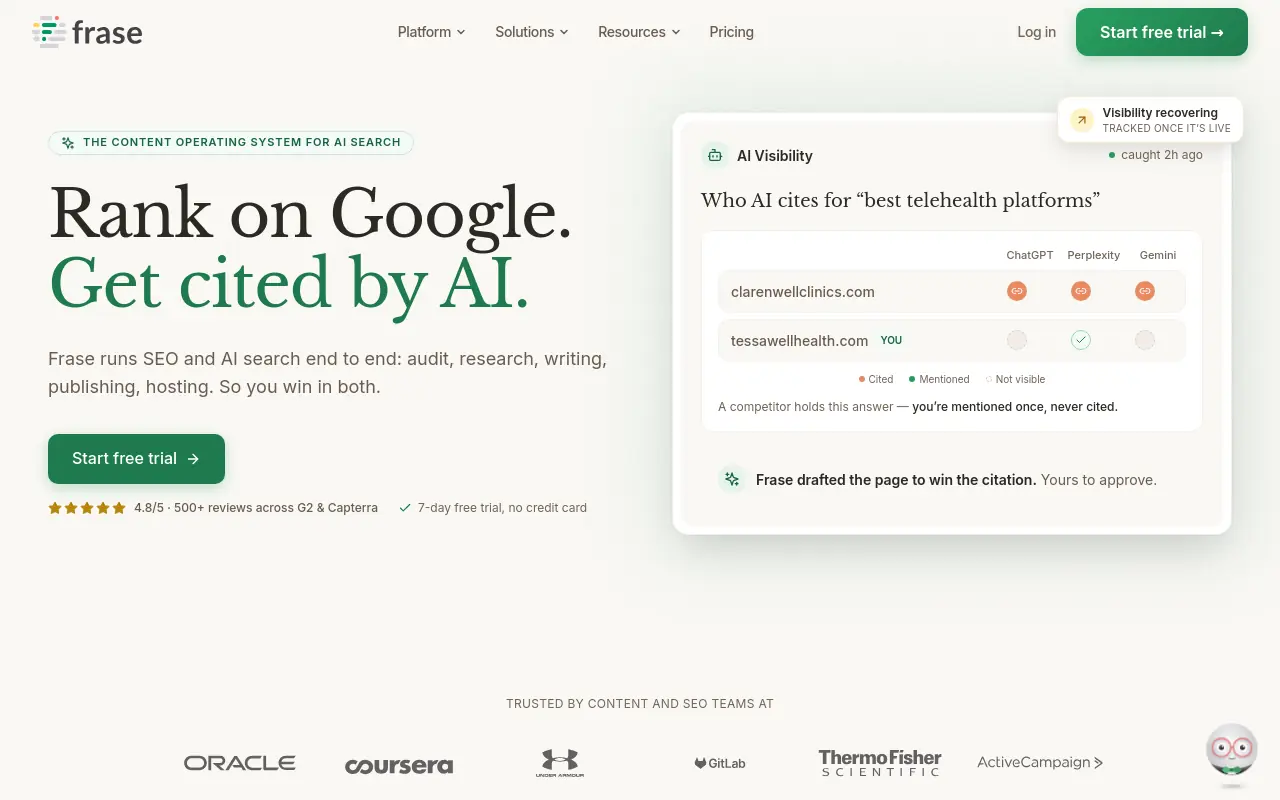 Frase monitors keyword opportunities, analyzes SERP composition, and generates content briefs intended to be production-ready, removing the manual research phase that typically precedes brief writing. Teams using Frase for brief generation report meaningful reductions in research time, though results vary with keyword complexity and content category. Users across content-heavy marketing teams consistently cite the research phase as the highest-friction step in the content calendar, and Frase’s brief generation is specifically designed to remove it.
For small marketing teams where the Head of Marketing is also the content strategist, Frase removes the research phase from the content calendar. The trade-off is that Frase produces briefs and outlines, not finished content. A human writer or a separate content agent still needs to take the brief to a published piece, which means Frase is most valuable as the first step in a coordinated content workflow rather than a standalone solution.
7. Ocoya - Best AI Agent for Social Media Content Scheduling and Caption Generation
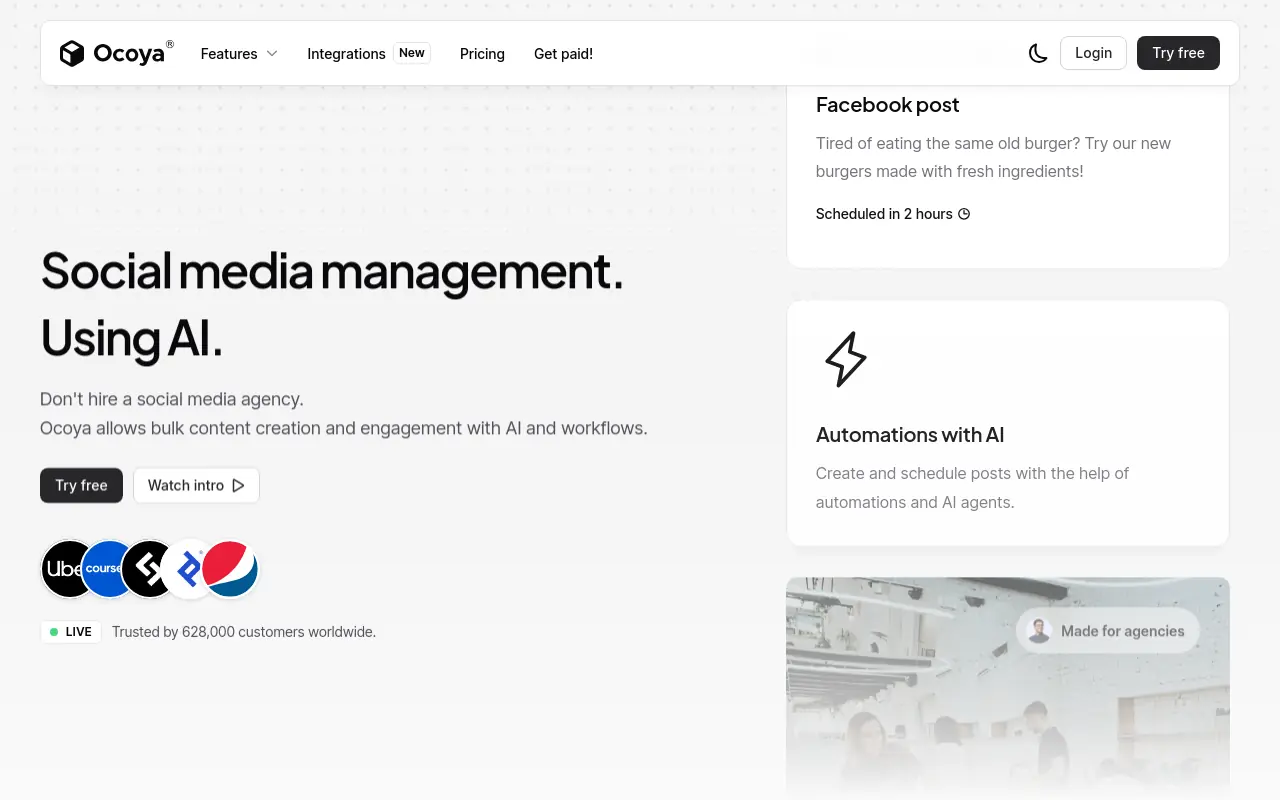 Ocoya combines AI caption generation with scheduling across major social platforms, which removes the weekly social production and distribution task from the marketing calendar in one step. For teams publishing across four or more channels, the consolidation alone saves meaningful time. The limitation is creative depth: Ocoya is optimized for speed and volume, not for brand-voice nuance or long-form social content. Teams with a highly differentiated brand voice will likely need a human review pass before posts go live, which reduces but does not eliminate the time saving.
8. Benchmark Email AI - Best for SMB Teams Automating Email Campaign Creation
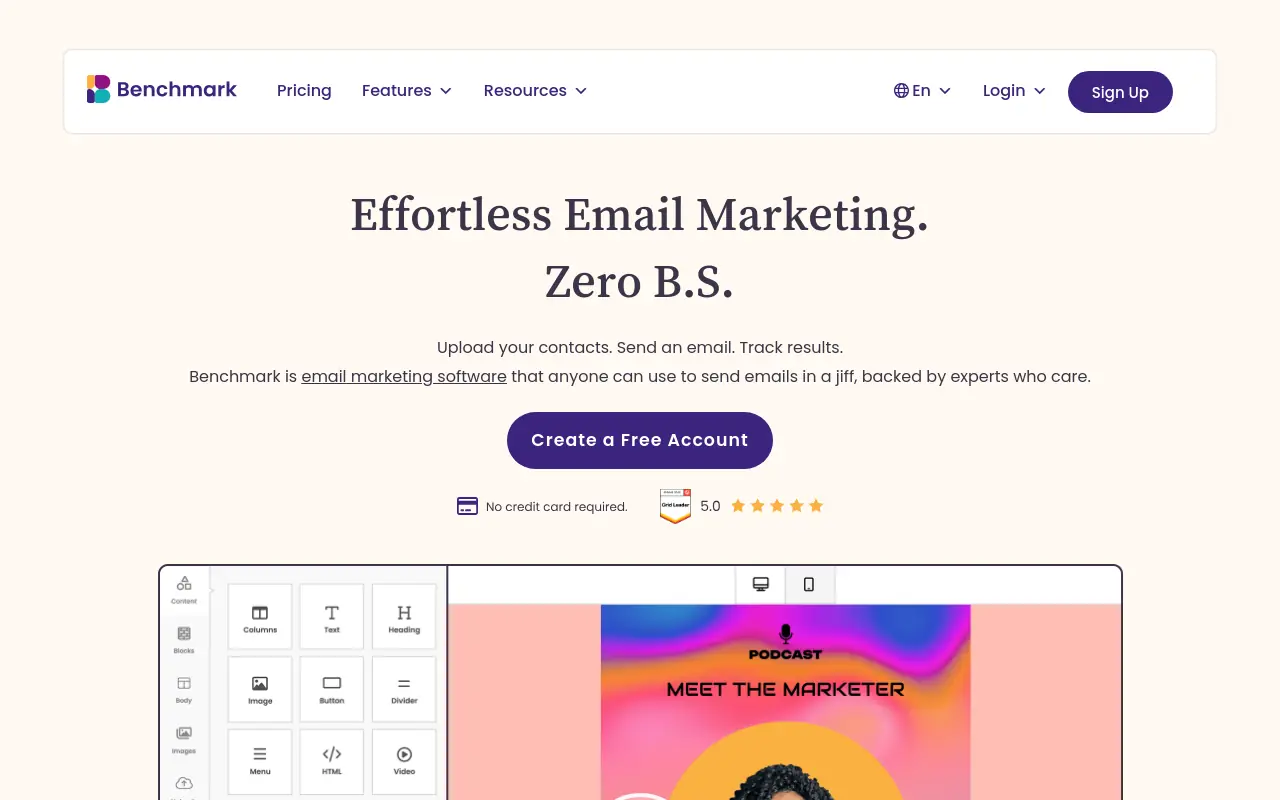 Benchmark Email’s AI layer handles subject line generation, email copy drafting, and send-time recommendations for small and mid-size teams that do not need the full complexity of a Salesforce or Marketo deployment. The platform is genuinely accessible to a non-technical marketer, which matters when the Head of Marketing is also the person building the campaigns. The honest ceiling: Benchmark Email AI is built for simplicity, and teams with complex segmentation logic or multi-touch lifecycle sequences will outgrow its native capabilities faster than they expect.
9. Brainz Digital AI SEO Agent - Best for Autonomous On-Page SEO Execution
Brainz Digital’s AI SEO agent goes beyond content suggestions to autonomously execute on-page optimizations, updating meta tags, internal linking structures, and content gaps based on live SERP data. It’s designed for marketing teams that want SEO work done, not just recommended. The right pick for growth-stage companies with large content libraries needing continuous optimization. The tradeoff: autonomous execution requires careful guardrails to prevent unintended changes to high-performing pages.
10. AKA Digital AI Paid Ads Agent - Best for B2B Marketers Running Autonomous Growth Campaigns
AKA Digital’s AI agent framework transforms paid advertising from manual campaign management into an autonomous growth system, continuously testing creatives, reallocating budgets, and optimizing audience targeting across channels. It’s purpose-built for B2B marketing teams in Southeast and Northeast Asia operating across complex multi-channel environments. The tradeoff: the agency-model delivery means less direct platform control for in-house teams who prefer hands-on access to their own ad accounts.
11. Jasper AI - Best AI Agent for Brand-Consistent Long-Form Marketing Content at Scale
Jasper is purpose-built for marketing teams that need to produce high volumes of on-brand content, blog posts, ad copy, landing pages, and email sequences, while maintaining consistent voice and tone. Its Brand Voice feature trains the AI on existing content, reducing the editing burden significantly. It’s the right pick for content-heavy teams scaling output without scaling headcount. The tradeoff: Jasper excels at content generation but doesn’t orchestrate multi-step marketing workflows or integrate deeply with CRM data.
12. Marketo Engage AI - Best for Demand Generation Teams Needing Predictive Lead Scoring
Adobe’s Marketo Engage uses AI to power predictive lead scoring, behavioral segmentation, and personalized nurture journeys at enterprise scale. It’s the right pick for B2B demand generation teams that need to align marketing automation tightly with sales pipeline data and account-based marketing strategies. The AI surfaces which leads are most likely to convert, enabling smarter prioritization. The tradeoff: Marketo’s complexity and cost require dedicated marketing operations resources to realize its full potential.
13. Supermemory AI - Best Memory Layer for Marketing Agents That Learn From Team Interactions
Supermemory provides a persistent memory layer for AI agents, enabling marketing tools to learn from human-in-the-loop feedback over time, improving content quality, audience targeting logic, and campaign recommendations with each interaction. It’s the right pick for teams building custom AI marketing agents who want their systems to compound knowledge rather than reset with every session. The tradeoff: it’s an infrastructure component, not a standalone marketing tool, requiring developer integration to deploy effectively.
Related Reading
- The Future of Agentic AI For Customer Support Explained
- 13 Best Agentic AI Platforms in 2026 for Autonomous Work
- How to Measure AI Agent ROI Before You Scale
- AI Agent vs Assistant: Key Differences Compared (2026)
- How To Measure AI Agent ROI With Proven Metrics
- The Ultimate AI Automation Tutorial for Beginners (2026)
- 14 Best Browser Use Agent Tools for AI Web Automation 2026
- 13 Best AI Agent Integrations to Automate More in 2026
- How to Set AI Agent Permissions Without Losing Control
- What Are Parallel AI Agents? A Complete 2026 Guide
AI Agent Platforms for Marketing Teams Compared - Features, Fit, and What Each One Costs You in Setup Time
Why Setup Architecture Predicts Operational Load, Not Features
The core insight most platform evaluations miss: a platform’s feature list is not a reliable predictor of whether it will reduce your team’s operational load, but setup architecture is. Platforms that require marketers to map workflow steps, maintain a visual canvas, or configure integrations between agents simply relocate the coordination burden rather than remove it; the marketer becomes a workflow engineer instead of a strategist.
“Business owners believe AI agent platforms eliminate the need for any field budget, leading to unrealistic expectations about zero-cost, fully automated field operations.”
Picking an AI agent platform feels like a features decision until the trial ends and someone has to wire the tools together. Two dimensions predict whether a platform actually reduces your team’s operational load: how fast it reaches first value and whether agents coordinate with each other or stop at one task. Everything else is secondary.
Dimension 2 - Whether Agents Coordinate With Each Other or Stop at One Task
That’s precisely why setup architecture matters more than feature depth. A platform that is multi-agent by default, one where teammates coordinate through complex, multi-step workflows without you losing track of who owns what at each stage, removes a fundamentally different category of work than a platform that automates a single task and stops. SkyDive is built from a description: you describe what you need, and the system instantiates coordinated teammates rather than requiring you to draw a canvas, map handoffs, or configure integrations manually. Because coordination is the default rather than a configuration project, the platform preserves what your team actually came to it for: time for writing and positioning work, and calendar time for strategic judgment work.
SkyDive’s built-in tools and capabilities, including memory and persistence, scheduled runs, per-teammate sandboxes with browser access, multi-channel access, granular permissions, team collaboration, pre-built teammate templates, and MCP (Model Context Protocol) support, are available without a separate configuration sprint for each. That means back-and-forth communication overhead drops from the start, so your team stays focused on high-impact work instead of status updates. Across the market, the gap between what automation promises and what teams can actually operate is a recurring failure mode, one that surfaces most acutely when the platform’s coordination logic lives in the marketer’s head rather than in the system itself.
What most teams report reinforces the same point: agent value compounds when agents hand work to each other reliably, not when a human is required to broker every handoff.
The table below maps six platforms on those two axes. Read it as a shortlist filter, not a feature checklist.
| Platform | Multi-Agent Coordination | Setup Complexity | Best Fit |
|---|---|---|---|
| SkyDive | Yes, by default | Low (description-driven) | 15–50 person funded startups |
| HubSpot AI Agents | Partial (within HubSpot ecosystem) | Low (hours to first automation) | Teams already on HubSpot Professional/Enterprise |
| Salesforce Agentforce | Yes (within Salesforce stack) | High (6–12 weeks enterprise implementation) | Enterprise marketing ops with complex CRM workflows |
| Domo Paid Media Optimization Agent | No (single-function) | Medium | Performance marketing teams with cross-channel data |
| Jasper AI | No (copy-first, single agent) | Low | Content teams needing brand-safe output at scale |
| Marketo Engage with AI | Partial (within Marketo ecosystem) | High (8–16 weeks onboarding) | Demand gen teams running multi-touch B2B pipelines with large lead volumes and existing Marketo infrastructure |
1. SkyDive - Best All-in-One AI Agent Platform for Marketing Teams
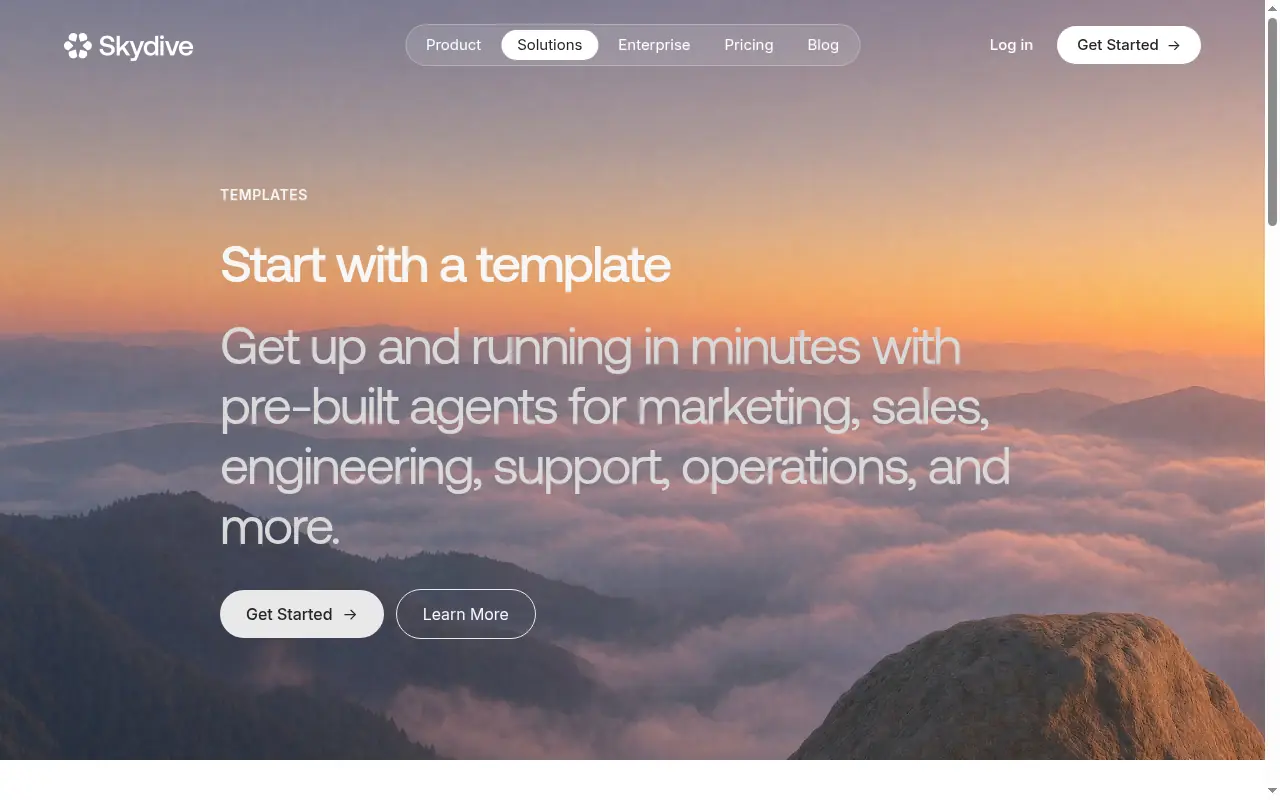 SkyDive is the top pick for marketing teams that need a single platform to orchestrate lead scoring, content generation, email sequencing, and campaign reporting without stitching together five separate tools. It shines for mid-market teams with a dedicated marketing ops resource. The real tradeoff: its breadth means no single capability is best-in-class, so specialist teams may outgrow it.
2. HubSpot AI Agents - Best for Teams Already Living in the HubSpot Ecosystem
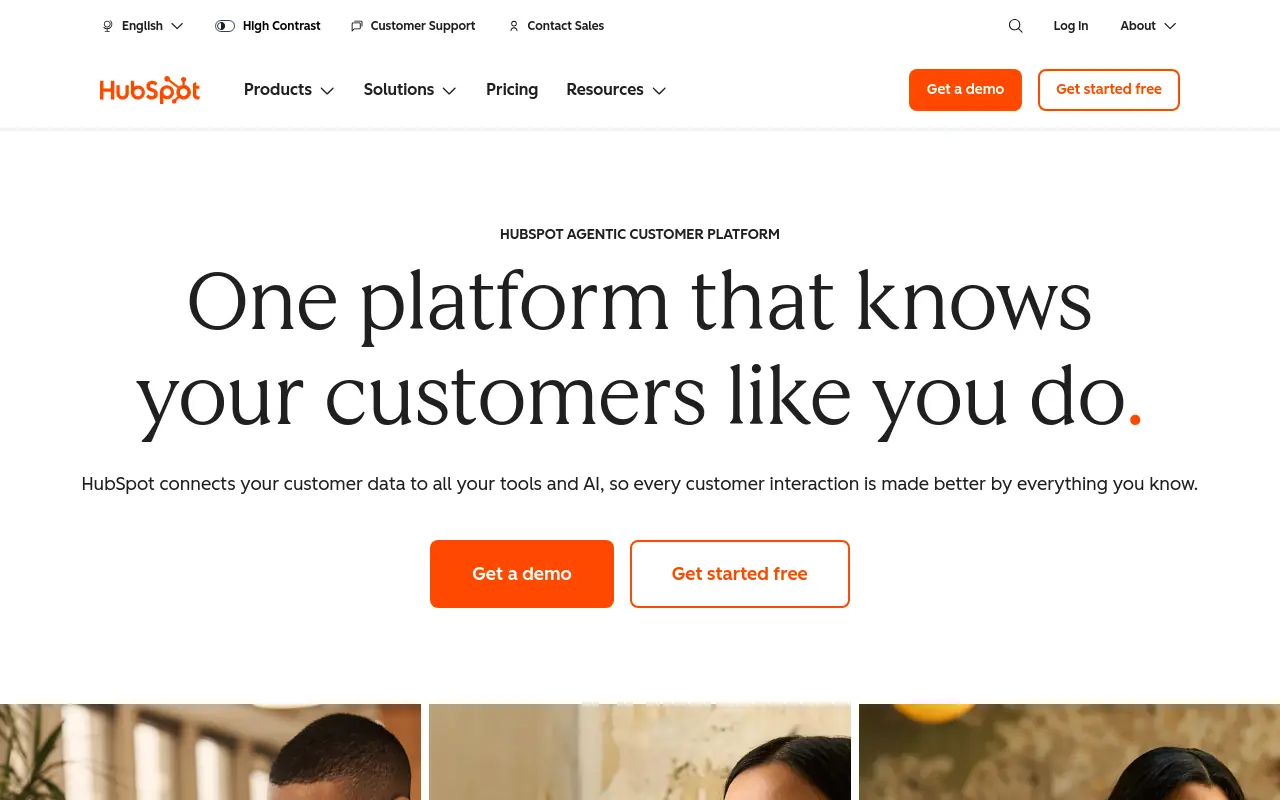 HubSpot’s native AI agents are the lowest-friction entry point for marketing teams already using HubSpot CRM and Marketing Hub. Agents handle contact enrichment, email personalization, and campaign suggestions without any API configuration. Setup time is measured in hours, not weeks. The limitation is hard: if your stack lives outside HubSpot, the agents lose most of their contextual power and the value proposition collapses fast.
3. Salesforce Agentforce - Best for Enterprise Marketing Ops Teams with Complex CRM Workflows
Agentforce is purpose-built for enterprise marketing teams running sophisticated Salesforce Data Cloud pipelines. It autonomously qualifies leads, triggers nurture sequences, and surfaces next-best-action recommendations inside Sales Cloud. The fit is strongest when a certified Salesforce admin is already on staff. The cost and configuration overhead is the honest tradeoff, expect a 6-to-12-week implementation before agents run reliably.
4. Domo Paid Media Optimization Agent - Best for Performance Marketing Teams Drowning in Cross-Channel Data
Domo’s Paid Media Optimization AI Agent continuously analyzes spend and performance signals across Google, Meta, LinkedIn, and programmatic channels, then surfaces prioritized optimization recommendations without requiring a data analyst to pull the report. It delivered 298 MQLs at 20% lower cost per lead in documented deployments. The tradeoff is that Domo’s broader platform licensing cost makes it a poor fit for teams under 50 employees.
5. Jasper AI - Best for Content Marketing Teams Needing Brand-Safe Generative Output at Scale
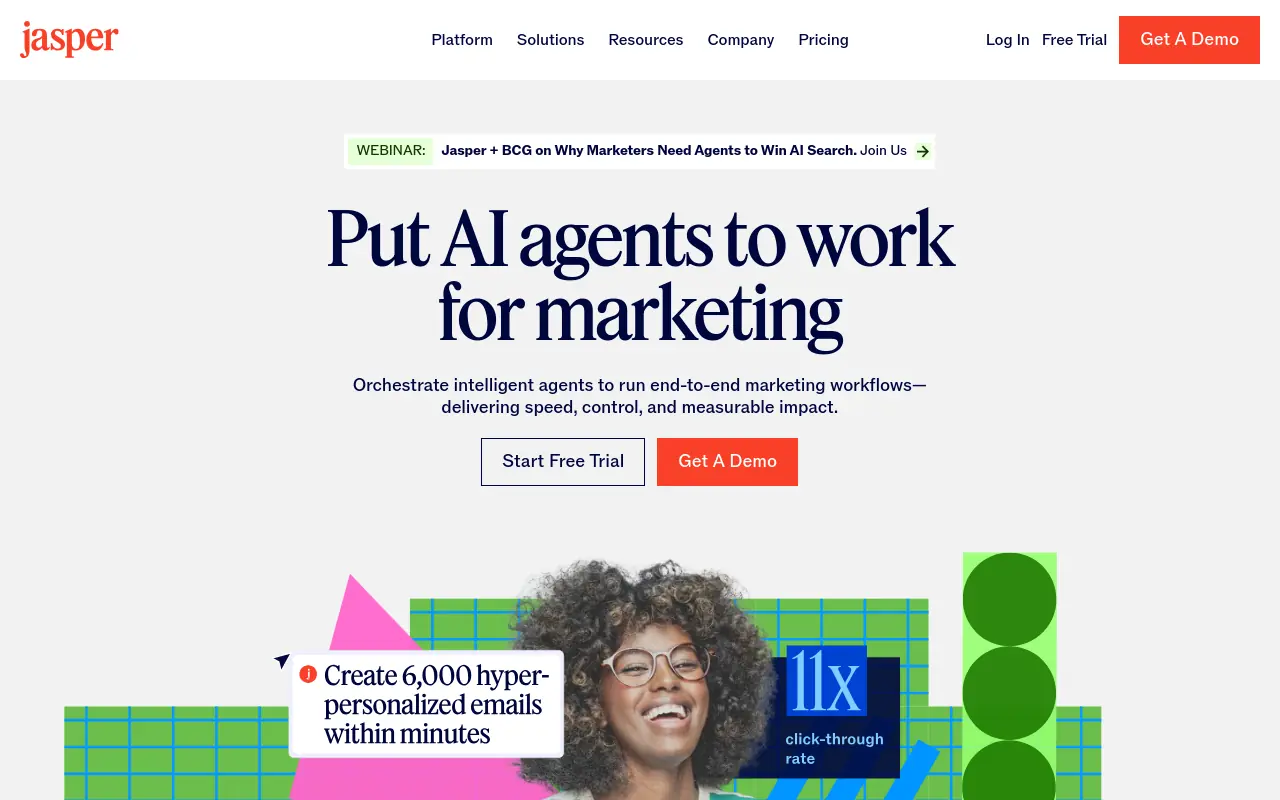 Jasper’s AI agents are calibrated for content marketing teams that need to produce high volumes of on-brand blog posts, ad copy, and email sequences without brand drift. Its Brand Voice feature trains the agent on existing content, reducing editorial review cycles significantly. It is the right pick when content volume is the bottleneck. The limitation: Jasper does not natively distribute or measure content performance, so it requires integration with a separate analytics layer.
6. Marketo Engage with AI - Best for Demand Generation Teams Running Multi-Touch Attribution Programs
Adobe’s Marketo Engage layers AI agents onto its mature demand generation engine, making it the strongest choice for B2B marketing teams that need predictive lead scoring, multi-touch attribution modeling, and intelligent nurture branching in one platform. It is purpose-fit for teams with a dedicated Marketo admin and a CRM already synced. The honest tradeoff is setup complexity, new teams routinely underestimate the 8-to-16-week onboarding timeline.
7. Improvado AI Agent - Best for Enterprise Marketing Analytics Teams Consolidating Fragmented Reporting
Improvado’s AI agent layer sits on top of its marketing data warehouse, letting analytics teams query cross-channel performance in natural language instead of writing SQL. It is the right pick for enterprise teams with 10-plus ad platforms and a reporting bottleneck that consumes analyst hours weekly. The tradeoff is that Improvado is an analytics and data layer, not a campaign execution platform, it informs decisions but does not act on them autonomously.
8. Relevance AI - Best for No-Code Marketing Teams Building Custom Agent Workflows Without Engineering Support
Relevance AI gives non-technical marketing teams a visual builder to chain AI tasks, research, outreach drafting, lead enrichment, and content repurposing, into repeatable agent workflows without writing a single line of code. It is the right fit for agile teams that need custom automation but lack engineering bandwidth. The tradeoff: highly custom workflows can become brittle when upstream data sources change, requiring regular maintenance by whoever built them.
9. Persado - Best for CRO-Focused Marketing Teams Optimizing Emotional Language in Campaigns
Persado’s AI agents specialize in generating and testing emotionally resonant language for email subject lines, ad headlines, and landing page copy, using a proprietary emotional language model trained on billions of marketing interactions. It is the right pick for conversion-rate-obsessed teams running high-volume email or paid campaigns where copy variation directly impacts revenue. The tradeoff: Persado is a premium, enterprise-priced point solution, it does not replace a broader marketing automation platform.
10. Zapier AI Agents - Best for SMB Marketing Teams Automating Repetitive Cross-App Tasks Without a Budget
Zapier’s AI agent layer extends its automation platform to let small marketing teams build agents that monitor inboxes, update CRM records, post social content, and route leads, all triggered by natural-language instructions. Setup time is genuinely fast: most agents are live within a day. The honest limitation is that Zapier agents are reactive task-runners, not strategic reasoners, they execute defined triggers well but cannot adapt to ambiguous marketing scenarios without human-defined rules.
11. Writer AI - Best for Brand and Content Teams Enforcing Governance Across AI-Generated Marketing Assets
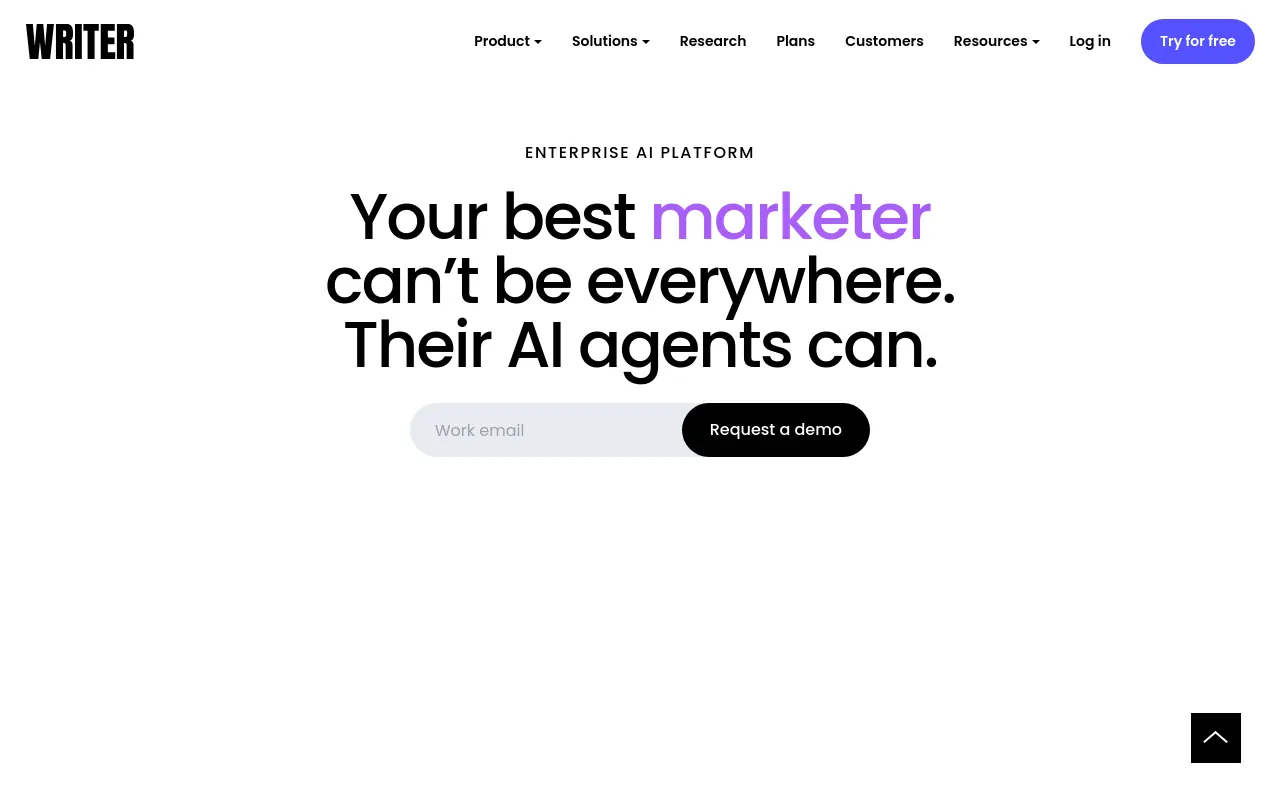 Writer’s enterprise AI platform combines generative agents with a Knowledge Graph trained on a company’s own documents, style guides, and compliance rules, making it the strongest pick for marketing teams in regulated industries or large enterprises where brand governance is non-negotiable. It catches off-brand or non-compliant language before content ships. The tradeoff: Writer’s governance-first architecture adds friction for teams that prioritize speed over consistency.
12. AI Growth Agent - Best for SEO and Content Teams Targeting AI Search Citation Visibility
AI Growth Agent is purpose-built for marketing teams whose primary goal is earning citations in AI-generated search answers from ChatGPT, Perplexity, and Google AI Mode rather than traditional ranked links. It maps content gaps, produces optimized articles, and tracks citation frequency across AI surfaces, a workflow no traditional SEO tool covers. The tradeoff: it is a specialized execution platform, not a general-purpose marketing agent, so teams still need separate tools for paid and email.
13. Zendesk AI Agents - Best for Marketing Teams That Own Post-Sale Customer Engagement and Retention Campaigns
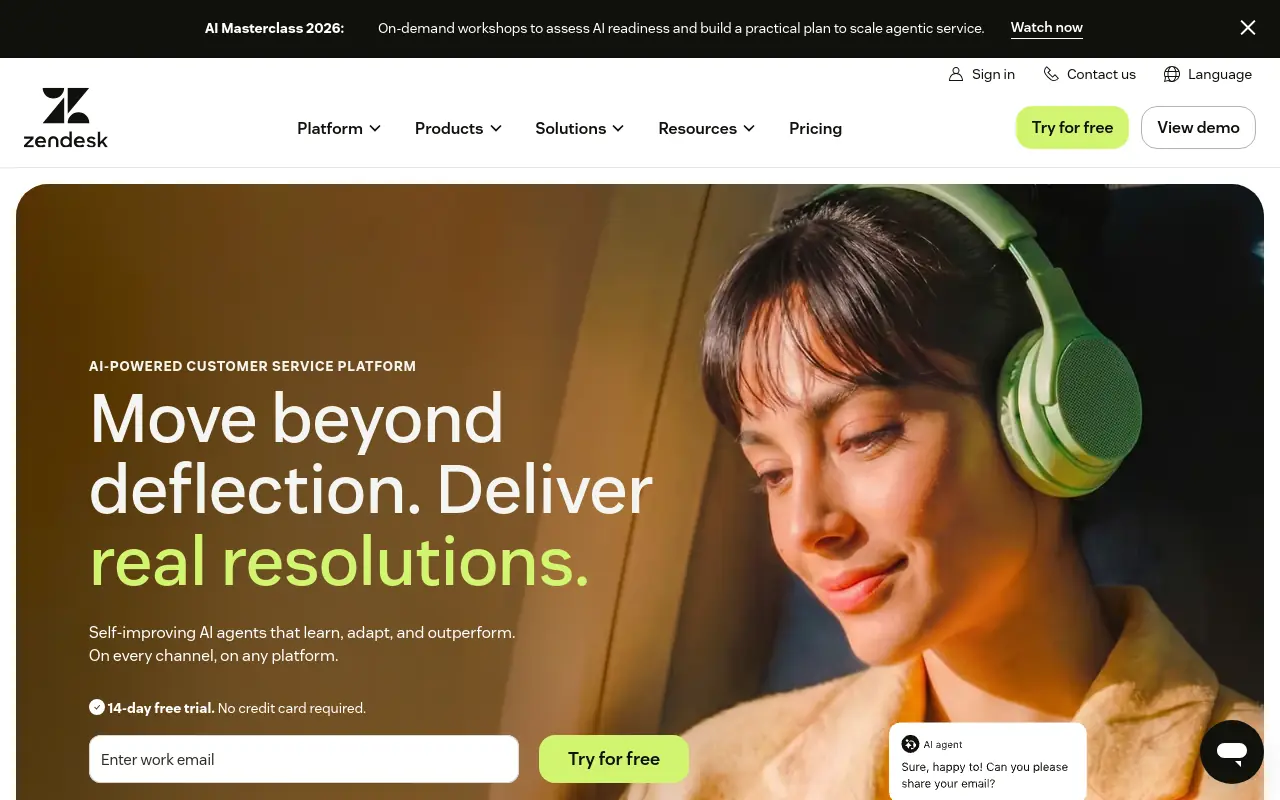 Zendesk’s AI agent builder is the right pick for marketing teams responsible for lifecycle and retention campaigns that intersect with customer support touchpoints, onboarding sequences, churn-risk outreach, and upsell triggers informed by support ticket signals. It connects marketing intent to real customer behavior data from the support layer. The tradeoff: Zendesk AI agents are not designed for top-of-funnel acquisition campaigns, so demand generation teams will find the toolset limited.
How to Choose the Right AI Marketing Agent for Your Team - Without Burning Two Weeks on a Trial
Most shortlists collapse fast once you apply the right pressure. The real cost of AI agent evaluation isn’t the two-week trial; it’s discovering at the end of week two that the tool you just configured still needs a human to carry every handoff across the finish line.
The bottom line is this: a trial period without defined review ownership, a clear completion standard, and a minimum multi-task handoff test is not evaluation, it is a structured path to abandonment. Teams that skip those conditions will reliably confirm their skepticism, discard the tool, and repeat the cycle with the next one.

The Three-Question Filter That Cuts Your Shortlist Before the First Demo
Most teams approach AI marketing tool selection the way they buy enterprise software: schedule demos, run parallel trials, stress-test integrations. With AI agents, the failure mode is subtler. Across B2B SaaS marketing teams, AI tool adoption is routinely slowed by integration complexity and the need for technical setup, effectively making marketers act as workflow engineers rather than strategists. The tools didn’t fail the trial. They passed it. Then they failed the job.
Three questions expose that gap before a single demo is booked.
Question 1: Does It Finish the Work or Hand You a Suggestion?
Most tools marketed as AI agents produce an output that is one step short of done: a draft that needs reformatting, a brief that needs filing, a report that needs someone to act on it. That final step, repeated across every task, is where the time savings evaporate. The honest evaluation criterion is simple: does the agent deliver a finished, usable artifact, or does it hand you a suggestion and wait? If the demo shows a result you still have to process, that tool is an assistant, not an agent.
Question 2: Does It Coordinate With Other Agents or Stop at One Task?
Three-Question Pre-Demo Filter, AI Agent Shortlisting Checklist
| Question | What a Pass Looks Like | What a Fail Looks Like | |
|---|---|---|---|
| 1 | Does it finish the work or hand you a suggestion? | Agent delivers a published, filed, or sent artifact with no human reformatting step | Output requires copy-paste, reformatting, or a manual trigger before it is usable |
| 2 | Does it coordinate with other agents or stop at one task? | Agent passes context and output to the next agent in the workflow automatically | Agent completes its task and waits for a human to carry the result forward |
| 3 | Who on your team owns ongoing maintenance, and does that role exist today? | A named person with available bandwidth can own configuration and review | No one can own it without pulling time from a role that already exists at capacity |
If a platform fails Question 1 or 2, remove it from the shortlist before booking a demo. If it fails Question 3, the platform’s feature depth is irrelevant until the ownership gap is resolved.
How Marketing Teams Work With AI Agents - The Role Shift That Makes the Bench Actually Run
Most marketing teams are already operating under the conditions AI was supposed to solve for: broader scope, leaner headcount, and a coordination burden that lands on the human in the middle. The question is which infrastructure can carry the load. This section breaks down what that shift looks like in practice, where the supervision model quietly breaks down, and how teams move from manually bridging every tool to directing agents that run the work end to end.

The Supervision Trap - Why the Marketer Is Still in Every Gap
The supervision model feels productive right up until you map your actual week. Brief written, pasted into the AI, output reviewed, reformatted, dropped into the next tool, triggered manually. Each step is faster than it used to be. The marketer is still in every gap.
Here is the synthesis that the vendor roadmaps obscure: the human role shift that AI promises as a future reward, from executor to strategic director, is already being forced on marketing leaders by budget pressure and expanding scope, whether or not their AI infrastructure is ready to support it. According to the CMO Survey (34th edition, April 2025), the Head of Marketing is already functioning as a de facto integration layer across the organization, absorbing broader organizational responsibility while simultaneously doing the coordination work that AI has not yet taken over. The role shift is not something teams choose to manage when the technology matures. It is already underway.
From Operator to Orchestrator - How Marketing Teams Direct AI Agents Without Supervising Every Step
Human marketing teams work most effectively with AI agents by shifting from operator to orchestrator: define the scope of each agent once, then review finished outputs rather than supervising every intermediate step. The failure mode is familiar. A marketer uses one AI for copy, another for scheduling, another for analytics, and manually bridges every output between them. The AI made each step faster. The marketer is still the integration layer by default.
The Seam Problem - Why Handoffs Are Where Work Actually Lives
*Key takeaway: The real productivity loss in agentic marketing workflows sits in the gaps between tasks, where a person has to stop, re-orient, and manually carry an output from one function to the next.*
Context switching between brief writing, content production, analytics review, and campaign ops is where compounded time loss lives. The cost is not in how long any individual task takes; it is in how often a person has to stop, re-orient, and manually carry an output from one function to the next. When agents hand off to each other by default, that switching cost disappears from the marketer’s calendar entirely.
Related Reading
- What Is Agentic AI for Business Operations and Why It Matters
- 18 Best AI Agent Platform Comparison Tools for 2026
- How Much Does an AI Agent Cost? 2026 Pricing Breakdown
- Zapier AI Agent: Build and Automate Smarter Workflows
- AI Agent Framework Comparison: Top Picks Ranked for 2026
- 15 Best Agentic Automation Tools to Try in 2026
- Gumloop vs Zapier: Which Tool Wins for AI Automation?
- 13 Top AI Automation Tools I Tested and Ranked for 2026
- 13 Best AI Automation Software Tools I Tested in 2026
- RPA vs AI Agents: Which Automation Wins in 2026?
- 12 Best AI Automation for Sales Tools That Actually Work
Next steps
If your team is still absorbing every handoff between tools manually, the path forward starts with treating coordination architecture as the selection criterion, not feature depth.
The agent type that executes a task is almost never the bottleneck; the invisible gap is the handoff between agents. That means evaluating tools by what they generate in isolation will reliably produce underwhelming trials. Setup architecture predicts operational load better than any feature list, because platforms that require marketers to map workflow steps simply relocate the coordination burden rather than remove it. Together, these two points make the next step obvious: stop shortlisting single-function agents and find a bench where handoffs are structural by default.
Start with AI teammates to see what a multi-teammate bench looks like when coordination is built into the architecture rather than delegated to your calendar.
Frequently Asked Questions
What’s the difference between an AI agent and the AI tools my marketing team is already using?
The structural difference is that AI agents act, they reason through a goal and execute multi-step tasks without a human intervening at each stage, while most AI tools marketed to marketing teams function as productivity aids that generate drafts or surface insights and then stop. With AI-assisted tools, the output lands in your inbox, you judge it, decide what to do with it, and carry it to the next tool yourself. The AI helped; you finished.
Can an AI agent actually handle lead scoring and qualification on its own, or does someone still have to review every lead?
A real lead scoring agent automatically scores, segments, and hands off leads to the appropriate sales or nurture track without requiring human triage. The important caveat this guide flags is that firmographic data quality caps the agent’s accuracy ceiling regardless of how sophisticated the model is, so teams with fragmented contact records will see limited gains until the underlying data improves.
We already use email automation, why isn’t that the same as having an AI agent running our campaigns?
Traditional email automation fires messages when a contact hits a predefined threshold, but it doesn’t read the result, make a judgment call, and trigger the next step on its own, a human still has to bridge those handoffs. A true campaign agent adapts cadence, subject line, and body copy to where each contact actually is in their evaluation, and a lifecycle nurture agent can scan underperforming sequences and self-correct subject lines based on live open metrics, without someone opening a new tab to do it.
How do I stop AI agents from drifting away from our brand voice when they’re producing content at scale?
Brand voice drift is the one consistent tradeoff practitioners flag when brief-to-publish automation runs without a human review gate. The post’s practical guidance is to set up brand guardrails deliberately upfront, without that setup, an agent optimizes for volume over voice.
If I deploy several AI agents across my marketing stack, how do I make sure they actually pass work to each other instead of just creating more noise?
This guide is explicit that deploying more agents without designing how they pass context to one another compounds noise, not capacity, productivity gains are concentrated among teams that coordinate multiple AI agents across content, operations, and analytics, not those trialing a single tool in isolation. The key is choosing a platform where the handoff between agents is structural by default rather than something your team has to wire together manually, which is exactly the architecture SkyDive is built around.