Agentic AI vs Traditional AI: Which One Actually Works?
Agentic AI vs traditional AI shows founders what they keep missing. Stop being the operator and hand off the work for good.
 Skydive 25 min read
Table of contents
Your AI tool gave you a great output. You’re still doing the work. Here’s why that happens, and what agentic AI actually changes about who owns the job.
The common assumption is that using AI tools means AI is handling the work. If I got a good output, the job is basically done. Most founders using AI tools today are not failing at AI because of this belief. They are succeeding at the wrong thing. They get a sharp output, a well-structured draft, a competitive summary that would have taken hours to write manually, and they feel the momentum. Then the tab closes, and the work is still theirs. See our AI teammates for how this works in practice.
That gap between “output produced” and “outcome achieved” is where the real cost hides. The pattern is consistent: a founder opens a chat window, asks a sharp question, gets a sharp answer, then manually carries that answer into the next step. They paste findings into a deck.

They open a separate tool to schedule follow-ups. They re-prompt from scratch because the previous session is gone. According to the Proceedings of the 2025 ICEKIM Conference, the predominant AI usage pattern remains prompt-and-retrieve: workers generate an output, then independently determine and execute every subsequent action.
AI handles isolated moments. The operator handles everything else.
Stateless by design. That phrase, drawn from the same 2025 ICEKIM research, describes exactly what happens when a session closes: context, decisions, and task history disappear. The same ICEKIM research frames this precisely: AI augments knowledge workers by handling discrete task outputs, but the cognitive coordination burden, the sequencing, the judgment, the integration across steps, does not transfer. You are still the connective tissue. Every handoff between the AI’s output and the next step in the workflow is a manual act, and those acts compound across every task, every day.
Key takeaways
- Traditional AI produces outputs, it does not hold the thread. Every handoff, follow-up, and next step lands back on you.
- Getting a sharp AI output and finishing the work are two different events. Most founders are optimizing for the first one and calling it done.
- Six out of seven enterprise AI projects never reach production, and the bottleneck is almost never the model, it’s the broken handoff between systems.
- Agentic AI isn’t a more powerful chatbot. It’s a different architecture: one that persists across tools, carries context through decisions, and closes the loop without waiting to be re-prompted.
- The right question when choosing between the two isn’t ‘which AI is smarter?’, it’s ‘does this task require more than one tool or more than one decision?’ If yes, traditional AI will hand the work back to you every time.
- SkyDive closes that gap by running as an AI teammate inside Slack, email, iMessage, and web chat, handling real multi-step work inside the tools your team already uses, without a rebuild.
What Is Traditional AI and Why Does It Stop Where the Work Gets Hard?
Most people assume that if AI produced a useful output, AI did the work. That assumption is costing operators more than they realize, because traditional AI was architected to answer questions, not to finish jobs, and the gap between those two things is where the real work quietly lands back on the human. Understanding exactly where that boundary sits, and why it is structural rather than fixable, is what makes the difference between choosing a tool and choosing the right kind of system.

Traditional AI Defined - A System Built to Answer, Not to Act
The common assumption is that using AI tools means AI is handling the work. If I got a good output, the job is basically done. That belief is widespread, but it misreads what traditional AI actually is. Traditional AI is a reactive system.
Feed it an input, and it produces an output through a fixed pipeline. That is the entire contract. A recommendation engine surfaces the right product but cannot follow up when the customer ignores it.
A language model drafts your email but cannot send it, track the reply, or adjust the message three days later when the prospect goes cold. The system was designed to answer a question, not to finish a job, and those are categorically different things.
Stateless by Design - Why Traditional AI Forgets the Moment the Session Ends
Traditional AI is stateless. Once the session closes, context is gone. Every new conversation starts from zero. Anyone who has tried to run a multi-week project through a chat interface knows the specific exhaustion of re-explaining the situation from scratch, who the client is, what was decided last time, what still needs doing. Knowledge workers spend a meaningful portion of every AI-assisted session simply re-contextualizing before they can get anything useful out of the tool. The human becomes the memory layer the system was never designed to hold.
That is not a bug waiting to be patched. It is an architectural decision.
Why Traditional AI Hands the Hard Part Back to You
Research from METR frames AI capability not by output quality on a single prompt but by how far an agent can autonomously progress through a multi-step sequence without human intervention. By that measure, current AI systems are still far from handling extended, multi-step work on their own. The practical result: traditional AI handles the first, easiest portion of a task and hands the rest back. You write the prompt, you read the output, you decide what to do with it, you move it into the next tool, you remember where you left off. The AI answered. You are still working.
Why Generative AI Is Still a Form of Traditional AI
Generative AI is a genuine capability leap. It moved AI from rule-based retrieval to synthesizing novel language, images, and reasoning at scale. But that leap is still contained within the same fundamental architecture: reactive, stateless, single-turn. A generative model produces richer outputs than a recommendation engine, but it shares the same stopping point. It answers. It does not act. The pipeline ends at the response, and the work of deciding what to do with that response returns to the person who asked.
What Is Agentic AI and What Makes It Actually Finish the Job?
Think of the last time you got exactly what you asked for from an AI tool, then spent the next twenty minutes figuring out what to do with it. That experience has a name: the accountability gap. And it sits at the center of why agentic AI is a genuinely different category, not a marketing rebrand of the tools already in your stack.
The distinction worth naming directly: a “good AI output” is not a finished unit of work, it is the starting gun for a second, invisible job. Because today’s generative AI is stateless and session-bound, the cognitive labor of sequencing, verifying, and handing off that output never transfers to the tool; it transfers back to the human. Most founders are therefore running two parallel workflows: the one the AI touches, and the connective tissue work only they can see.

Agentic AI Defined: a System That Owns a Goal, Not Just a Prompt
Agentic AI refers to systems that pursue a goal across multiple steps, tools, and decisions with minimal human supervision once that goal is set. According to the MarketsandMarkets Agentic AI Market Report (2026), agentic AI “plans, executes, monitors, and adapts across time rather than responding to a single prompt.” That distinction matters more than it sounds. A system that responds is reactive. A system that plans and adapts is, in a meaningful sense, responsible.
The Fortune Business Insights Agentic AI Market Report projects the category will grow from $7.29 billion to $139.19 billion by 2034. That growth signals something real: the industry is not treating agentic AI as a smarter chatbot. It is treating it as a separate infrastructure category, one where the investment thesis is not incremental improvement on existing tools, but a structural shift in how operational work gets done.
Four Characteristics That Make Agentic AI Finish Things
Four properties separate agentic systems from single-turn generative models. Autonomy means the system acts without needing a human to approve each move. Stateful memory means context persists across sessions, so the agent remembers what happened yesterday without being re-briefed. Tool use means the agent calls external systems, APIs, databases, and browsers rather than working from a closed context window alone. Self-correction means feedback loops catch failures mid-task and reroute before the final output lands.
Remove any one of these and the system stops finishing work. It starts producing outputs that require a human to carry them forward.
Agentic AI vs. Generative AI: the Output Is a Finished Job, Not a Finished Sentence
Generative AI produces content: a sentence, a summary, a draft. Agentic AI produces outcomes. The distinction is not semantic: one delivers a thing for you to act on; the other acts until the thing is done. For founders whose bottleneck is not ideas but execution, that difference determines whether AI changes how the business runs or simply changes how notes get written.
Agentic AI vs Traditional AI - The Key Differences, Side by Side
That gap shows up most painfully in production failure rates. Six out of every seven enterprise AI projects never make it to production, according to industry research, and the most common reason is a broken handoff. The difference between traditional AI and agentic AI is about who owns the work between outputs, and that distinction determines whether AI changes how a business runs.
“Free LLM tiers are often too rate-limited or weak for real agentic workloads (tool calling, multi-step tasks, scheduled crons), making them unreliable compared to traditional one-off chatbot use cases.”

Operation - Single Output vs. Goal-Directed Orchestration
Traditional AI answers a question. Agentic AI pursues a goal. When you prompt a traditional system, it maps your input to an output and stops. Agentic AI breaks the goal into steps, coordinates tools, monitors results, and loops back when something is off, as documented by Synergy’s analysis of why generative AI projects fail. The output is a completed workflow, not a completed sentence.
One of the first friction points beginners run into is infrastructure: free LLM tiers are routinely too rate-limited or underpowered for real agentic workloads, tool calling, multi-step tasks, scheduled runs, making them unreliable in ways that a simple one-off chatbot never exposed. SkyDive is built from the ground up to handle exactly that load, with built-in tools and capabilities, MCP (Model Context Protocol) support, and scheduled runs that execute without you standing by to trigger them.
Autonomy - Prompted at Every Step vs. Supervised Once
Traditional AI requires a human prompt at every meaningful step. You are the engine between actions. Agentic AI operates with high autonomy, acting independently with adaptive strategies once a goal is set, as described in Synergy’s breakdown of the architectural shifts that separate failing projects from production systems. The human supervises the outcome, not the process. That shift alone recovers hours per task.
SkyDive operationalizes this through multi-teammate coordination by default. Each teammate can run code and commands, read and write files, browse the web, search the web, host web apps, and process media, and the agent can give itself new tools as needed, so work spanning multiple tools happens without you becoming the engineer who wires it together. You set the goal; the team moves.
Workflow Structure - Linear Pipeline vs. Dynamic Loop with an Orchestration Layer
Traditional AI runs a fixed, linear pipeline: data in, prediction out. The orchestration layer in agentic systems is what makes the difference. It sets goals, breaks work into steps, coordinates multiple agents and tools, and decides which model or tool to call at each stage, as detailed by Synergy in their comparison of agentic and traditional AI architectures. Without that layer, the human fills the role by default.
SkyDive’s orchestration is concrete: coordinate your team through complex, multi-step workflows without losing track of who owns what at each stage. Granular permissions and team collaboration controls mean the right teammate has access to the right context, and multi-channel access keeps the work visible wherever your team operates. Productive on day one, with templates for inbox triage, lead enrichment, CRM hygiene, deck updates, content drafting, research, and support triage. The library expands as customers build and share.
Memory and State - Stateless Session vs. Persistent Context Across Time
Traditional AI resets to zero after every session. Agentic AI maintains both short- and long-term memory that persists across sessions, a capability gap that Synergy identifies as one of the structural reasons most generative AI projects stall before they scale. That persistence allows an agent to pick up a multi-week project where it left off, reference decisions made in prior sessions, and act on standing instructions without being re-briefed, and the longer and more complex the work becomes, the wider that gap grows.
In practice, this is where SkyDive’s memory and persistence layer earns its place. Instead of spending cycles re-explaining context or chasing status updates, your team stays focused on high-impact work, because the system already knows what was decided, what’s pending, and what comes next.
Related Reading
- How to Measure AI Agent ROI Before You Scale
- 13 Best Agentic AI Platforms in 2026 for Autonomous Work
- The Future of Agentic AI For Customer Support Explained
- 13 Best AI Agent Integrations to Automate More in 2026
- How To Measure AI Agent ROI With Proven Metrics
- 14 Best Browser Use Agent Tools for AI Web Automation 2026
- The Ultimate AI Automation Tutorial for Beginners (2026)
- AI Agent vs Assistant: Key Differences Compared (2026)
- What Are Parallel AI Agents? A Complete 2026 Guide
- 13 Best AI Agents for Marketing Teams in 2026
- How to Set AI Agent Permissions Without Losing Control
Same Task, Two Outcomes - What Agentic AI vs Traditional AI Looks Like in Practice
Choosing between agentic AI and traditional AI rarely comes down to output quality. It comes down to how much work you are still holding after the output arrives. Walking the same task through both approaches makes that gap concrete.

The Task - Produce a Competitive Intelligence Report on Your Top Five Rivals
Pick any task a founder runs on repeat, and the gap between traditional AI and agentic AI becomes impossible to ignore. Competitive intelligence is a good place to start, because it touches research, synthesis, formatting, and distribution, exactly the kind of multi-step work where the two paradigms produce very different amounts of remaining work.
Agentic AI and traditional AI, given the same goal, often return similar-quality prose. The divergence lives in everything that had to happen before the sentence arrived, and everything you still have to do after.
The Traditional AI Path - You Are the Project Manager
You open a chat window and ask for a competitor analysis. You get a solid summary, maybe a table. Then the actual work begins. You paste that output into a doc, switch to a browser to verify the pricing figures, notice one competitor launched a new feature last week that the model missed, re-prompt with the correction, copy the updated section, open your slide deck, reformat the table to match your template, and schedule time to share it with your co-founder.
According to Stealth Agents’ 2026 research on startup admin burden, founders spend an average of 16 hours per week on administrative tasks of exactly this shape: gathering inputs, synthesizing them, formatting outputs, scheduling follow-ups. The AI answered the question. You managed the project.
16 hours per week Founders spend on administrative tasks
That project management cost compounds. Productivity research consistently shows that unplanned context switches carry a significant recovery cost before full focus returns. Across six manual handoff steps, the raw task duration understates the real time bill by a wide margin.
The Agentic AI Path - You Are the Reviewer, Not the Driver
The agentic path starts the same way: you describe the goal. What happens next is structurally different. The agent browses the competitors’ sites, pulls recent pricing pages, checks for product announcements, synthesizes findings across sources, formats the output to the template you specified, and delivers a finished document.
When it hits a page that requires a login, it flags the gap rather than silently skipping it. This workflow pattern, browse, synthesize, format, deliver, flag exceptions, is consistent with how agentic orchestration layers are documented to operate, according to industry research on agentic AI foundations and comparative analyses of agentic systems. You receive a draft to review, not a starting block to build from.
This is the ownership shift that matters. Traditional AI hands you a result and stops. Agentic AI loops back when results are off, calls the next tool in sequence, and drives toward a completed outcome.
The Same Pattern Repeats
Competitive intelligence is one example, but the pattern holds across the recurring operational work most founders run every week: outreach sequences, vendor follow-ups, onboarding checklists, weekly reporting.
In every case, traditional AI produces a finished moment inside an unfinished job. Agentic AI inherits the goal rather than the prompt and drives it to a completed state, with the founder reviewing the outcome rather than managing each step that produced it.
The Capability Gap Is Not About Intelligence - It Is About Ownership
Both paradigms draw on similar underlying models. The prose quality, the reasoning depth, the accuracy of a well-prompted response: these are not where the divergence lives. The divergence lives in who owns the sequence. Traditional AI is a skilled collaborator that waits for your next instruction. Agentic AI is a system that holds the goal, decides what the next instruction should be, executes it, and only surfaces to you when a decision requires human judgment or an outcome is ready for review.
That distinction has a compounding effect on founder time. When you own the sequence, every step is a context switch you absorb. When the agent owns the sequence, you absorb one: the review. For a task like competitive intelligence, that difference might be six interruptions versus one. Across a full week of recurring operational work, the arithmetic shifts meaningfully in favor of the agentic model, because the accountability for progress has moved.
What This Means for How You Should Choose Between Them
The practical question is which paradigm fits the shape of the task in front of you. For a one-off question, a quick synthesis, or a creative prompt where you want to stay in the loop on every iteration, traditional AI is the faster path. The overhead of configuring an agent for a task you will run once does not pay back its setup cost.
For recurring, multi-step work where the output needs to be formatted, verified, and delivered to someone else, the calculus inverts. The setup cost of an agentic workflow is a one-time expense. Every subsequent run returns time that would otherwise be spent on project management rather than judgment. The founders who get the most leverage from agentic AI are the ones who identify the ten or fifteen tasks they repeat every week, hand those sequences to an agent, and redirect their attention to the decisions only they can make.
When to Use Agentic AI vs Traditional AI and What Breaks If You Pick Wrong
Not every AI decision is a question of power. The real question is fit: does the task you’re handing off match the architecture of the tool you’re handing it to? Get that wrong, and the tool doesn’t fail loudly. It hands the unfinished work back to you, quietly, each time.
Where Traditional AI Still Wins and Should Stay
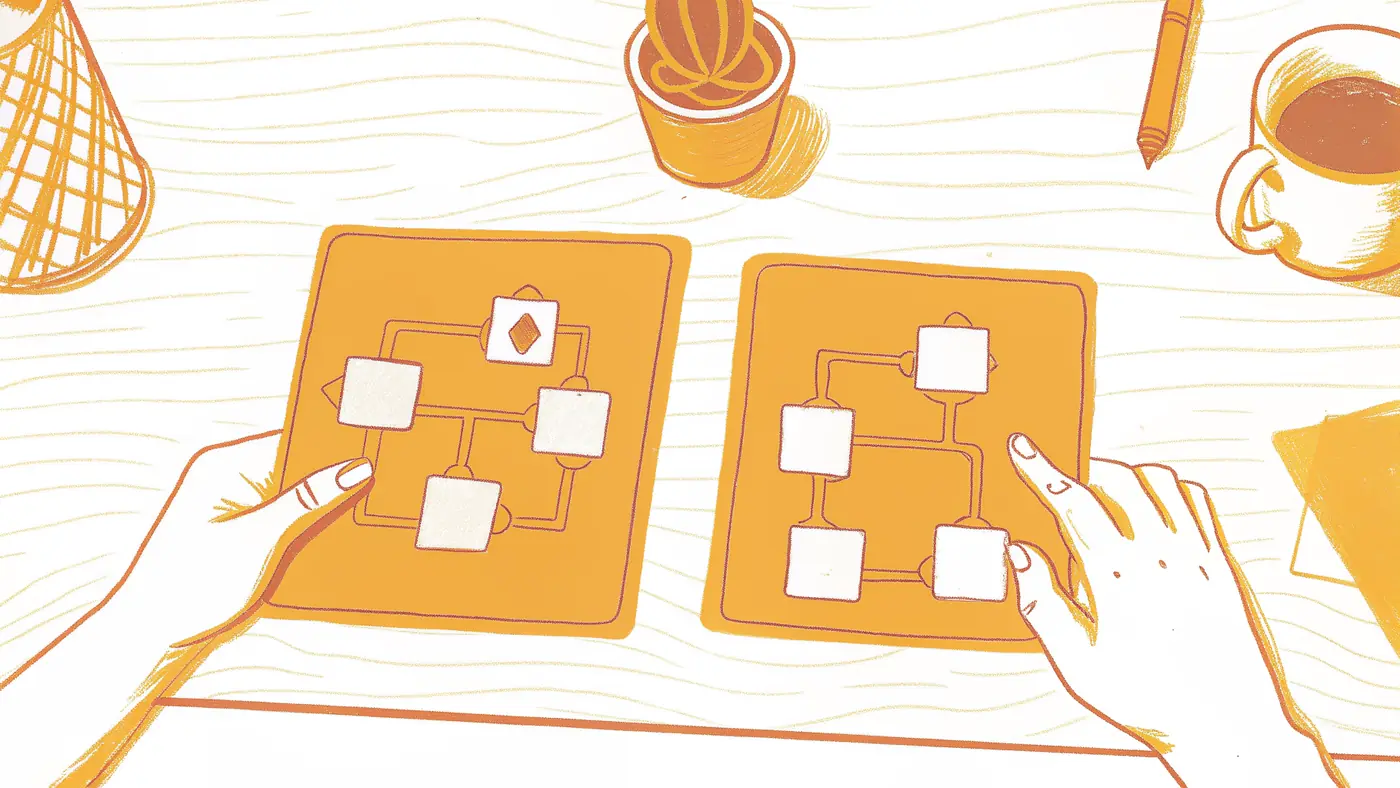
Some tasks are genuinely isolated. A fraud-detection model that scores a transaction is perfect traditional AI territory: one input, one output, no handoffs required. Sentiment analysis on a customer review, a grammar check, a product description draft, these are single-moment jobs. The tool fires, delivers, and you move on. Traditional AI is fast and cheap for exactly this shape of work, and deploying anything heavier on it is waste.
Where Agentic AI Is the Only Paradigm That Finishes the Job
The moment a task crosses systems, decisions, or time, the math changes. A job that spans multiple steps with handoffs between each is several jobs, and traditional AI handles step one and stops. According to the Asana Anatomy of Work Index (2023), workers already spend 60% of their time on coordination and communication rather than skilled work, and that overhead compounds the moment your tooling resets between sessions. A tool that only handles isolated moments adds to that burden.
60% Of work time lost to coordination
SkyDive is built from the ground up for the jobs that don’t stop after one output. Because it’s multi-teammate by default, you can coordinate your team through complex, multi-step workflows without losing track of who owns what at each stage. Granular permissions make clear who holds which handoff. Scheduled runs keep the chain moving without a human manually re-triggering each step. And because SkyDive carries memory and persistence across sessions, the context doesn’t evaporate when the window closes; judgment stays in the system rather than walking out the door when a team member leaves or a conversation ends.
The Hidden Cost of Paradigm Mismatch - You Become the Middleware
Choosing traditional AI for multi-step work absorbs, invisibly, the coordination overhead the tool cannot touch. When the majority of working hours are already consumed by “work about work”, sequencing, following up, re-contextualizing, deploying a tool that resets between sessions compounds that burden rather than relieving it. The mismatch between tool and task type becomes an active drag on growth.
When a single-output tool meets a multi-step job, the gap between what the tool produces and what the work requires gets filled by one person: you. You paste the output into the next tool. You remember where the thread was. You re-prompt from scratch when the context window closes. Every one of those moments is coordination overhead your team absorbs silently, overhead that could instead be owned by a SkyDive teammate running on its own schedule, surfacing updates through multi-channel access, and keeping every collaborator informed through built-in tools that reduce the back-and-forth so your team stays focused on high-impact work instead of status updates.
Why Most Founders Stall at the Agentic AI Threshold and How to Skip the Rebuild
Switching to agentic AI sounds like a capability upgrade until the engineering invoice arrives. The real barrier most founders hit is the weeks of configuration, canvas-building, and API mapping required before any of it does something useful. This section breaks down exactly where that cost hides and what a genuinely low-threshold alternative actually looks like in practice.
The Practical Alternative - Describe the Outcome, Skip the Build
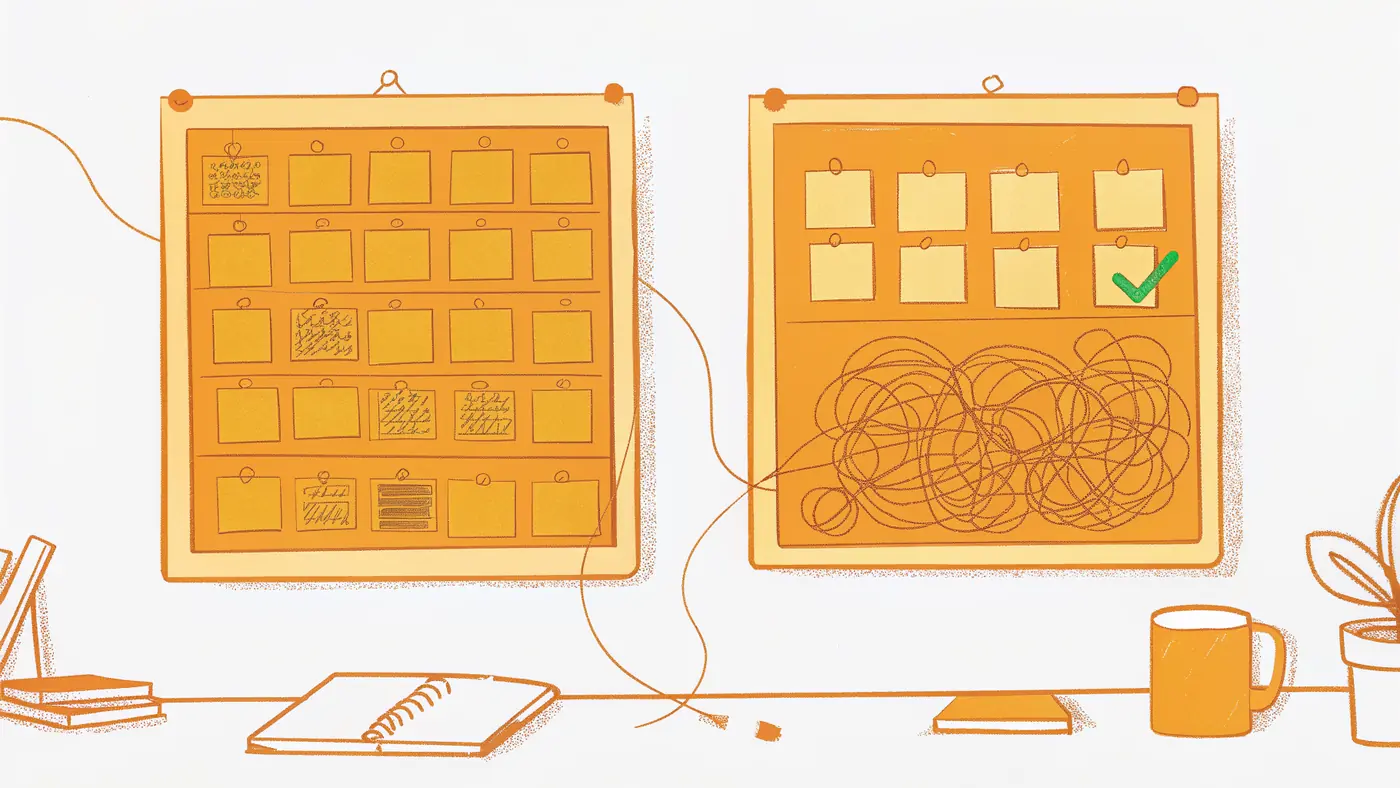
The clearest signal that a platform is genuinely low-threshold is whether a founder can activate a workflow in plain language, no canvas, no API mapping, no configuration sprint. If the first step is still ‘build the system,’ the adoption barrier has not moved; it has been repackaged. The right question to ask any agentic platform is ‘how long before it is doing something useful, without an engineer in the room?”
Why Switching to Agentic AI Is Harder Than It Sounds: The Engineering Tax
Across the market, implementation guides consistently note that even a single narrow workflow using an existing AI model via API takes 2 to 6 weeks to implement. Multi-workflow platforms stretch to 6 to 14 weeks. For a founder already spending the bulk of their week on operational execution, that timeline is a rational reason to defer indefinitely.
The hidden cost is the engineering hours required before the tool does anything useful.
Workflow Builders Still Leave the Founder as the Operator
Visual workflow tools give non-developers a canvas to map automations without writing code, and for teams with a dedicated ops hire, they can move fast. But for most founders running lean, the canvas itself becomes the job. What most teams report is that competing agentic platforms require founders to construct workflows, map handoffs, or manage visual canvases, which means the operator still engineers the system rather than describing the desired outcome. The builder becomes the bottleneck.
No-Code Agentic AI - How to Get Started Without an Engineering Build
Founders searching for no-code AI agents or an agentic AI platform are looking for a hire. But most platforms available today ask them to construct the orchestration layer first, turning a staffing decision into an infrastructure project, a pattern documented across vendor implementation timelines. That gap between “AI sounds useful” and “we actually got it running” is where most small teams stall, not because they lack technical ability, but because they lack discretionary hours.
The lower-friction alternative is systems that operate inside tools a team already uses and are activated through plain-language description rather than workflow construction, a design principle that, when present, shifts the adoption threshold from ‘teams with an engineer to spare’ to ‘any founder who can describe what they need.’ That changes who can adopt agentic AI entirely.
Related Reading
- What Is Agentic AI for Business Operations and Why It Matters
- 12 Best AI Automation for Sales Tools That Actually Work
- Gumloop vs Zapier: Which Tool Wins for AI Automation?
- 13 Best AI Automation Software Tools I Tested in 2026
- AI Agent Framework Comparison: Top Picks Ranked for 2026
- 18 Best AI Agent Platform Comparison Tools for 2026
- Zapier AI Agent: Build and Automate Smarter Workflows
- 13 Top AI Automation Tools I Tested and Ranked for 2026
- 15 Best Agentic Automation Tools to Try in 2026
- How Much Does an AI Agent Cost? 2026 Pricing Breakdown
- RPA vs AI Agents: Which Automation Wins in 2026?
Next steps
If your week keeps disappearing into the space between AI outputs and finished work, the path forward starts with recognizing that stateless, single-turn tools are structurally incapable of closing that gap on their own. Start with our AI teammates.
The research is direct: workers already spend roughly 60% of their time on coordination overhead, and adding a tool that resets between sessions compounds that burden rather than relieving it. Separately, the cognitive labor of sequencing, verifying, and handing off AI outputs never transfers to the tool, it transfers back to the human, every time. Together, those two realities point to one conclusion: the bottleneck is not the quality of the output you are getting. It is the architecture of the tool producing it, and whether that tool can keep moving after the response lands.
Start by seeing what a system built to finish the work actually looks like, through AI teammates at SkyDive. From there, you can match a pre-built teammate template to the recurring task costing you the most hours, describe the outcome in plain language, and let the system own the sequencing, memory, and handoffs your current tools are handing back to you.
Frequently Asked Questions
How does agentic AI actually work on its own without me prompting every step?
Agentic AI works by combining four properties: autonomy (acting without human approval at each move), stateful memory (context that persists across sessions), tool use (calling external systems, APIs, databases, and browsers), and self-correction (catching failures mid-task and rerouting). Once you set a goal, the system’s orchestration layer breaks it into steps, coordinates tools and agents, and loops back when something is off, without you acting as the engine between actions.
What’s the real business benefit of switching from traditional AI to an agentic approach?
The core benefit is that agentic AI produces outcomes rather than outputs, meaning it drives work to completion instead of handing it back to you after each step. Research cited in this guide shows founders already spend an average of 16 hours per week on administrative tasks, gathering inputs, synthesizing findings, formatting outputs, scheduling follow-ups, and that burden is exactly what agentic AI is designed to absorb. The shift also recovers the hidden time cost of context-switching between manual handoff steps.
If generative AI has improved so much, why is it still considered ‘traditional AI’?
Generative AI moved from rule-based retrieval to synthesizing novel language and reasoning, but it still shares the same fundamental architecture as earlier AI systems: reactive, stateless, and single-turn. It produces richer outputs than a recommendation engine, but it has the same stopping point, it answers and does not act. The pipeline ends at the response, and the work of deciding what to do with that response returns to the person who asked.
Why do so many enterprise AI projects fail before they ever reach production?
According to industry research cited in this guide, six out of every seven enterprise AI projects never make it to production, and the most common reason isn’t a bad model, it’s a broken handoff. Traditional AI handles the first, easiest portion of a task and hands the rest back to the human, meaning the connective work between outputs is never owned by the system. Agentic AI addresses this directly by maintaining an orchestration layer that owns the sequencing, tool coordination, and error-handling that traditional systems leave to people.
Does agentic AI work alongside generative AI, or does it replace it?
Agentic AI builds on generative AI rather than replacing it, it uses the same underlying language and reasoning capabilities but wraps them in an architecture that adds autonomy, persistent memory, tool use, and self-correction. This guide describes agentic systems as calling different models or tools at each stage through an orchestration layer, so generative AI remains part of the stack; what changes is that a human is no longer required to carry each output into the next step.