13 Best Agentic Automation Platforms in 2026
Ops leaders, stop rebuilding the same fragile workflows. Find the right agentic automation platform and get a day back this week.
 Skydive 26 min read

Table of contents
Most “agentic” platforms still make you the engineer. Here is how to tell the difference, and what staying on the wrong side of that line is actually costing your team.
The label “agentic” is everywhere right now. Industry research counted hundreds of enterprise AI initiatives carrying that word in 2025 alone, which tells you less about what these platforms actually do and more about how fast a useful term becomes a marketing category. The common assumption among heads of operations is that the way to fix fragmented operations is to pick the most powerful workflow automation platform and build more sophisticated, better-connected automations.
If you are a head of operations trying to evaluate tools, that noise is a real problem. The definition you use will determine whether you escape the construction loop or just rebuild it with shinier parts. See our AI teammates for how this works in practice.
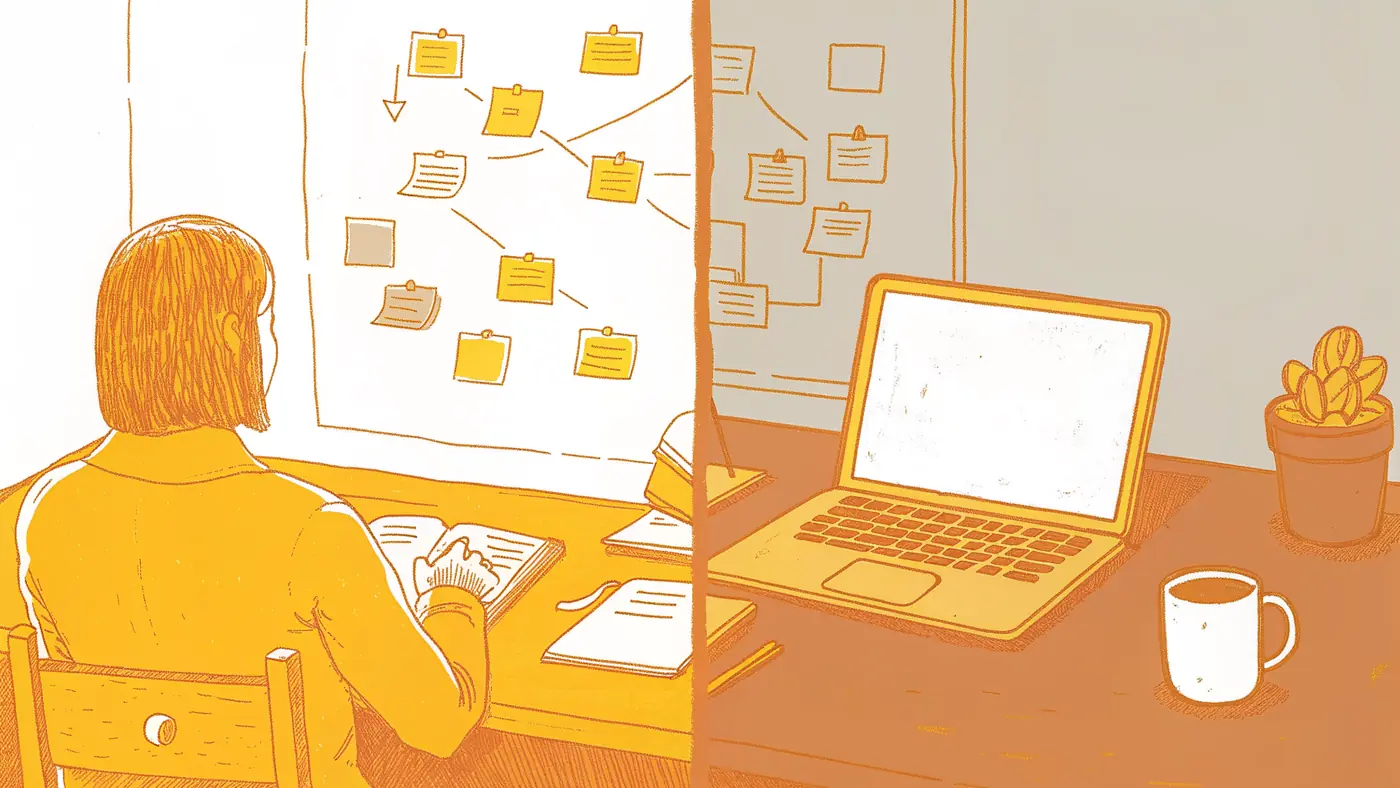
True agentic AI follows a specific cycle: observe what is happening across your systems, plan a sequence of steps to reach a goal, act on those steps, then reflect on the result and adjust. That loop is the point. It means the system can handle ambiguity, recover from partial failures, and route work without you pre-specifying every branch. An agentic AI definition turns on whether the system figures out which buttons to click, in which order, across which tools, without you drawing the map first.
The execution half gets all the demos. The construction half gets none of the attention. An AI agent that takes actions on your behalf still requires someone to define what those actions are, in what order, under what conditions.
That someone is usually you, spending a Friday afternoon in a workflow canvas instead of running the business. According to MeltingSpot’s October 2025 analysis, digital transformation projects frequently fail not because organizations lack powerful tools, but because they lack the human capacity to architect, connect, and maintain complex automated workflows, turning ops leaders into de facto engineers. 70% of digital transformation projects still fail in 2025, and the primary cause is the engineering burden placed on internal teams who were never meant to be systems architects.
70% of digital transformation projects still fail in 2025
Imagine describing a desired outcome in plain language, the way you would brief a new teammate, and having the work routed, executed, and confirmed without you drawing a single flowchart. That is the shift this evaluation is designed to help you make.
How Agentic Automation Differs from Traditional Automation and What the Gap Costs You
Most teams that adopt RPA or trigger-action platforms discover the same uncomfortable truth within the first few months: the tools automate the motion, not the judgment. Clicking, copying, routing, firing a webhook when a condition is met, these are the operations that get eliminated. What remains untouched is everything that had to happen before the click: deciding which records qualify, interpreting an ambiguous request, knowing that this particular exception should go to a manager rather than the standard queue. That distinction sounds minor until you account for where the operator hours actually go.
The common assumption is that the way to fix fragmented operations is to pick the most powerful workflow automation platform and build more sophisticated, better-connected automations. Rule-based automation tools do one thing well: they remove repetitive clicks. If field A changes, write to field B.

If a form is submitted, send an email. That is the scope. According to US Tech Automations, tasks scoring high on frequency and low on complexity are the primary targets for this kind of automation, which means the tools are explicitly scoped to predictable, low-judgment work.
The moment a step requires context, sequencing across systems, or a judgment call about what to do when something goes wrong, the tool stops and waits for a human.
That human is usually you.
This is a live tension for practitioners who have spent years building RPA expertise. The rise of agentic AI creates real career anxiety around whether existing automation skills remain relevant, and at the same time, agentic automation is not yet universally treated as a ready enterprise replacement, precisely because it has historically struggled to match the predictability and cost profile of rule-based tools. Both concerns are legitimate. The more productive frame is understanding exactly where the architectural boundary sits, and what it costs to stay on the wrong side of it.
The Agent Loop - Observe, Plan, Act, Reflect, and Why That Sequence Changes Everything
A genuinely agentic system does not wait for a trigger it was pre-programmed to recognize. It observes a state, forms a plan, takes action, and then checks whether the outcome matched the goal before deciding what to do next. Traditional automation skips the “plan” and “reflect” steps entirely, which is why it handles the predictable 80% of a workflow and collapses at the first exception. The observe-plan-act-reflect cycle means the system can reason about what went wrong rather than simply halt and log an error for someone else to decode at 9 p.m.
SkyDive is built around this loop by default. Each teammate operates with its own per-teammate sandbox and browser, so it can observe live system state rather than relying on pre-mapped field values. Memory and persistence mean context is not lost between steps.
A teammate coordinating a multi-stage approval does not forget what it learned in step two when it reaches step seven. Granular permissions and team collaboration controls mean the right teammate acts on the right data, and nothing crosses a boundary it was not cleared to cross. The practical result is what practitioners working through complex, multi-step workflows need: a system that tracks who owns what at each stage without requiring a human to hold that context in their head.
Xurrent draws a clean line between workflow automation that executes predefined sequences and AI-driven orchestration that can adapt mid-execution, and notes that the latter is where the judgment-dependent work finally gets handled rather than deferred. SkyDive’s multi-teammate architecture operationalizes that distinction: teammates coordinate across the full GTM motion without requiring a human to rebuild the connective tissue every time a step changes.
The Hidden Implementation Cost of Rule-Based and Agentic Automation Platforms
Industry data notes that even well-configured automations achieve only a 99.5% success rate, and every failure requires human intervention to resolve. Complex multi-department automation deployments on platforms like Zapier routinely consume many weeks of implementation time before the first workflow runs in production. You pay that cost in calendar time, internal goodwill, and delayed value, and you pay it again every time a workflow needs to be rebuilt because a tool, field, or process changed upstream.
99.5% Best-case automation success rate, still not enough
The rebuild cost is where traditional platforms quietly drain the most budget. Because rule-based automations encode assumptions about field names, API schemas, and process sequences at build time, any upstream change cascades into a re-implementation project. SkyDive’s MCP (Model Context Protocol) support and built-in tools are designed to absorb that fragility: when a connected system changes, the teammate reasons about the new state rather than breaking on a hardcoded expectation.
Pre-built teammate templates reduce the initial configuration lift, and scheduled runs mean recurring workflows execute without requiring a human to remember to trigger them. What gets eliminated is the click and the back-and-forth communication overhead that accumulates around every exception, status check, and re-trigger. Teams that remove that overhead get real output from their AI tooling rather than a queue of suggestions waiting for a human to act on them.
How to Evaluate Agentic AI Platforms - The Criteria That Actually Separate Real Agents from Rebranded Workflows
Pick up any vendor’s feature matrix and you will find the same columns: integrations, AI model options, automation triggers, workflow nodes. The matrix feels rigorous. It is not. What it hides is the construction work that lives behind every checked box, and that work lands on one person: you.
The Construction-Loop Test - Does the Platform Build the Workflow, or Do You?

The honest question to ask in any demo is which party builds the logic. The practical test for a true agentic platform is whether a non-technical operations leader can describe a desired outcome and have the platform route, coordinate, and complete the work without IT involvement. If the answer requires you to map steps, set triggers, or configure branches, the platform has handed the engineering back to you with a friendlier interface.
A pattern worth naming plainly: well-configured automations still fail, triggering admin intervention every time. Every node you add to a canvas is a future maintenance obligation wearing a capability badge. The platform that lets you build the most is also the platform that gives you the most to break.
Single-Agent Chat vs. Multi-Agent Coordination - Why the Difference Shows Up in Your Calendar
A single agent answering questions in a chat window is useful. Multi-agent coordination goes further: discrete agents hand work to each other across tools without you managing the sequence. The difference shows up not in the demo but in your calendar. Single-agent setups still require you to copy outputs, re-prompt, and track state manually between steps. That is the ops tax in a different costume.
Most ops work that matters crosses at least three systems. Customer response touches email, CRM, and a project tracker simultaneously. Onboarding spans HR tools, access provisioning, and async communication. A platform that coordinates those handoffs without human relay is solving a different problem than one that automates a single step in isolation.
Implementation Timeline - How to Compare Weeks-to-Deploy Across Agentic Automation Platforms
Agentic Platform Evaluation Checklist: 5 Questions to Ask Before You Buy
| Question to Ask in the Demo | What a Strong Answer Looks Like | Red Flag | |
|---|---|---|---|
| 1 | Who builds the workflow logic, me or the platform? | Platform generates logic from a plain-language description | You’re handed a canvas or a trigger library |
| 2 | Can a non-technical teammate modify this without IT? | Yes, changes are made via natural language or simple UI | Requires developer or admin access |
| 3 | How long until the first workflow runs in production? | Days to a few weeks for initial workflows, description-driven platforms typically reach a first production run significantly faster than canvas-based platforms, which require additional build time depending on workflow complexity. | “Several weeks depending on your setup” |
| 4 | What happens when a step fails, who gets the error? | Platform retries, reroutes, or flags with context | Error log drops into a queue for a human to decode |
| 5 | Does multi-agent coordination exist, or is this single-agent? | Discrete agents hand off work to each other across tools | One agent answers questions in a chat window |
Related Reading
- How to Measure AI Agent ROI Before You Scale
- The Future of Agentic AI For Customer Support Explained
- 13 Best Agentic AI Platforms in 2026 for Autonomous Work
- 13 Best AI Agent Integrations to Automate More in 2026
- 14 Best Browser Use Agent Tools for AI Web Automation 2026
- The Ultimate AI Automation Tutorial for Beginners (2026)
- AI Agent vs Assistant: Key Differences Compared (2026)
- How To Measure AI Agent ROI With Proven Metrics
- What Are Parallel AI Agents? A Complete 2026 Guide
- 13 Best AI Agents for Marketing Teams in 2026
- How to Set AI Agent Permissions Without Losing Control
The 13 Best Agentic Automation Platforms in 2026 - Ranked for Teams That Can’t Afford a Six-Month Implementation
The 13 platforms scored below all call themselves agentic, and in 2026 that label has been stretched far enough to cover nearly anything. At one end sits a visual workflow canvas with an AI layer bolted on top; at the other, a platform where you type a plain-language outcome and coordinated agents handle the rest. That gap is not cosmetic. It determines whether you get your time back or spend the next quarter becoming an accidental workflow engineer.
“Teams are being forced to implement AI agents on unrealistic timelines (2 weeks), mirroring the exact problem the article addresses. Platforms that require six-month implementations are a dealbreaker for fast-moving teams.”
The distinction between construction-required platforms and description-driven platforms is now the primary evaluation axis for ops teams choosing between agentic tools. Enterprise-grade platforms typically require IT involvement, developer frameworks require engineering resources, and workflow builders still require a dedicated builder. Only a narrow category removes the operator from the construction process entirely.
The hidden cost most buyers miss is what happens after the platform is live. Every workflow that requires ongoing engineering involvement to modify or debug quietly relocates accountability from the platform back to the one person who knows how the automation was built. When that person leaves, the automation becomes a liability. That is a structural risk, and no pricing page will tell you about it.
The 13 platforms below are ranked through one lens: does this platform remove the operator from the construction loop, or does it hand the construction work back to them under a different name?
1. SkyDive - Best for Teams That Want AI Teammates, Not Just Chatbots
Most ops leads at funded startups hit the same wall: they can describe exactly what they need done, but every platform they evaluate asks them to map it first. SkyDive inverts that. An operator types something like “whenever a new deal closes in HubSpot, draft a kickoff email, create a Notion project page, and post a summary to #wins in Slack” and a coordinated set of AI teammates handles the handoffs without a canvas, without wiring, and without a step to maintain.
Each teammate runs in its own per-sandbox environment with browser access, which means agents can interact with real tools rather than just passing data between APIs. The honest tradeoff: SkyDive is purpose-built for the small, funded startup. Teams that need enterprise compliance layers or deeply custom conditional logic across legacy systems will find the platform’s opinionated simplicity a constraint rather than a feature.
2. Moveworks - Best for Enterprise IT and HR Self-Service Automation
Moveworks is a mature, enterprise-grade platform built specifically for IT and HR self-service: password resets, access requests, policy lookups, benefits questions. It handles these with genuine conversational depth and integrates with the identity and ticketing systems large organizations already run. The tradeoff for anyone outside that profile is significant.
Moveworks cites a typical time to value of around eight weeks, so rollout timelines are measured in months, not days, and the platform is optimized for large IT environments rather than cross-functional ops work at smaller organizations. If your automation needs extend beyond IT and HR into sales, finance, or customer success workflows, you will need additional tooling.
3. Automation Anywhere - Best for RPA Teams Graduating to Agentic AI
 Automation Anywhere occupies a specific and legitimate niche: organizations that already have a meaningful RPA investment and want to extend it with agentic reasoning rather than rip and replace. The platform’s AI agents can work alongside existing bots, which makes the upgrade path less disruptive than switching to a net-new architecture. Automation Anywhere offers a free, full-featured Cloud Community Edition that lets teams start automating instantly without dedicated implementation resources or pre-existing RPA infrastructure.
According to industry research, platforms in this tier require different levels of technical skill and implementation time, and the most powerful option is rarely the fastest to deploy. Best suited for enterprise ops teams with an existing automation practice and IT capacity to support it.
4. Gumloop - Best for No-Code Teams Building Custom Agentic Workflows
Gumloop offers a genuinely capable no-code canvas for teams that want to build multi-agent workflows without writing code. The visual interface is more accessible than many competitors in this tier, and the platform has received positive usability marks among no-code builders for its drag-and-drop canvas experience. The platform supports meaningful agent chaining for content, research, and data workflows. The honest assessment: Gumloop still makes the operator the engineer. The canvas is the product. You are designing the logic, sequencing the steps, and maintaining the flow when something upstream changes.
For a technical business analyst or a product-minded operator who enjoys building, that is a feature. For a Head of Ops who already has 14 other things demanding judgment today, it is a time cost that compounds. Most beneficial when the builder and the beneficiary are the same person.
5. LangGraph - Best for Engineering Teams Needing Fine-Grained Agent Control
LangGraph is a developer framework, not an operator-facing platform, and that distinction matters more here than anywhere else on this list. It gives engineering teams precise control over agent state, memory, branching logic, and multi-agent coordination at a level no visual platform can match. Production adoption among engineering teams has grown steadily, and for teams building proprietary agentic systems, it is a serious infrastructure choice.
The tradeoff is absolute: a non-technical operator cannot deploy, modify, or debug a LangGraph workflow without engineering support. If your team does not have a dedicated ML or backend engineer, this is not a tool you will ship value with. It belongs on the shortlist of companies building agentic products, not companies trying to automate operations.
6. CrewAI - Best for Multi-Agent Role-Based Task Delegation
 CrewAI’s core idea is that agents work better when they have defined roles, and the framework is built around that model. You assign agents as researcher, writer, reviewer, and the crew coordinates to complete a task. For teams experimenting with multi-agent orchestration in Python, it stands out among Python practitioners as one of the more intuitive frameworks for role-based agent orchestration, reflected in strong GitHub adoption and consistent recognition across the developer market for multi-agent tooling.
The limitation is the same as LangGraph: this is an engineering tool. Deploying a CrewAI workflow in production requires code, maintenance, and someone who understands the framework when something breaks. It is useful for technical teams prototyping agentic pipelines, but it is not a platform an ops leader can hand to a business analyst and expect results from without engineering support in the loop.
7. Microsoft Copilot Studio - Best for Microsoft 365 Shops Extending Existing Workflows
 Copilot Studio earns its place on this list for one specific audience: organizations already deep in the Microsoft 365 ecosystem that want to extend Teams, SharePoint, and Outlook with agentic capabilities without introducing a new vendor. The integration depth with Microsoft services is real, and the low-code canvas is accessible to technically comfortable business users. The friction point is well-documented among IT teams: rollout complexity scales with the organization, and customization beyond the Microsoft surface area requires developer involvement. Teams that live outside the Microsoft stack will find the platform’s value proposition narrow. For a small startup on Google Workspace and Slack, the switching cost to make Copilot Studio relevant is higher than the automation benefit it delivers.
8. Coworker AI - Best for Deploying Agents Across Business Teams Without IT Bottlenecks
Coworker AI positions itself at the intersection of no-code accessibility and team-wide deployment, targeting business teams that want agents running across departments without routing every configuration change through IT. The platform supports role-based agent deployment and is designed to be managed by operations or enablement leads rather than engineers. It sits in a growing segment: according to industry research, agent platforms like this one occupy a distinct tier from both enterprise RPA and infrastructure-layer tools, requiring less technical skill to deploy while offering more reasoning capability than simple workflow builders. The tradeoff is that Coworker AI’s agent customization depth is shallower than developer-first platforms, which matters when workflows involve complex conditional logic or non-standard integrations.
9. Blue Prism - Best for Regulated Industries Needing Auditable Agentic Automation
Blue Prism’s strength is governance. In financial services, healthcare, and other regulated environments where every automated action needs an audit trail, Blue Prism’s architecture is built for that requirement from the ground up. The platform’s agentic layer extends its established RPA foundation with AI reasoning, which gives compliance-sensitive organizations a path to more adaptive automation without abandoning the control structures their regulators expect. The cost is implementation complexity and timeline.
10. Domo - Best for Data-Driven Teams Embedding Agents Inside BI Workflows
Domo’s AI agent platform is uniquely positioned at the intersection of business intelligence and agentic automation, letting teams trigger autonomous actions directly from data signals and dashboards. Agents can monitor KPIs and execute downstream workflows without manual intervention. Best for analytics-forward teams that want automation tied to live data. The tradeoff: teams without an existing Domo BI investment will find it expensive to adopt purely for its agentic capabilities.
11. AutoGen - Best for Research and Experimental Multi-Agent Architectures
Microsoft’s AutoGen framework enables highly flexible conversational multi-agent systems where agents can debate, critique, and collaborate to solve problems. It’s the preferred tool for AI researchers and advanced engineering teams exploring novel agent architectures. Best for teams running experiments or building proof-of-concepts for complex reasoning tasks. The clear limitation: it is not production-ready out of the box and requires substantial engineering investment to harden for real business operations.
12. Relevance AI - Best for Sales and GTM Teams Deploying Specialized AI Agents Fast
Relevance AI offers a no-code agent builder with a library of pre-built tools specifically tuned for go-to-market use cases, lead research, outreach personalization, and CRM enrichment. Teams can deploy a working sales agent in hours rather than weeks. Best for revenue teams that need agentic automation without waiting on engineering. The tradeoff: it is narrower in scope than general-purpose platforms, and teams with complex cross-functional automation needs will hit its ceiling quickly.
13. n8n - Best for Technical Teams Wanting Open-Source Agentic Workflow Flexibility
N8n is an open-source workflow automation platform that has evolved to support agentic AI nodes, letting technical teams build self-directed automation pipelines with full control over hosting, data, and integrations. It connects to hundreds of tools and can be self-hosted for maximum data privacy. Best for engineering teams in data-sensitive environments who want flexibility without SaaS lock-in. The tradeoff: it requires technical ownership to maintain and is not accessible to non-developer users.
Common Use Cases for Agentic Platforms and Which Platform Types Actually Handle Them
Work breaks in the gaps, not in the features. The real stress test for any agentic platform is whether it can coordinate judgment across tools when the actual work lives in the space between them.

The Ops Use Cases Where Seam-Crossing Determines Whether Agentic Platforms Actually Deliver
Most ops teams have already mapped their broken workflows. The onboarding that stalls because HR closes the ticket before IT opens theirs. The customer escalation that dies in a Slack thread nobody owns.
The project update that exists in three places and is accurate in none of them. These are seam problems.
The platforms that solve them are the ones that can carry context and judgment across the seam without a human acting as the relay. SkyDive is built around that premise: handle cross-functional GTM work without hiring, and coordinate work across every function without adding headcount.
Cross-Tool Data Handoffs - Why Copy-Paste Survives Every Point-Solution Rollout
According to Parseur’s 2024 report, manual data entry costs U.S. businesses an average of $28,500 per employee annually. That number persists because point solutions fix one side of the seam, not the crossing. A 25-person SaaS startup where the ops lead manually moves closed-won deal data from industry messaging tools into HubSpot, then Notion, then emails the CS team isn’t suffering from a lack of integrations. The gap is that no single layer owns the handoff logic when a field is missing, a format shifts, or a step fails silently. 78% of real SMB automation workflows require conditional logic and multi-step data transformation beyond simple field mapping, so use cases that look routine are judgment-intensive the moment an exception surfaces.
SkyDive addresses this at the architecture level. Because every teammate ships with memory and persistence, handoff logic doesn’t evaporate when a step fails or a format shifts; the system retains state and resumes with full context. Built-in tools and MCP (Model Context Protocol) support mean teammates can reach into the specific systems where your data actually lives, not just the ones a pre-built connector happened to cover. And because SkyDive is multi-teammate by default, the ops lead who was manually relaying closed-won data across four tools can instead assign that coordination to a dedicated teammate, one that owns the handoff logic end-to-end, applies conditional judgment when exceptions surface, and keeps the team focused on high-impact work instead of status updates.
One important caveat worth naming directly: agentic platforms given high-stakes, write-access tasks, think anything touching production systems or irreversible records, carry real risk if judgment guardrails aren’t built in. This is a known failure mode across the category; unconstrained agents have caused serious damage in real-world deployments. SkyDive’s answer is granular permissions and team collaboration controls, so each teammate operates only within the boundaries its role requires, combined with per-teammate sandboxes with browser access for testing behavior before it touches live systems. Scheduled runs let you gate when and how often automation executes, adding another layer of operational control without sacrificing the coordination benefit.
Customer Response Coordination Across Email, Slack, and CRM - Where Single-Channel Agents Fail
A customer escalation that starts in email, gets discussed in Slack, and needs a CRM update to close the loop is not one workflow. It is three, running in parallel, with no shared owner. Single-channel agents handle one leg of that journey well and drop the context the moment the conversation moves surfaces. The platforms that solve this problem carry state and judgment across the handoffs, so the CRM record reflects what was said in Slack and the email response reflects what the CRM already knows.
SkyDive’s multi-channel access means teammates aren’t siloed to a single surface. A teammate can monitor the email thread, track the Slack discussion, and write back to the CRM, not as three disconnected automations but as one coordinated workflow with shared memory across each leg. Pre-built teammate templates give ops teams a starting point for exactly these escalation patterns, so the coordination layer doesn’t have to be built from scratch. The result is what broader market experience points to as the defining unlock of mature automation: fewer humans acting as the relay between tools. That coordination is what separates an agentic platform from a smarter notification bot, and it’s what SkyDive is designed to deliver without requiring you to grow the team to manage it.
Related Reading
- What Is Agentic AI for Business Operations and Why It Matters
- 12 Best AI Automation for Sales Tools That Actually Work
- Gumloop vs Zapier: Which Tool Wins for AI Automation?
- 13 Best AI Automation Software Tools I Tested in 2026
- 18 Best AI Agent Platform Comparison Tools for 2026
- 13 Top AI Automation Tools I Tested and Ranked for 2026
- How Much Does an AI Agent Cost? 2026 Pricing Breakdown
- Zapier AI Agent: Build and Automate Smarter Workflows
- AI Agent Framework Comparison: Top Picks Ranked for 2026
- 15 Best Agentic Automation Tools to Try in 2026
- RPA vs AI Agents: Which Automation Wins in 2026?
Next steps
If your ops calendar is filling up with workflow maintenance instead of actual work, the path forward starts with removing yourself from the construction loop entirely. More sophisticated automations do not reduce the ops tax. They compound it, because every node you add is a future maintenance obligation, and every failure routes the error back to the one person who remembers how the workflow was built. Start with our AI teammates.
The evidence points in one direction. Platforms requiring construction-layer involvement measure onboarding in quarters, while description-driven platforms measure it in days. That gap is the difference between a tool that ships and one that gets abandoned mid-pilot. And when 78% of real SMB workflows require conditional logic beyond simple field mapping, the use cases that look routine become judgment-intensive the moment an exception surfaces, which means the operator who was supposed to be freed up becomes the manual glue instead. Together, these two realities point to one practical action: evaluate platforms on whether you describe the outcome or build the logic, not on how many integrations the feature matrix lists.
Start with AI teammates to see what a description-driven, multi-teammate architecture looks like in practice. From there, the first production workflow runs in days, not quarters.
Frequently Asked Questions
What is the observe-plan-act-reflect loop and why does it matter for automation?
The observe-plan-act-reflect loop is what separates a genuinely agentic system from traditional automation: the system observes a state, forms a plan, takes action, and then checks whether the outcome matched the goal before deciding what to do next. Traditional automation skips the ‘plan’ and ‘reflect’ steps entirely, which is why it handles predictable work well but collapses at the first exception. The loop means an agentic system can reason about what went wrong rather than simply halt and log an error for someone else to decode.
What’s the real difference between single-agent and multi-agent platforms?
A single agent answering questions in a chat window is useful, but it still requires you to copy outputs, re-prompt, and track state manually between steps. Multi-agent coordination means discrete agents hand work to each other across tools without you managing the sequence, and most ops work that matters crosses at least three systems simultaneously, so that difference shows up directly in your calendar.
Why do so many automation and digital transformation projects still fail even with powerful tools available?
According to a MeltingSpot October 2025 analysis cited in this guide, 70% of digital transformation projects still fail in 2025, and the primary cause is not weak AI capability, it is the engineering burden placed on internal teams who were never meant to be systems architects. Organizations often have powerful tools but lack the human capacity to architect, connect, and maintain complex automated workflows, effectively turning ops leaders into de facto engineers.
What should I actually ask during an agentic platform demo to cut through the marketing?
The most important question is not ‘who does the work?’ but ‘who builds the logic?’ Specifically, ask whether a non-technical operations leader can describe a desired outcome in plain language and have the platform route and complete the work without IT involvement, and ask how long until the first workflow runs in production. If the answer hands you a canvas, a trigger library, or a timeline of ‘several weeks depending on your setup,’ the platform is giving the construction work back to you with a friendlier interface.
What are the hidden ongoing costs of rule-based automation platforms after they’re live?
Because rule-based automations encode assumptions about field names, API schemas, and process sequences at build time, any upstream change cascades into a re-implementation project, and even well-configured automations achieve only a 99.5% success rate, meaning every failure requires human intervention. The rebuild cost is where traditional platforms quietly drain the most budget, and the person who knows how the automation was built becomes a single point of failure: when they leave, the automation becomes a liability.