31 AI Agent Applications: Real-World Examples for 2026
31 real-world AI agent applications founders can hand off work to today, so you stop being the operator and finally let the work drive itself.
 Skydive 29 min read

Table of contents
Chatbots answer. Agents act. Here is why the gap between the two is costing founders more than they can see, and what a coordinated bench of specialized agents actually changes.
Most founders have already tried a chatbot. The common assumption is that the only fix is either hiring faster or building more elaborate single-tool automations until the gaps are covered. They connected it to a knowledge base, watched it handle a few FAQs, and felt a brief spark of optimism. Then the edge cases arrived, the handoffs piled up, and the founder found themselves doing the follow-up anyway, just with an extra tool in the stack. See our AI teammates for how this works in practice.
The distinction that actually matters here is about who drives the work forward. Chatbots only reply.

A support chatbot answers a question about your return policy; a support agent queries the knowledge base, updates the CRM record, and escalates only what genuinely needs a human, without being told to do each step. That is not a smarter tool. That is a different category of worker entirely.
Autonomous does not mean unsupervised or unaccountable. It means the agent receives a goal and figures out the steps, rather than waiting for a human to specify each one.
What most teams report, once they move beyond chatbots, is that AI agents maintain context across interactions, call external tools, make decisions, and complete multi-step tasks without requiring step-by-step human instruction. The founder sets the destination. The agent drives.
Four things define an agent that a chatbot cannot replicate: planning (breaking a goal into ordered steps), tool use (calling APIs, querying databases, sending messages), state memory (knowing what happened in prior sessions), and goal-directed action (continuing until the task is complete, not until the reply is sent). Remove any one of these and the system collapses back into sophisticated autocomplete. Across the market, chatbots are optimized for a single exchange, receive input, return output, whereas agents are optimized for a goal: they keep running until the objective is met, regardless of how many steps that requires.
Key takeaways
- Most ‘AI agent’ deployments fail by week two not because the technology is wrong, but because a single agent hitting its first edge case has no one to hand the work to, so it lands back on the founder.
- The real architecture isn’t one smarter bot; it’s a bench of specialized agents, researcher, writer, support rep, ops coordinator, that pass work to each other the way a well-run 20-person team does.
- Six agent types (goal-based, utility-based, learning, reactive, hierarchical, multi-agent) map directly to six job functions a lean startup is already trying to fill with people it cannot yet afford to hire.
- 31 concrete applications are organized by what each agent actually delivers, the artifact created, the decision made, the hour recovered, not by what it theoretically could do.
- Sequencing matters more than tool selection: a 25-person company with every function understaffed cannot deploy everything at once, and the order you choose determines whether agents compound each other or just create new bottlenecks.
- SkyDive closes that gap by letting teams spin up AI teammates that own real work inside Slack, email, iMessage, and web chat, no build sprint required, no new interface to train anyone on.
Why Most AI Agent Trials Die in Week Two (The Single-Agent Trap)
Most AI agent pilots don’t fail because the tool underperformed. They fail because a single agent solving a single node leaves every workflow seam around it exactly as manual as before, and that structural gap compounds quietly until the subscription gets cancelled. This section breaks down why that pattern is so predictable, what it actually costs beyond the visible subscription fee, and why the fix isn’t more automation layered onto a single-agent architecture.

Why AI Agent Pilots Stall in Week Two and What Actually Causes the Drop-Off
The common assumption is that the only fix is either hiring faster or building more elaborate single-tool automations until the gaps are covered. According to subscription churn benchmarks, annual churn for monthly-billed SaaS subscriptions measured 38% between September 2024 and August 2025. That number captures tools people consciously chose, paid for, and then quietly stopped using. The week-two drop-off is a structural problem: the tool worked exactly as advertised, and it still wasn’t enough to change how the work actually moved.
Single-Agent AI Applications Leave Every Workflow Seam Manual, Here’s Why
Picture a founder who sets up an AI step to draft follow-up emails. The drafts are decent. But the agent has no memory of the deal context, no visibility into the CRM state, and no way to route the finished message to the right channel without a human in the middle. The output is real; the workflow is still broken. The agent solved one node. Every seam between that node and the next system stayed manual. That’s not a product failure. That’s single-agent math.
The Real Cost of Stalled AI Agent Applications Beyond the Subscription Fee
The subscription fee is visible. The compounding cost is not. Every handoff decision that lives in the founder’s head is a decision that can’t scale, can’t be delegated, and can’t compound. A founder absorbing cross-functional routing work, research handoffs, and follow-up decisions is spending their highest-cost hours on the work least likely to compound.
Related Reading
- Best AI Coworker Tools in 2026 That Actually Boost Output
- 14 Best Agentic AI Companies to Watch in 2026
- 103 Best Self Hosted AI Agents to Run Locally in 2026
- 15 AI Automation For Small Business Wins I Learned the Hard Way
- 18 Best AI Automation Tools 2026 to Supercharge Your Work
- 20 Computer Use Agent Examples: Complete Guide 2026
- AI Teammates: Work Smarter With Always-On AI Coworkers
- 13 Best Agentic Automation Platforms in 2026
- How To Deploy AI Agents Without Breaking Production
- AI Agents at Work: What They Are and Where Work Is Headed
- How to Evaluate AI Agents: A Practical Step-by-Step Guide
- Agentic Assistant Tools That Actually Work for You in 2026
- How to Maximize AI Automation ROI in 2026
- 13 Types of AI Agents in the Workplace Shaping 2026
- 12 Best AI Agent for Slack Tools to Boost Team Productivity
- 9 Ways Agentic AI For Sales Is Changing How Teams Sell
- Agent to Agent Communication Protocol Explained
- Agentic AI vs Traditional AI: Which One Actually Works?
- Agent Communication Protocol Explained: How AI Agents Talk
- What Is Agentic Automation and How It Works
- 5 Layers of the Agentic AI Stack Every Builder Must Know
- 7 Agentic AI For Marketing Use Cases Explained
Types of AI Agents Explained - The Roles That Make a Full-Company Bench
Six job titles. That is what the taxonomy of agent types actually describes, once you strip away the computer-science framing and look at what each one does inside a working company.
The deeper claim worth naming before the taxonomy unfolds: specialized agents outperform single-purpose automations not just because they handle more tasks, but because parallelizing tool calls and routing work to purpose-built agents simultaneously reduces latency and increases accuracy, meaning a coordinated bench of agents compounds output in a way that stacking individual tools structurally cannot. The performance gap widens as workflows grow more complex, because every additional handoff a single general-purpose automation must handle adds latency and error surface, while a coordinated bench absorbs that complexity across parallel lanes.
1. Reactive AI Agents - The Instant-Response Frontline Worker
Reactive agents respond to a stimulus and return an output, with no memory and no planning. That simplicity is a feature, not a limitation. Routing tasks to the most appropriate specialized agent is one of the primary architectural levers for reducing end-to-end response time. Reactive agents are that lever at the frontline: they handle inbound triage, keyword routing, and instant acknowledgment at a speed that no reasoning-heavy model can match. The tradeoff is real: they cannot hold context across a conversation, so anything requiring memory or multi-step judgment needs to be handed off.
2. Goal-Based AI Agents - The Strategic Planner on Your Executive Bench
Goal-based agents work backward from an objective. Give one a target and it decomposes the goal into steps, selects tools, and executes without waiting for instruction at each stage. This is the agent type that most closely mirrors what strong personal and executive assistants do: they hold the outcome in mind and figure out the path. The limitation is scope: goal-based agents perform best when the goal is well-defined. Ambiguous briefs produce ambiguous outputs, and a founder who hands over a vague objective will still own the cleanup.
3. Learning AI Agents - The Self-Improving Analyst Who Gets Smarter Every Sprint
Learning agents use feedback loops, reinforcement signals, human corrections, or outcome data, to continuously refine their behavior over time. They’re the strongest fit for AI agent applications in personalization engines, dynamic pricing, and predictive maintenance, where the environment shifts constantly. Knowledge workers in data-heavy roles see compounding ROI as the agent adapts. The real limitation: cold-start performance is weak, and poor-quality training feedback can entrench bad patterns quickly.
4. Utility-Based AI Agents - The ROI-Maximizing Operations Specialist
Utility-based agents assign a numerical score to every possible outcome and choose the action that maximizes expected value, making them the precision instrument for AI agent applications in resource allocation, logistics routing, and revenue forecasting. Finance and operations leaders who need defensible, quantified decision-making will find these agents align naturally with KPI-driven cultures. The tradeoff: defining a utility function that captures all business constraints accurately is harder than it looks and often requires significant domain-expert input.
5. Multi-Agent Orchestration Systems - The Full-Company Bench Playing in Formation
Multi-agent systems coordinate specialized sub-agents, each owning a discrete task, under an orchestrator that routes work, resolves conflicts, and synthesizes outputs. This architecture powers the most sophisticated enterprise AI agent applications: end-to-end contract review, autonomous marketing campaign execution, and cross-functional incident response. It’s the right choice when no single agent type can handle the full workflow. The critical tradeoff is governance complexity, debugging failures across agent handoffs requires mature observability tooling most teams don’t yet have.
6. Conversational AI Agents - The Always-On Employee Experience Layer
Conversational agents handle natural-language interactions across IT helpdesk, HR self-service, and internal knowledge retrieval, reducing ticket volume and freeing human specialists for higher-order work. For knowledge workers, these are the most immediately visible AI agent applications, delivering measurable deflection rates within weeks of deployment. They integrate into existing enterprise systems like ServiceNow or Workday via API. The key limitation: they struggle with requests that require cross-system action chains unless paired with a broader orchestration layer.
How Multi-Agent Systems Coordinate Specialized Agents - The Handoff Model That Actually Works
Coordination is the work. Not a layer you add after the “real” AI work is done, but the mechanism that determines whether specialized agents compound each other’s output or just bottleneck at the same points a human team would.
Think about how a well-run 20-person team actually operates. No one person touches every task end to end. A researcher pulls the raw material, a writer shapes it, a critic stress-tests the claims. Work moves forward because each person knows their lane and trusts the next handoff. A single capable agent that can’t transfer context to a specialist recreates the opposite: every task bottlenecks at the same node, just faster. The goal is preserving your calendar time for strategic judgment, writing, and positioning work that only a human can own.
Orchestrator-Worker vs. Peer-to-Peer Coordination
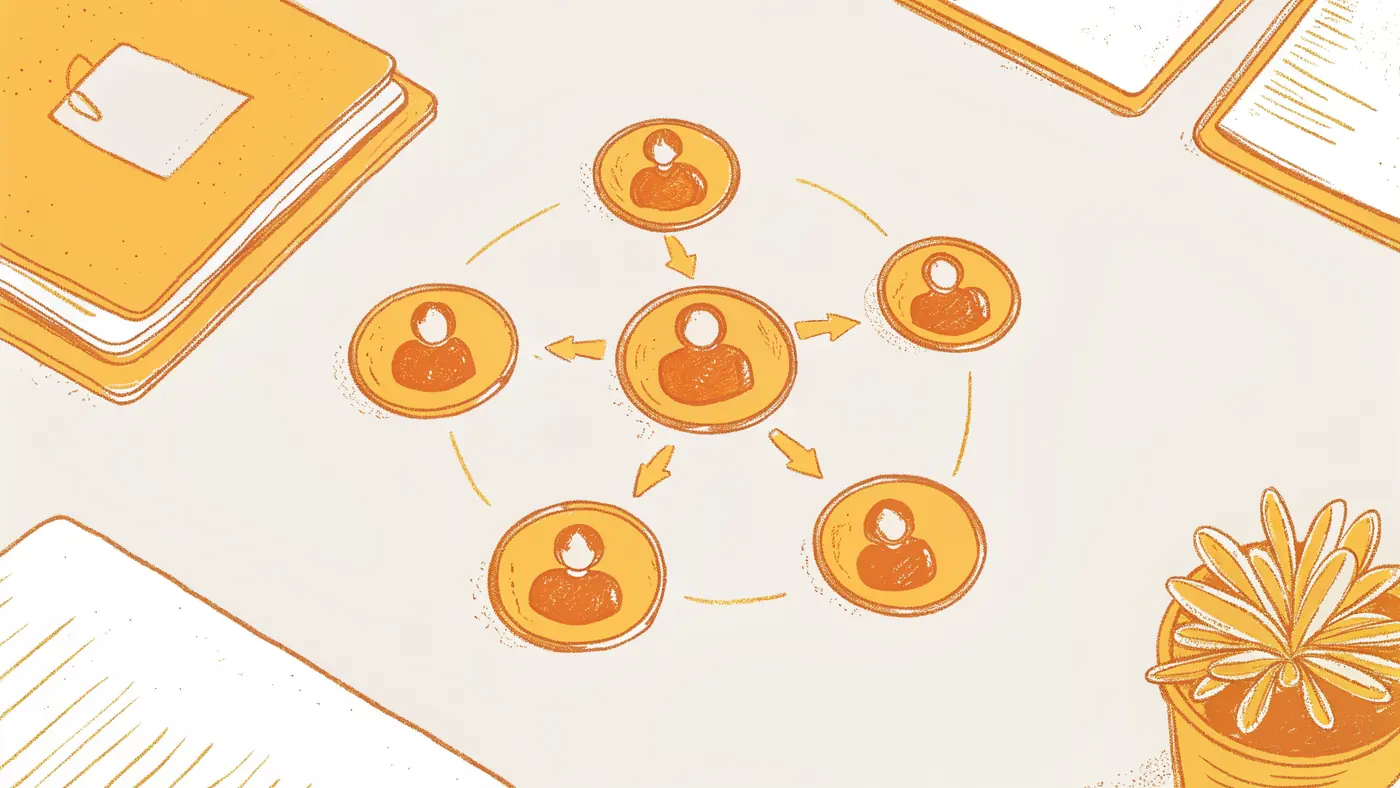
Multi-agent systems coordinate specialized agents through two dominant patterns. In orchestrator-worker setups, a planner agent holds the goal, decomposes it into subtasks, and routes each subtask to the right specialist. In peer-to-peer configurations, agents communicate directly without a central coordinator, which suits tasks where sequencing is less rigid. Across the broader ecosystem, LangGraph models this as a stateful graph where nodes are agents or tools and edges represent conditional handoffs, making the orchestrator-worker pattern explicit in code. Peer-to-peer works well for exploratory tasks; it struggles when strict output sequencing matters.
What makes this harder in practice than it looks on a whiteboard: getting coordination and verification right between specialized agents is the most difficult part of building a multi-agent system, harder than model selection, harder than hardware constraints. Teams we work with describe the trial-and-error of tuning agent handoffs as hitting wall after wall before the workflow clicks. That friction is architectural, not incidental, and it’s why the design of handoffs matters more than the capability of any individual agent.
How a Planner Agent Decomposes a Goal
The planner agent does not execute. It reads the goal, breaks it into ordered subtasks, and assigns each to the agent best equipped to handle it, passing state forward at every transition. As most practitioners building these systems will tell you, a manager agent delegates subtasks to specialist workers and holds the thread until a final approval stage.
SkyDive is built around this pattern from the ground up. Teams are multi-teammate by default: a coordinated group of specialists, each able to run code and commands, read and write files, browse the web, search the web, host web apps, process media, and give itself new tools as needed. Granular permissions let you define exactly which teammate owns which stage, so the system knows its lane the same way a well-structured human team does.
Memory and persistence mean context carries forward rather than being reconstructed from scratch at each handoff. Scheduled runs let complex, multi-step workflows execute without a human coordinator sitting in the middle of every seam. And SkyDive’s MCP (Model Context Protocol) support means each teammate can connect to external tools and data sources through a standardized protocol, the same standardization that has moved agent-to-agent handoffs from experimental to production-ready.
The practical result is less back-and-forth communication overhead and fewer status-update cycles that pull your team away from high-impact work. When each agent’s output becomes a clean, verified input for the next specialist and the system tracks who owns what at every stage, the coordination layer stops being friction and starts being leverage. Strategic marketing work, writing, and positioning work get their time back on your calendar, rather than getting crowded out by the mechanics of keeping a workflow moving.
This is where the field’s central insight becomes concrete: the real unlock is designing the handoffs between agents so that each agent’s output becomes a clean input for the next, compressing multi-step workflows that previously required a human coordinator at every seam.
31 Real-World AI Agent Applications Across Every Business Function
Every function in a growing company generates work that either moves forward on its own or waits for a human to carry it. The 31 applications below are organized around that distinction. Each one is described by what it actually delivers: the artifact created, the decision made, the hour recovered. The goal is not a catalog of possibilities but a working map a lean team can hold up against their own week and immediately see where the gaps are.
One framing note before the list: the compounding value in agentic AI is not in any single agent doing one task better. It is in agents whose outputs become the inputs for the next agent, so work moves through the organization without the founder acting as the relay node between every step. Keep that pattern in mind as you read. The individual items are useful; the chains between them are where the real leverage lives.
1. Intelligent Email Triage and Inbox Summarization Agent
An AI agent that reads every incoming email, surfaces action items, flags urgency, and delivers a daily digest saves knowledge workers 40–60 minutes of context-switching per day. Best for executives, sales reps, and operations managers drowning in high-volume inboxes. The real tradeoff is privacy: granting an agent full mailbox access requires careful data-handling policies and employee trust.
2. AI-Powered Meeting Prep and Pre-Call Briefing Agent
Before every scheduled call, this agent automatically pulls the last meeting notes, LinkedIn profiles, recent email threads, and CRM data to produce a concise briefing document. Ideal for account executives, consultants, and C-suite leaders who run back-to-back meetings. The limitation is data freshness, if CRM records are stale, the briefing can mislead rather than inform.
3. Post-Call Follow-Up Email Drafting Agent
Immediately after a meeting ends, this agent drafts a personalized follow-up email summarizing key decisions, next steps, and owner assignments. It eliminates the post-meeting admin lag that kills deal momentum. Best for sales teams and client-facing consultants. The tradeoff is tone calibration, agents often produce generic language that needs human editing before it sounds authentic.
4. Voice-Activated Executive Personal Assistant Agent
A fully voice-driven agent that composes messages, sends emails, sets reminders, books appointments, and retrieves task context hands-free. Purpose-built for C-suite leaders who need to operate while commuting or between meetings. Integration with task management tools and calendars is the core strength. The key limitation is accuracy on proper nouns and industry-specific terminology in voice transcription.
5. RSS Feed Monitoring and Automated Social Content Agent
This agent monitors RSS feeds, detects new content, generates a topically relevant meme or graphic concept, writes a caption, and posts directly to a Telegram channel or social platform, all without human intervention. Perfect for media brands, newsletters, and community managers. The tradeoff is brand safety: fully automated posting can occasionally produce tone-deaf content that requires a human review gate.
6. Weekly Newsletter Research and Assembly Agent
Running on a fixed schedule, this agent scrapes news from multiple sources, categorizes stories into editorial sections, adds commentary, formats the document in Google Docs, and notifies the design and copy team for final review. Ideal for content teams producing recurring newsletters. The limitation is editorial voice, AI-generated opinion sections often lack the distinctive perspective readers subscribe for.
7. SEO Content Pipeline Agent - From Keyword to Published Draft
A multi-step agent chain that performs keyword research, scrapes the top-ranking competitor articles, builds a content outline, suggests AI-SEO optimizations, routes for human approval, generates the full draft, logs it in Google Sheets, and forwards to an editor. Best for content marketing teams scaling output without scaling headcount. The tradeoff is originality, scraped-outline drafts can feel derivative without strong editorial intervention.
8. AI Code Review Agent with Security and Logic Bug Detection
An orchestrator agent monitors Slack for code review requests, fetches the pull request diff, builds AST-based context for large repositories, and routes to a powerful LLM for bug, logic, and security analysis. Ideal for engineering teams with high PR volume and limited senior reviewer bandwidth. The limitation is false positives on design-pattern violations that require deep domain knowledge to evaluate correctly.
9. Email-to-Calendar and Task Management Automation Agent
This agent reads incoming emails, extracts deadlines and commitments, and automatically creates calendar events and to-do items in connected task management apps. It eliminates the manual translation layer between communication and execution. Best for project managers and solo operators. The key tradeoff is over-scheduling, the agent may create duplicate or low-priority tasks that clutter the system without smart deduplication logic.
10. AI Customer Support Chatbot with Full Conversation Resolution
AI agents deployed in customer support can handle entire support conversations end-to-end, understanding intent, retrieving order data, processing refunds, and closing tickets without escalation. Best for e-commerce and SaaS companies with high ticket volume and repetitive query patterns. The critical limitation is edge-case handling: unusual or emotionally charged situations still require seamless human handoff to avoid customer frustration.
11. Proactive Customer Outreach and Retention Agent
Rather than waiting for customers to complain, this agent monitors behavioral signals, inactivity, failed payments, negative sentiment, and proactively reaches out with personalized messages or offers. Ideal for subscription businesses and SaaS platforms focused on churn reduction. The tradeoff is message fatigue: poorly calibrated outreach frequency can feel intrusive and accelerate the very churn it aims to prevent.
12. AI Agent for Real-Time Customer Sentiment Analysis and Escalation
This agent monitors live chat and support ticket sentiment in real time, automatically escalating conversations that show frustration, anger, or churn risk signals to senior agents with full context pre-loaded. Best for contact centers managing large agent teams. The limitation is sentiment model accuracy across languages and cultural contexts, misclassified escalations waste senior agent time and can feel patronizing to customers.
13. Intelligent FAQ and Knowledge Base Self-Service Agent
An AI agent that dynamically searches and synthesizes answers from a company’s knowledge base, product documentation, and past resolved tickets to answer customer questions without human involvement. Ideal for tech companies and telecoms with complex product ecosystems. The tradeoff is knowledge base quality dependency, if source documentation is outdated or inconsistent, the agent confidently delivers wrong answers.
14. Omnichannel Customer Service Agent Across Chat, Voice, and Email
A unified AI agent that maintains conversation context and customer history across chat, voice, email, and social channels simultaneously, delivering consistent service regardless of channel. Best for large enterprises with fragmented customer touchpoints. The key limitation is integration complexity, connecting legacy CRM, telephony, and ticketing systems into a single coherent agent layer requires significant engineering investment.
15. AI Marketing Lead Scoring and Qualification Agent
An AI agent that continuously evaluates inbound leads against firmographic, behavioral, and intent data to assign dynamic scores and route high-priority prospects to sales immediately. Best for B2B marketing and revenue operations teams managing large lead volumes. The limitation is model drift, scoring models trained on historical conversion data can become miscalibrated as market conditions and buyer behavior evolve.
16. Autonomous Email Campaign Personalization and Sequencing Agent
This agent dynamically personalizes email subject lines, body copy, send timing, and follow-up sequences for each recipient based on their engagement history and segment attributes. Ideal for demand generation teams running large-scale nurture programs. The tradeoff is deliverability risk, highly personalized, high-volume sending can trigger spam filters if not carefully managed with proper domain warming and list hygiene.
17. AI Social Media Content Calendar and Publishing Agent
An agent that generates platform-specific social content, schedules posts across LinkedIn, Twitter, and Instagram based on optimal engagement windows, and reports performance back to the marketing team. Best for lean marketing teams managing multiple brand accounts. The limitation is platform API dependency, changes to social platform APIs or algorithm shifts can break publishing workflows without warning.
18. Competitor Monitoring and Market Intelligence Agent
This agent continuously monitors competitor websites, press releases, job postings, and social channels to surface strategic intelligence, pricing changes, new product launches, and hiring signals, delivered as a weekly digest. Ideal for product marketing and strategy teams. The tradeoff is signal-to-noise ratio: without careful source curation, the agent floods stakeholders with irrelevant updates that erode trust in the tool.
19. Autonomous Accounts Payable Processing and Invoice Matching Agent
An AI agent that ingests invoices from email and vendor portals, matches them against purchase orders and receipts, flags discrepancies, and routes exceptions to human reviewers while auto-approving clean matches. Ideal for finance teams processing high invoice volumes. The critical tradeoff is audit trail integrity, controllers must ensure every autonomous approval is logged with sufficient provenance for regulatory review.
20. Financial Close Automation Agent for Month-End Reconciliation
Month-end close typically stretches across one to two weeks of manual reconciliation. This agent monitors transaction data continuously, flags unmatched entries in real time, and prepares reconciliation summaries so the close process compresses into days rather than weeks. The tradeoff is that the agent’s accuracy depends on clean upstream data; messy source systems produce messy outputs regardless of the agent’s capability.
21. Autonomous Expense Report Review and Policy Compliance Agent
This agent reviews submitted expense reports against company policy, flags out-of-policy items, requests missing receipts, and auto-approves compliant submissions, eliminating the bottleneck of manual finance review. Best for companies with large field sales or consulting workforces. The limitation is policy ambiguity: expenses that fall in gray areas require human judgment that rigid rule-based agents cannot reliably replicate.
22. AI Accounting Agent for Autonomous Lease and Contract Abstraction
An AI agent that reads lease agreements and contracts, extracts key financial terms, payment schedules, renewal options, escalation clauses, and populates accounting systems for ASC 842 and IFRS 16 compliance. Ideal for real estate-heavy enterprises and companies with complex vendor contracts. The tradeoff is extraction accuracy on non-standard contract language, which can introduce material errors in financial statements if not reviewed.
23. Autonomous Revenue Recognition and Audit Trail Agent
This agent monitors contract milestones, delivery events, and billing triggers to autonomously recognize revenue in accordance with ASC 606, generating a complete audit trail for each recognition event. Best for SaaS and professional services companies with complex multi-element arrangements. The limitation is that novel contract structures not seen in training data require manual accounting judgment before the agent can process them reliably.
24. DevOps CI/CD Pipeline Optimization Agent
An AI agent that analyzes CI/CD pipeline configurations, identifies bottlenecks, parallelization opportunities, and redundant steps, then recommends or implements changes to cut build and deploy times. Real-world results include cutting test cycles from 6 minutes to 3 and deploy times to under 10 minutes. Best for platform engineering teams. The tradeoff is that automated pipeline changes in production environments carry risk if not gated by human approval.
25. SRE Incident Memory and Historical Pattern Matching Agent
When an alert fires, this agent instantly surfaces the three most similar past incidents ranked by similarity, their root causes, and which rollbacks or fixes resolved them, giving on-call engineers immediate context instead of starting from zero at 3am. Ideal for SRE teams at companies with complex distributed systems. The limitation is memory contamination: if past incident records are inaccurate, the agent reinforces bad institutional knowledge.
26. Kubernetes Safe Auto-Remediation Agent for Common Production Issues
This agent classifies incoming Kubernetes alerts into safe-to-auto-fix, needs-approval, and never-touch tiers, autonomously executing pod restarts, rollout restarts, and scaling actions for the safe tier without paging an engineer. Best for platform teams managing large Kubernetes fleets. The critical tradeoff is the classification boundary, misclassifying a destructive action as safe can cause cascading outages worse than the original alert.
27. Production Readiness Review Agent for New Feature Deployments
Before a new feature ships, this agent automatically checks whether it has proper metrics, logs, traces, SLOs, runbooks, and alerting configured, generating a readiness scorecard and blocking deployment if critical gaps exist. Ideal for SRE and platform engineering teams enforcing reliability standards at scale. The limitation is that it can only verify the presence of observability artifacts, not their quality or correctness.
28. On-Call Handover Note and Incident Summary Generation Agent
At the end of each on-call shift, this agent synthesizes incident timelines, open issues, and pending actions into a structured handover document, and drafts post-incident summaries for stakeholder communication. Best for SRE teams with global follow-the-sun on-call rotations. The tradeoff is that auto-generated summaries can omit nuanced context that only the on-call engineer experienced firsthand.
29. Deployment Risk Scoring Agent for Pre-Rollout Assessment
This agent analyzes the scope of code changes, affected services, historical failure rates for similar deployments, and current system health to generate a risk score before any rollout proceeds. High-risk deployments trigger mandatory human review; low-risk ones proceed automatically. Ideal for DevOps teams balancing deployment velocity with reliability. The limitation is that novel architectural changes have no historical baseline for accurate risk scoring.
30. Infrastructure Drift Detection and Configuration Compliance Agent
Continuously comparing live cluster and infrastructure state against the last known-good configuration, this agent surfaces unauthorized or accidental drift before it causes incidents. Best for DevOps and security teams managing large cloud infrastructure footprints. The tradeoff is alert volume, in dynamic environments with frequent legitimate changes, the agent requires careful tuning to distinguish drift from intentional configuration updates.
31. AI Legal Contract Review and Risk Flagging Agent
An AI agent that reviews incoming vendor, customer, and partnership contracts, flags non-standard clauses, missing indemnification language, and liability exposure, and routes high-risk items to legal counsel. Ideal for legal operations teams at companies processing high contract volumes. The critical tradeoff is that AI contract review can miss jurisdiction-specific nuances and novel clause constructions that experienced attorneys would catch immediately.
Related Reading
- How to Measure AI Agent ROI Before You Scale
- 13 Best Agentic AI Platforms in 2026 for Autonomous Work
- The Future of Agentic AI For Customer Support Explained
- 13 Best AI Agent Integrations to Automate More in 2026
- How To Measure AI Agent ROI With Proven Metrics
- 14 Best Browser Use Agent Tools for AI Web Automation 2026
- The Ultimate AI Automation Tutorial for Beginners (2026)
- AI Agent vs Assistant: Key Differences Compared (2026)
- What Are Parallel AI Agents? A Complete 2026 Guide
- 13 Best AI Agents for Marketing Teams in 2026
- How to Set AI Agent Permissions Without Losing Control
AI Agents by Industry and Department - Where to Start If You Run a Lean Team
The sequencing problem is harder than the tool selection problem, and most agent roundups never acknowledge it. They catalog what is possible; they say nothing about what a 25-person company with every function simultaneously understaffed should actually deploy first.
1. Customer Support - AI Agent Applications That Deflect 60%+ of Tickets Without Hiring
The highest-ROI entry point for a lean team is almost never the function that feels most broken. It is the function where a single agent can deflect the highest volume of repetitive decisions. According to Pylon’s 2025 analysis, AI ticket deflection can reduce inbound volume by up to 60%, resolving common queries autonomously before they reach a human.
That deflection frees not just support bandwidth but the founder attention currently absorbed by escalations. One honest trade-off: customer-facing agents require continuous monitoring and human-in-the-loop escalation paths. The agent handles the volume; a human still owns the edge cases.
2. Sales Prospecting - AI Agent Applications That Research, Score, and Sequence Leads Automatically
A common pattern among founders with one or two SDRs: reps spend more time building prospect lists than selling. AI prospecting agents pull firmographic data, score leads against ICP criteria, and sequence outreach automatically. The legitimate concern is that fully automated sequences can read as generic. The fix is keeping the agent on research and scoring while a human writes or approves the first-touch message. That division of labor is where the ROI actually lives.
3. Finance & Accounts Payable - AI Agent Applications That Close the Books Faster with Fewer Errors
Small finance teams spending hours on invoice matching, expense categorisation, and reconciliation are prime candidates for AI agent deployment. Agents can extract data from invoices, cross-reference purchase orders, flag anomalies, and post entries, compressing a multi-day close cycle. Ideal for businesses processing 50+ invoices monthly. The key limitation is that initial data mapping and ERP integration require upfront configuration time that lean teams often underestimate.
4. HR Onboarding - AI Agent Applications That Guide New Hires Through Day One Without HR Babysitting
When HR is one person wearing five hats, an onboarding AI agent handles document collection, policy acknowledgements, system access requests, and new-hire Q&A automatically. It keeps the process consistent whether you’re onboarding one person or ten in the same week. Best for businesses scaling headcount faster than HR capacity. The tradeoff: culture-building and relationship-forming moments still require human presence, the agent handles logistics, not belonging.
5. Content Marketing - AI Agent Applications That Draft, Optimise, and Schedule Without a Full Content Team
Lean marketing teams can deploy AI agents to research topics, generate first-draft blog posts, repurpose long-form content into social snippets, and schedule publishing, compressing a week of content work into hours. This application suits businesses that need consistent content output but can’t justify a dedicated content hire. The critical tradeoff: AI drafts require editorial review to maintain brand voice and factual accuracy, so a human must stay in the loop before anything goes live.
6. B2B Lead Nurturing - AI Agent Applications That Keep Warm Prospects Engaged Between Sales Calls
Small B2B teams often lose deals simply because follow-up falls through the cracks. AI agents can monitor CRM activity, detect prospect inactivity, and trigger contextually relevant follow-up messages, case studies, ROI calculators, or meeting nudges, without the rep lifting a finger. Right for businesses with long sales cycles and small deal volumes. The tradeoff: over-automation risks feeling impersonal, so message cadence and tone need careful calibration per segment.
7. Internal Knowledge Management - AI Agent Applications That Answer Team Questions Instead of Interrupting Experts
Every time a new hire asks where the deployment docs live, or a sales rep interrupts the founder to find a contract template, deep work is destroyed. Research on interruption costs shows that recovering focus after a deep-work interruption takes a significant amount of time, meaning even a handful of routed questions each day can quietly consume a large block of focused output. An internal knowledge agent answers those questions instantly, drawing from a connected knowledge base, so the founder and senior team members are never the first line of search.
Next steps
If your week keeps collapsing into research queues, follow-up drafts, and escalation decisions that only you can handle, the path forward starts with a bench of specialized teammates, each owning a defined stage, so the judgment lives in the system rather than in your calendar. Start with our AI teammates.
The 28% of the workweek that knowledge workers lose to email alone does not account for the overhead that accumulates between channels, where work stalls in translation from one tool to the next. That inter-channel gap is where most ops time actually disappears, and no single automation touches it. At the same time, the highest-ROI entry point for a lean team is not the function that feels most broken but the one where a single agent can deflect the highest volume of repetitive decisions, freeing founder attention for everything else. Together, those two realities point to the same action: deploy a coordinated bench that spans channels and functions simultaneously, starting with whichever function has your name on every output right now.
Start by seeing AI teammates for the full bench model. Write two sentences about the task, the expected output, and where it should land, and the first teammate is configured.
Frequently Asked Questions
What actually makes an AI agent different from a chatbot I’ve already tried?
The difference comes down to who drives the work forward. A chatbot replies to one message and stops; an AI agent plans, uses tools, remembers prior context, and keeps running until a goal is complete, for example, querying a knowledge base, updating a CRM record, and escalating only what needs a human, all without being told each step.
What is a utility-based agent and what does it do?
A utility-based agent optimizes against a scoring function instead of following fixed rules. For example, one evaluating scheduling options might weigh cost, time-to-close, and rep capacity simultaneously, selecting the path that scores highest across all three, though the scoring function itself must be designed by a human who understands the tradeoffs, since a poorly specified function produces confidently wrong decisions.
What is a goal-based agent and how is it used?
A goal-based agent works backward from an objective: give it a target and it decomposes the goal into steps, selects tools, and executes without waiting for instruction at each stage. This guide compares it to a strong chief of staff who holds the outcome in mind and figures out the path, though it performs best when the goal is well-defined, ambiguous briefs still produce ambiguous outputs.
Why do most AI agent pilots fail after the first couple of weeks?
The failure is structural, not a quality problem. A single agent solves one node in a workflow but leaves every seam between that node and the next system manual, so the founder still ends up doing the routing, research handoffs, and follow-up decisions themselves. The subscription fee is the smallest cost; the real expense is the founder’s highest-cost hours being spent on work that can’t compound.
How do multi-agent systems hand off work between specialized agents?
Two dominant patterns exist: orchestrator-worker, where a planner agent holds the goal, breaks it into subtasks, and routes each to the right specialist; and peer-to-peer, where agents communicate directly without a central coordinator. Getting the handoffs right, ensuring each agent’s output becomes a clean, verified input for the next, is described in this guide as the hardest part of building a multi-agent system, harder than model selection or hardware constraints.