How To Deploy AI Agents Without Breaking Production
How to deploy AI agents without breaking production, so ops leaders stop losing work to silent failures no error log will ever catch.
 Skydive 32 min read

Table of contents
Most AI agent deployments don’t fail in the code. They fail at the boundaries no one defined before the infrastructure was wired. Here is how to fix the sequence.
Most teams never see the structural failure coming, partly because of a belief so common it rarely gets questioned. The common assumption is that if the prototype worked in the demo, the deployment problem is just infrastructure: find the right hosting platform, containerize correctly, and the agent will perform the same way in production. The prototype ran cleanly, the demo impressed the stakeholders, and the deployment checklist looked like a standard software release.
Then production hit, and something quietly broke. According to NTT DATA’s 2024 research, between 70 and 85 percent of GenAI deployment efforts fail to meet their desired ROI. The same research is direct about why: the failures are human and structural, not technical.

Organizations underestimate the process and coordination changes required to move from prototype to production. That gap is in the design.
See our AI teammates for how this works in practice.
A prototype is a controlled environment dressed up as proof. It runs one task, in one context, against one data source. The agent looks capable because nothing in the test ever asked it to hand work off, resolve a permission conflict, or hold state across two systems at once.
That is a working demo. NTT DATA’s research puts it plainly: GenAI tools that perform well in controlled pilots consistently underperform at scale because production environments differ fundamentally from prototype conditions. The failure point is almost never inside the agent’s core logic.
It surfaces the moment a task crosses a boundary the agent was never designed to cross.
An ops team deploys a customer-escalation agent that works perfectly in staging, then watches it silently drop tasks the moment a ticket requires pulling data from both Salesforce and Zendesk simultaneously. No error. No alert. Just work that disappears into the seam. That silence is the real danger. Unlike a traditional software bug that throws an exception and writes to a log, agentic workflow breakdowns at system boundaries often produce nothing. The agent completes its local step and stops.
Key takeaways
- The real failure mode in AI agent deployment isn’t bad code or wrong infrastructure, it’s treating a single-agent prototype as a production-ready system when real workflows require coordinated handoffs across multiple agents and tools.
- Scope definition is not a step you return to after the infrastructure is wired; it is the infrastructure decision, and teams that skip it pay for it in blast radius, not in sprint points.
- Three deployment architecture patterns, cloud-hosted, self-hosted, and hybrid, are governance decisions first, determining compliance posture and data residency before a single real task runs.
- A perfectly containerized agent is not a safe one; container boundaries stop lateral movement at the infrastructure layer, but prompt injection operates at the reasoning layer and routes malicious instructions straight through.
- The agent that drops work silently is almost always the one no one designed a handoff for, coordination failure, not infrastructure failure, is what kills production deployments.
- Going live is not the finish line: the moment an agent receives real requests, every unresolved question about access, spend limits, and accountability lands on operations, not engineering.
- SkyDive closes the coordination gap by letting teams build AI teammates that pass work across real tools, Slack, email, iMessage, and web chat, so multi-agent handoffs are designed in from day one, not bolted on after the first production incident.
Agent Design Foundations and Scope Definition Before You Deploy Anything
The common assumption is that if the prototype worked in the demo, the deployment problem is just infrastructure: find the right hosting platform, containerize correctly, and the agent will perform the same way in production. That assumption is wrong, and acting on it is expensive. Scope definition is not a step you return to after the infrastructure is wired.
It is the infrastructure decision. Every choice downstream, from framework selection to hosting pattern to monitoring strategy, sits on top of the boundary you draw first. Skip it, and you are not deferring a documentation task.

You are making every subsequent decision on a foundation that does not exist.
Draw the Task Boundary Before You Touch Infrastructure
According to Digital Applied’s March 2026 analysis, 88% of AI agents never reach production, and the root cause is almost never a hosting or containerization problem. It is scope ambiguity. The same research identifies a clear pre-deployment requirement: define what the agent can initiate, what it cannot touch, and which decisions require a human gate before any infrastructure work begins.
That sequence is not arbitrary. Agents built without strict task boundaries tend to drift, attempting to be helpful beyond their original design in ways that are difficult to audit and harder to trust in production. This is one of the most consistent pressure points developers run into at the design stage: by the time the boundary problem surfaces, it surfaces in production, which is the most expensive place to fix it.
88% of AI agents never reach production
SkyDive addresses this at the platform level rather than leaving it as an exercise for each team. Granular permissions are built in, so every teammate operates within an explicitly defined scope before a single workflow runs. Per-teammate sandboxes with browser access mean each agent has its own contained environment; it cannot silently consume another agent’s task queue or reach beyond the permissions it has been granted. The boundary is not a policy document you write and hope the agent respects; it is enforced by the platform’s permission layer from the start.
Single-Agent vs. Multi-Agent Coordination, Why Your Framework Choice Must Match Your Handoff Model
The Digital Applied analysis flags framework mismatch as a distinct failure mode: single-agent tools suit simple, contained tasks, while multi-agent orchestration frameworks are required the moment coordination enters the picture. Developers navigating a fragmented landscape of frameworks, AgentScope, CrewAI, Microsoft AutoGen, LangGraph, and others, face real decision fatigue at the design stage, often before they have enough information to evaluate which foundation will hold up under their actual handoff model. Choosing the wrong framework forces a redesign in production, not in planning, which is the more expensive version of the same lesson.
SkyDive is multi-teammate by default, which means coordination is not an architectural upgrade you bolt on later; it is the starting point. Complex, multi-step workflows can be distributed across teammates without losing track of who owns what at each stage. Structured handoffs between teammates are defined before any workflow runs, and memory and persistence carry context across those transitions so nothing falls through the seams between agents. The back-and-forth communication overhead that typically forces teams onto status-update treadmills is reduced by the platform’s coordination layer, keeping team members focused on high-impact work rather than tracking what each agent is doing.
Map Every System Boundary the Agent Will Cross
Failures cluster in the seams. Digital Applied’s research and infrastructure analysis from Cockroach Labs both point to the same pattern: it is not the agent logic that breaks first, it is the integrations, the points where the agent crosses from one system into another. Authentication layers, permission handoffs, OAuth wiring, and backend connections each represent a boundary where an underspecified scope can cause an agent to stall, overclaim, or fail silently.
One of the most persistent obstacles developers face is that existing hosted platforms require them to build an app from scratch, wiring backends, authentication, OAuth, frontends, and permissions layers, even when their agent’s functional needs are essentially identical to everyone else’s. SkyDive is built from a description, which means that scaffolding is handled by the platform. Multi-channel access, built-in tools and capabilities, MCP (Model Context Protocol) support, and pre-built teammate templates mean that the boundary-mapping work focuses on what the agent does, not on reconstructing generic infrastructure for the tenth time.
Scheduled runs and team collaboration features are already present, so the decisions that matter, what the agent can initiate, what it cannot touch, and where a human gate is required, can be made clearly, before any system boundary is crossed.
Related Reading
- Best AI Coworker Tools in 2026 That Actually Boost Output
- 14 Best Agentic AI Companies to Watch in 2026
- 103 Best Self Hosted AI Agents to Run Locally in 2026
- 15 AI Automation For Small Business Wins I Learned the Hard Way
- 18 Best AI Automation Tools 2026 to Supercharge Your Work
- 20 Computer Use Agent Examples: Complete Guide 2026
- AI Agents at Work: What They Are and Where Work Is Headed
- How to Evaluate AI Agents: A Practical Step-by-Step Guide
- How to Maximize AI Automation ROI in 2026
- 13 Types of AI Agents in the Workplace Shaping 2026
- 12 Best AI Agent for Slack Tools to Boost Team Productivity
- 9 Ways Agentic AI For Sales Is Changing How Teams Sell
- Agent to Agent Communication Protocol Explained
- Agentic AI vs Traditional AI: Which One Actually Works?
- Agent Communication Protocol Explained: How AI Agents Talk
- What Is Agentic Automation and How It Works
- 5 Layers of the Agentic AI Stack Every Builder Must Know
- 7 Agentic AI For Marketing Use Cases Explained
- 31 AI Agent Applications: Real-World Examples for 2026
- AI Teammates: Work Smarter With Always-On AI Coworkers
- 13 Best Agentic Automation Platforms in 2026
- Agentic Assistant Tools That Actually Work for You in 2026
What Are the Three Deployment Architecture Patterns for AI Agents and When Should Each Be Used?
Three deployment architecture patterns govern how AI agents reach production. The right choice is not about which platform is easiest to provision; it is a governance decision that determines your compliance posture, your data residency, and your ability to coordinate work across system boundaries before a single real task runs.
Most teams treat this choice as an infrastructure preference: pick whatever is fastest to set up, then harden it later if compliance becomes an issue. That logic works for a web app. It breaks for an agent, because the architecture pattern determines where data flows, which boundaries the agent can cross, and who owns accountability when it acts autonomously. “Harden it later” is not a production strategy for a system that touches real workflows on day one.
1. Cloud-Native Centralized Deployment - Best for Scalable, API-Driven Agent Workloads
Fully managed platforms like LangGraph Cloud handle scaling, infrastructure, and observability out of the box, giving teams a fast path to production with zero infrastructure management overhead. This pattern is the right call when your data sensitivity is low to moderate and iteration speed matters more than sovereignty. The real tradeoff: you accept the platform’s data routing decisions, which makes this pattern a poor fit the moment a compliance requirement restricts where inference data can travel.
2. Hybrid On-Prem/Cloud Deployment - Best for Regulated Enterprises with Mixed Sensitivity Data
The hybrid pattern uses a SaaS control plane (such as Azure AI Foundry Agent Service) to manage provisioning and scaling while keeping the data plane inside your own VPC, so sensitive records never leave your infrastructure boundary. According to the SNS Insider Hybrid Cloud Market Report, January 2025, the hybrid cloud market was valued at USD 133.27 billion in 2025, reflecting enterprise demand for exactly this separation. The tradeoff is coordination complexity: two planes means two failure surfaces, and the handoff between them requires explicit governance from the start.
3. Edge-Distributed Deployment - Best for Disconnected, Low-Latency, or IoT-Adjacent Agent Use Cases
Edge deployment pushes the entire agent stack, including tool execution and state management, onto infrastructure at or near the point of work, using Kubernetes or dedicated microVM networks to ensure total compliance and eliminate external data leakage. This pattern is growing fast in manufacturing and industrial IoT, where network connectivity is unreliable and round-trip latency to a cloud inference endpoint is operationally unacceptable. It is overkill for most knowledge-work agents and carries the highest operational overhead of the three patterns.
The architecture decision ultimately narrows to one question: where does your data sensitivity require the boundary to sit? Once that pattern is locked, the next structural decision is how the agent surfaces its work to the systems around it.
How to Wrap an AI Agent in an API - Endpoints, Latency, and Protocol Integration
Wrapping an AI agent in an API feels like the last mile. The agent logic works, the reasoning loops run cleanly in your local environment, and the POST endpoint looks like a formality. It isn’t. The API layer is where the agent’s operational contract is actually enforced, and teams that treat it as thin glue discover the hard way that latency budgets, retry logic, and tool-connection security are all decided here, whether or not they were designed here.

Pros and Cons at a Glance
| ✓ Pros | ✗ Cons |
|---|---|
| Bundles code, SDK dependencies, and environment config into a portable unit | Does not stop prompt injection operating at the reasoning layer |
| Runs consistently across machines | Does not govern what the agent does once it starts reasoning over user-supplied input |
| Stops lateral movement at the infrastructure layer | Self-hosting containerized agents requires building thread, state storage, and sandboxing from scratch |
| Solves for environment drift | Ongoing maintenance burden compounds with every agent added |
FastAPI vs. Flask - Which Framework Enforces the Right Execution Contract
To wrap an AI agent in an API, you expose its logic as an HTTP endpoint that frontend applications, webhooks, and external systems can call programmatically. The framework choice determines whether that endpoint can survive what agents actually do. According to Strapi’s 2025 framework comparison, Flask handles approximately 3,000 requests per second while FastAPI reaches 15,000 or more, a roughly 5x performance difference. Raw throughput, though, is not the real issue.
Flask is a synchronous WSGI framework. Each request blocks a worker thread until completion. For an agent running sequential tool calls across a reasoning loop that can take many seconds to complete, that blocking behavior hard-codes a failure ceiling before a single infrastructure choice is made. FastAPI’s async-first architecture, built on Starlette and ASGI, handles non-blocking, long-running endpoints natively. The choice between them is an architectural commitment about whether your agent can survive production load at all.
Why Synchronous Endpoints Kill Agents Mid-Loop
AWS API Gateway enforces a hard maximum integration timeout well below what most multi-step agent reasoning loops require. Google Cloud Run supports longer request durations, but most default configurations sit far below what a multi-step agent reasoning loop may require. A multi-step agent reasoning across several tool calls, multiple LLM completions, and a database lookup will routinely exceed the tight timeout windows that synchronous HTTP infrastructure assumes as a ceiling.
The fix is structural, not a configuration tweak. Async endpoints with background task queues accept the request immediately, return a job ID, and process the agent’s reasoning loop out-of-band. A webhook or polling endpoint delivers the result when the agent finishes. Teams that skip this pattern report the same failure mode: the endpoint times out, the caller receives no error, and the task disappears silently. That is not a bug you debug easily. It is a structural mismatch between the HTTP contract and the agent’s execution model.
What Containerization and Isolation Strategies Are Required for Secure AI Agent Deployment
Containerization is a necessary starting point for AI agent deployment, but the security model breaks down the moment you treat the container boundary as the finish line. The real risk is what happens inside the agent’s permitted execution scope when it starts reasoning over malicious input, because prompt injection does not need to escape the container to cause serious damage. Understanding where Docker’s protections actually end is what separates a deployment that looks secure from one that is.

Docker Is the Minimum Viable Isolation Layer, Not the Finish Line
A containerized AI agent can still be an unsafe one, and treating containerization as a sufficient security control is precisely what makes it dangerous. Container boundaries stop lateral movement at the infrastructure layer, but prompt injection operates at the reasoning layer, routing malicious instructions through the agent’s own intelligence. An agent that is containerized and injectable is a secured perimeter around an open door, keeping the host system clean while the agent exfiltrates data or corrupts workflow state entirely within its permitted execution scope.
Docker handles the packaging problem well: it bundles your agent’s code, SDK dependencies, and environment configuration into a portable, reproducible unit that runs consistently across machines. That is genuinely useful. But containerization solves for environment drift, not for what happens when a user feeds your agent a malicious instruction at runtime. Teams distributing images through Docker Hub or private registries like AWS ECR still face the same runtime reasoning risks regardless of how cleanly the image is packaged.
Docker packages what your agent is. It does not govern what your agent does once it starts reasoning over user-supplied input. A containerized agent still has access to every tool, API key, and execution scope it was granted at build time. The container boundary stops lateral movement at the infrastructure layer. It does nothing to stop an injected instruction from routing through the agent’s own reasoning to exfiltrate data or corrupt workflow state, entirely within its permitted scope. That distinction matters more than most teams realize until something goes wrong in production.
Beyond the security gap, teams self-hosting containerized AI agents on AKS or Container Apps quickly discover a second, equally punishing problem: building thread and state storage, agent identity, and sandboxing from scratch is a significant engineering burden that compounds with every agent added to the system. It is not a one-time setup cost; it is ongoing maintenance that pulls engineering attention away from the actual product.
Why Dynamic Code Execution Makes Prompt Injection a Container-Level Threat
AI agents are not deterministic API endpoints. They execute dynamic, user-influenced logic at runtime, which means the attack surface moves with every conversation. According to industry research, prompt injection ranks as the number one risk on the OWASP Top 10 for Large Language Model applications. Obsidian Security’s research confirms it is the most common AI exploit in the current threat landscape, with agents that interact with external data sources being especially exposed to indirect injection, where malicious instructions arrive embedded in retrieved content rather than typed directly by a user.
The implication is concrete: an agent that is containerized and injectable is a secured perimeter around an open door. Detection telemetry and layered runtime controls, not just correct containerization, are what actually stop prompt injection in production. microVM sandboxes add a further hardware-level boundary that standard container runtimes do not provide, isolating the execution kernel itself rather than only the filesystem and process namespace.
An agent that is perfectly containerized and perfectly injectable is a secured perimeter around an open door.
SkyDive approaches this differently. Rather than leaving teams to bolt on identity, permissions, and sandboxing after the fact, SkyDive is multi-teammate by default, with granular permissions and team collaboration built into the platform from the start. Each teammate operates within its own per-teammate sandbox, including browser access, so the execution environment for one agent is isolated from siblings by design. Memory and persistence are handled natively, which means teams are not engineering thread and state storage themselves. The result is a system that removes the infrastructure burden that causes most self-hosted deployments to cut security corners.
Raw Containers Are Insufficient for Multi-Agent Applications
When multiple agents hand work to each other across tool boundaries, the exposure compounds. A prompt injection in one agent can redirect behavior that cascades into sibling agents sharing the same container network. As Obsidian Security notes, agents interacting with external data sources are especially vulnerable to this indirect injection path, and in multi-agent pipelines, a single compromised reasoning step can propagate through the entire workflow.
SkyDive’s per-teammate sandboxing addresses this directly. Because each teammate runs in its own isolated execution environment, a compromised instruction in one agent cannot freely route into a sibling’s reasoning context. Granular permissions mean each teammate is granted only the access it legitimately needs, not the full scope of the platform. And because SkyDive coordinates complex, multi-step workflows natively, tracking who owns what at each stage without requiring teams to build that orchestration layer themselves, the attack surface of each individual agent is kept narrow and auditable rather than expanding with every new integration.
For teams that need to move quickly without rebuilding the security and persistence stack from scratch, SkyDive’s pre-built teammate templates and built-in tools provide a foundation that is already scoped correctly, rather than one that ships permissive by default and relies on teams to lock it down before production.
What Are the Three Hosting Patterns for AI Agents Based on Execution Style
Three hosting patterns govern where AI agents actually run in production. The right match depends entirely on how the agent reasons, not on which cloud platform your team already pays for.
The failure mode that catches most ops teams off guard is invisible, and it points to a deeper architectural truth. According to the AWS Lambda Developer Guide, Lambda enforces a hard execution ceiling of 15 minutes per invocation, after which the function is forcibly terminated regardless of task state. No error is thrown.
No alert fires. The task simply stops existing. Lambda’s 15-minute hard execution ceiling exposes something deeper than a timeout configuration problem: serverless hosting architectures are built around a stateless, discrete-task model that is structurally opposed to what agentic reasoning requires. The hosting pattern decision is not an ops choice made after the agent is built; it is a constraint that dictates whether the agent’s reasoning architecture can exist at all in that environment.
A multi-step agent accumulating context across sequential tool calls will be killed mid-reasoning loop by Lambda’s design, not by misconfiguration. The mismatch is invisible until the task simply stops existing.
A second pressure compounds this: as agents grow more capable, the question of who owns accountability becomes urgent. When an agent runs fully autonomously, with no human approval between steps, there is no clear owner when something goes wrong. Is it the operator, the developer, or the infrastructure team?
That accountability gap is real, and it starts at the hosting layer. The pattern you choose does not just determine uptime; it determines whether your team can implement granular permissions, inject human checkpoints, and maintain a clear chain of custody over what the agent decides and acts on. Managing API keys across multiple AI providers and agents compounds this further: without centralized or keyless authentication, every hosted agent becomes a credential-management liability.
These are not edge cases; they are the structural risks that teams running agents in production face before they ever debug a reasoning loop.
1. Synchronous Request-Response Hosting - Best for Low-Latency, Short-Horizon Tasks
Stateless web services like Google Cloud Run Services and AWS Lambda suit request-driven agents with short, discrete tasks:
- A customer-question agent handling high volumes of concurrent requests
- A routing agent classifying inbound tickets
- A chatbot API that scales to zero overnight
Cloud Run supports FastAPI and Flask runtimes and deploys directly from source, containers, or a git repository, making it fast to ship. The real tradeoff: any agent that needs to accumulate context across multiple tool calls will be evicted before it finishes, as the AWS Lambda Developer Guide confirms. Each Lambda execution environment is isolated and ephemeral by design. Use this pattern only when each invocation is genuinely self-contained.
2. Asynchronous Job-Queue Hosting - Best for Long-Running, Multi-Step Agent Workflows
Background worker pools behind message queues like Kafka or RabbitMQ handle agents that must complete multi-step workflows without blocking the caller. Kafka’s autoscaler on Cloud Run lets worker pools grow horizontally under load, which matters when batch tasks spike unpredictably. RabbitMQ suits teams that need simpler queue semantics without the operational weight of a full streaming platform.
For teams that want this pattern without managing the queue infrastructure themselves, Blaxel offers managed worker pools backed by microVMs that boot and resume rapidly, removing the self-hosted maintenance burden. This pattern is also where granular permissions become non-negotiable: when agents coordinate complex, multi-step workflows across teammates without a human in the loop at every stage, you need role-level controls that define exactly what each agent can read, write, or trigger. Otherwise, the autonomous execution style creates an accountability gap with no clear owner.
3. Event-Driven Streaming Hosting - Best for Real-Time, Reactive Multi-Agent Systems
Platforms such as Fly.io serve agents running persistent, always-on reasoning loops that must maintain continuous lifecycle memory across hours or days. This is the hosting tier where memory and persistence, scheduled runs, and multi-teammate coordination become load-bearing features rather than conveniences. Agents here are not completing a single task and exiting; they are tracking state across a team, managing hand-offs, and reducing the back-and-forth communication overhead that otherwise consumes high-impact work time. The AWS Lambda Developer Guide makes the boundary explicit: Lambda’s hard ceiling means any reasoning loop that runs longer than 15 minutes cannot be hosted there.
Stateful hosting is the architecture that can hold that loop open while preserving the auditability and team-level permissions that make fully autonomous, multi-agent coordination trustworthy enough to ship to production.
Related Reading
- How to Measure AI Agent ROI Before You Scale
- The Future of Agentic AI For Customer Support Explained
- 13 Best Agentic AI Platforms in 2026 for Autonomous Work
- 13 Best AI Agent Integrations to Automate More in 2026
- 14 Best Browser Use Agent Tools for AI Web Automation 2026
- The Ultimate AI Automation Tutorial for Beginners (2026)
- AI Agent vs Assistant: Key Differences Compared (2026)
- How To Measure AI Agent ROI With Proven Metrics
- What Are Parallel AI Agents? A Complete 2026 Guide
- 13 Best AI Agents for Marketing Teams in 2026
- How to Set AI Agent Permissions Without Losing Control
Production Deployment Step-by-Step - Security, Governance, and Monitoring That Actually Holds
Going live is not the finish line. The moment your agent starts receiving real requests, every unresolved question about who can call it, what it can be told to do, and how much it can spend becomes your accountability, not an engineering ticket. For a Head of Operations, that distinction matters: the blast radius of a misbehaving agent lands on your function, not on the team that wrote the container spec. The operations leaders SkyDive works with are not trying to become engineers; they are trying to coordinate their teams through complex, multi-step workflows without losing track of who owns what at each stage. Security and access control are what makes that goal durable.

Adversarial Input Is an Ops Problem First - MCP Validation, Sanitization, and Sandbox Isolation
Prompt injection is ranked as OWASP’s top LLM vulnerability in the OWASP Top 10 for LLM Applications, and adversarial input manipulation is the leading documented threat vector for AI agents in production. What makes this an ops problem is the measurement gap. Industry security research confirms that prompt injection attack success rates vary materially depending on safeguard configuration, which means unprotected or misconfigured agent endpoints face meaningfully higher adversarial input success rates than hardened ones. As VentureBeat notes, Anthropic is notable precisely because it published those numbers at all; OpenAI and Google have not released equivalent failure-rate data broken out by attack surface and safeguard configuration, leaving enterprise security teams making production deployment decisions with asymmetric risk data.
That is a governance accountability gap. Treating prompt injection as an engineering task with no measurable benchmark is the equivalent of deploying a financial control with no audit trail. The ops leaders we work with are already handling work that spans tools without becoming the engineer, and they should not have to become a security architect either.
This is where SkyDive’s architecture removes the burden directly. Every teammate runs inside a per-teammate sandbox with its own browser context, so a successful injection cannot propagate laterally into adjacent teammates or the host environment. MCP validation layers, enabled natively through SkyDive’s MCP (Model Context Protocol) support, sanitize every input before it reaches the agent’s reasoning loop. Tool-execution processes run inside those isolated sandboxes, not the host container. For operations teams trying to step-change productivity rather than triage security incidents, this is the difference between a governance posture that holds and one that collapses under the first real adversarial attempt.
Unauthenticated Agent Endpoints Are a Silent Liability - API Gateway, OAuth, and Granular Permissions
An unauthenticated webhook endpoint on a deployed scheduling or data-retrieval agent is an open door. The practical failure mode operations teams experience is the quiet accumulation of unchecked calls that succeed when they should not, creating liability that only surfaces during an audit or an incident.
API Gateway with a Cognito authorizer blocks unauthenticated calls before they reach the agent runtime, and OAuth scopes restrict which systems can trigger which actions. The combination is the minimum viable access control layer for AI agent authentication in production. SkyDive’s granular permissions and team collaboration model extends this posture into the operational layer: access is scoped at the teammate level, so a teammate provisioned for calendar writes cannot be called into a financial data retrieval flow it was never authorized to touch. Every inbound call carries a signed token, and the authorizer validates scope before the request proceeds.
For the operations leader whose team is already managing multi-channel access across scheduling, CRM, and communications workflows, this matters structurally. When your teammates are multi-teammate by default and coordinating across those channels simultaneously, an unauthenticated call that succeeds anywhere in that mesh is a liability event, not a bug report. Granular permissions are how you reduce back-and-forth communication overhead without introducing a surface area your security team cannot audit.
Staging, Testing, and CI/CD Integration for AI Agents Before They Touch Production
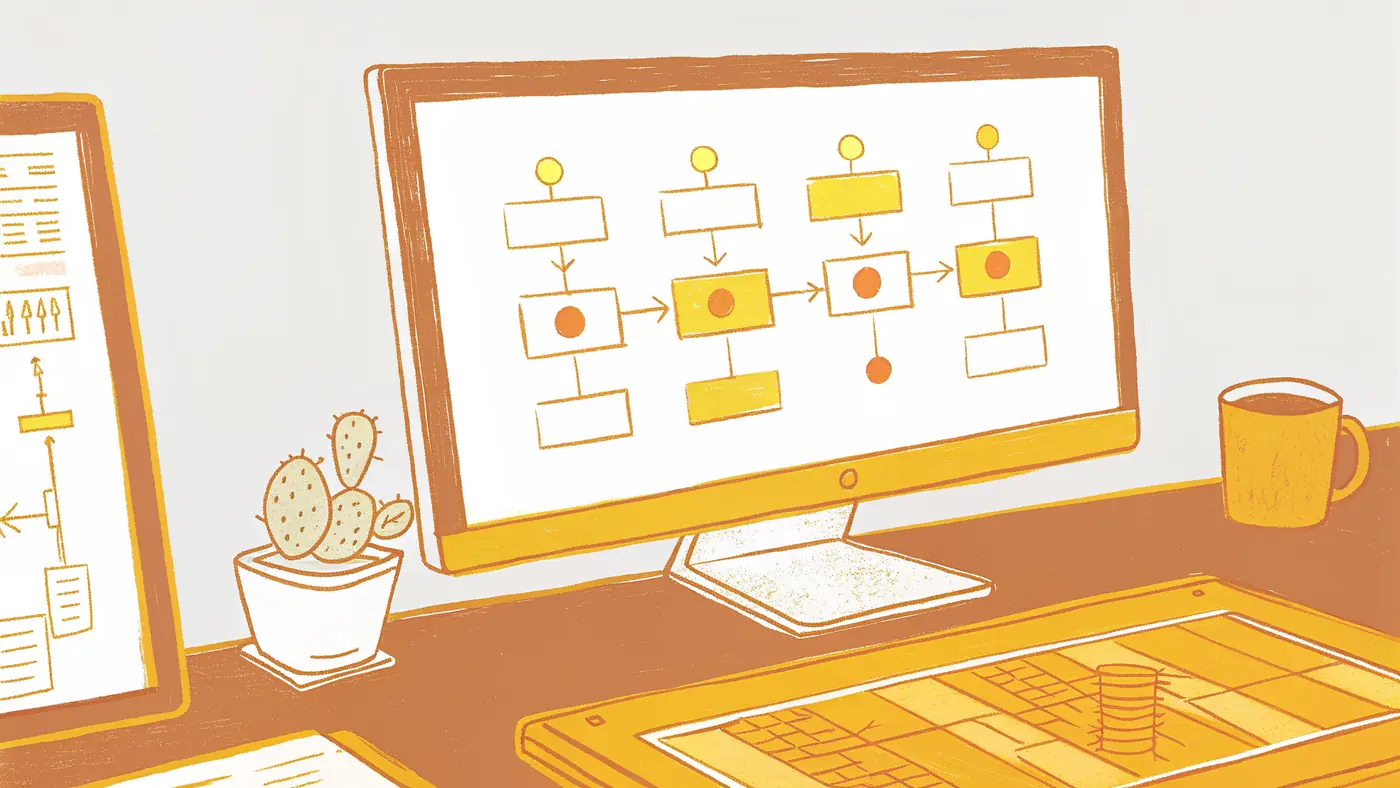
Shipping an AI agent without a proper staging pipeline isn’t a shortcut; it’s a deferred failure waiting to surface at the worst possible moment. The conditions that actually break agents in production, cascading tool calls, permission boundary violations, real OAuth scopes, multi-agent handoff chains, are exactly what stripped-down test environments tend to remove. What follows covers how to stage, test, and integrate AI agents into CI/CD in a way that reflects how they will actually behave when real work depends on them.
Mirror Production Conditions in Staging, Not a Simplified Sandbox
The most common staging mistake is stripping out the exact conditions that cause production failures. Real tool connections get swapped for mocks. Permission scopes get widened so tests pass cleanly. Multi-agent handoff conditions disappear entirely because the test suite only covers a single agent in isolation. What remains is a fiction of the agent, and it passes every check.
This is the core risk we see when AI agents get pushed into production-adjacent workflows, platform engineering, SaaS pipelines, enterprise automation, without the same due diligence applied to any other new technology. Teams ship an agent with nothing but a prompt and a prayer: no health checks, no retry policies, no rollback mechanisms. The equivalent of deploying a microservice with zero observability and calling it production-ready.
Cascading tool calls, permission boundary violations, and mid-reasoning state drops are invisible in a stripped-down staging environment. They only surface when real work is on the line. A staging pipeline that doesn’t replicate live API connections, actual OAuth scopes, and the full handoff chain between agents isn’t a safety gate. It’s a confidence trap.
SkyDive is built multi-teammate by default, which means the handoff chain isn’t an afterthought; it’s the architecture. Every teammate operates inside its own per-teammate sandbox with browser access, and anyone on the team can create teammates. Permissions control view, use, or edit on a per-teammate basis. Useful teammates spread the way useful things inside companies always spread. That structure makes it materially easier to replicate production permission boundaries in staging, because those boundaries are defined explicitly in the platform rather than assumed.
Behavioral Evals as the CI/CD Gate
Syntax checks confirm the code runs. They say nothing about whether the agent does the right thing.
Behavioral evals run the agent against recorded production traces and score its outputs against expected results. A practical implementation: every new agent version completes a defined set of behavioral evals before the container is promoted to the live registry. Most teams deploying AI models lack any automated behavioral gate in their CI/CD pipeline, which is precisely why behavioral regressions routinely pass code review undetected and only surface after they’ve touched real users or real data.
For teams using SkyDive to automate campaign operations and content production, behavioral evals are especially high-value. Multi-step workflows that coordinate across teammates, routing content drafts, managing approval handoffs, triggering scheduled runs, produce compounding failure modes when one agent in the chain regresses silently. SkyDive’s scheduled runs and built-in memory and persistence mean an agent’s outputs carry forward into subsequent steps; a behavioral regression in step two contaminates everything downstream before anyone notices.
This is worth naming honestly: building a behavioral eval suite takes real time upfront. For teams running a single, low-stakes agent, it may genuinely be overkill. The cost scales with the number of tools the agent touches and the consequences of a wrong output. SkyDive’s built-in tools and MCP (Model Context Protocol) support mean the tool surface for any given teammate is explicit and enumerable, which is exactly the starting point you need to scope a behavioral eval suite without guessing at what the agent can reach.
Rollback Triggers Defined Before Deployment
Pre-defining rollback thresholds matters because agent failures are structurally harder to detect than traditional software failures. A broken API returns a 500 immediately. An agent producing subtly wrong outputs, calling the right tools in the wrong sequence, or dropping context mid-task can run for hours before anyone notices.
This is the operational gap that creates enterprise-wide exposure: AI agents shipped into internal workflows with no defined failure boundary, so by the time a wrong output propagates through a multi-step pipeline, the blast radius is already large. The fix isn’t more monitoring after the fact; it’s pre-defined rollback thresholds agreed upon before the agent touches production.
A concrete threshold: automatic rollback when a deployed agent’s tool-call success rate drops below a defined floor for a defined window. For teams running SkyDive across complex, multi-step workflows, where clear ownership of each stage is maintained across teammates, rollback conditions should be defined per teammate role, not just at the pipeline level. An agent responsible for a discrete step (content production, campaign scheduling, handoff routing) has a measurable success condition. Define it before deployment, not after the first incident.
The Deployment That Sticks - Why Multi-Teammate Design Is the Missing Layer
The task that drops silently is the one no one planned a handoff for. An agent can be containerized perfectly, hosted on the right infrastructure, and monitored with full observability, and still fail the moment a real workflow asks it to pass work to the next system. That gap is a coordination problem, and most deployments never see it coming.

Why Single-Agent Deployments Silently Fail at the Seams
According to Coworker AI’s analysis, 95% of GenAI pilots fail to scale beyond the demo or proof-of-concept stage into production. The reason is structural, not technical. A prototype exercises one agent against one tool in one session. It cannot expose what happens when a task crosses a team boundary, triggers a permission scope the agent was never designed for, or requires a handoff protocol that was never defined. The demo script is constitutionally blind to the failure modes that matter most in production.
What Multi-Teammate-by-Default Means in Production
Multi-agent handoff design is the deployment. Each AI teammate needs a defined scope, a defined handoff protocol, and isolated execution permissions before the first task runs, not configured after the first production failure reveals the gap.
This is also where the honest trade-off lives: designing coordination upfront takes more time than shipping a single agent fast. For a one-tool, one-step workflow, a single-agent deployment may be sufficient. The architecture earns its cost when work spans systems, teams, or async steps where a dropped handoff creates a real business consequence.
Next steps
If your agents keep falling apart the moment work crosses a tool boundary or team handoff, the path forward starts with designing scope, permissions, and coordination before you touch infrastructure.
Serverless hosting architectures are structurally opposed to what multi-step agentic reasoning requires, meaning a hosting decision made after the agent is built can make the agent’s reasoning architecture impossible to run at all. And the reason 95% of GenAI pilots never scale is that single-agent prototypes are constitutionally blind to the coordination failures that surface in production, where tasks cross boundaries the demo never tested. Together, those two constraints point to one action: build the coordination model first, then choose the infrastructure that can hold it.
Start with AI teammates to see how SkyDive enforces scope and handoff protocols at the platform level, so the seams between systems are governed before the first real task runs.
Frequently Asked Questions
How do I choose the right AI agent framework before deployment?
Match your framework to your handoff model first: single-agent tools suit simple, contained tasks, while multi-agent orchestration frameworks are required the moment coordination enters the picture. Choosing the wrong framework forces a redesign in production rather than in planning, which is the more expensive version of the same lesson.
Why do AI agents fail silently in production instead of throwing an error?
Unlike a traditional software bug that throws an exception and writes to a log, agentic workflow breakdowns at system boundaries often produce nothing, the agent completes its local step and stops. This happens most often at integration seams, such as when an agent needs to pull data from two systems simultaneously, because the failure point is the boundary crossing, not the agent’s core logic.
Does containerizing my agent with Docker make it secure enough for production?
No, Docker is the minimum viable isolation layer, not the finish line. Container boundaries stop lateral movement at the infrastructure layer, but prompt injection operates at the reasoning layer, routing malicious instructions through the agent’s own intelligence entirely within its permitted execution scope. A containerized agent still has access to every tool, API key, and execution scope it was granted at build time.
How do I handle long-running agent tasks without the API endpoint timing out?
Use async endpoints with background task queues: accept the request immediately, return a job ID, and process the agent’s reasoning loop out-of-band, then deliver the result via a webhook or polling endpoint when the agent finishes. Synchronous endpoints hard-code a failure ceiling because a multi-step agent reasoning across several tool calls, multiple LLM completions, and a database lookup will routinely exceed the tight timeout windows that synchronous HTTP infrastructure assumes.
What’s the right deployment architecture if my organization has strict data residency requirements?
The hybrid on-prem/cloud pattern is designed for exactly this situation: a SaaS control plane manages provisioning and scaling while the data plane stays inside your own VPC, so sensitive records never leave your infrastructure boundary. If your use case involves unreliable network connectivity or unacceptable round-trip latency, such as manufacturing or industrial IoT, edge-distributed deployment pushes the entire agent stack onto infrastructure at or near the point of work for total compliance and zero external data leakage.